
maximalist home decor bold ideas work best when you stop chasing “perfectly matched” and start designing for energy, personality, and lived-in comfort.
Still, a lot of people freeze at the same point, they love bold rooms on Instagram, then at home it turns into visual noise, or a cart full of random prints that never feels cohesive.
This guide keeps maximalism fun but controlled, you’ll get practical ways to pick a color story, layer patterns, mix old and new, and pull a room together so it feels intentional, not accidental.
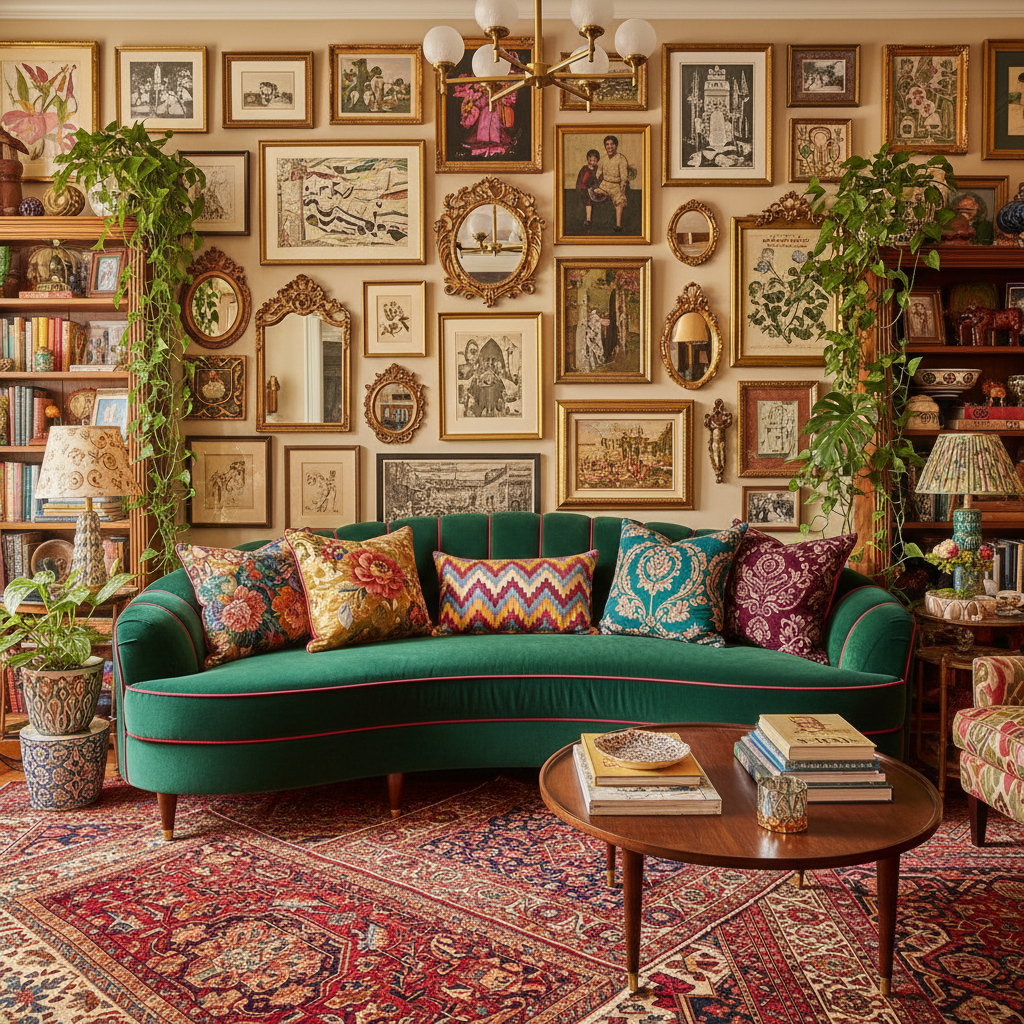
What “Maximalist” Really Means (and What It Doesn’t)
Maximalism is not just “more stuff.” It’s curation through abundance, you can have many colors and objects, but they follow a logic you can feel even if you can’t name it.
A helpful way to think about it, minimalism edits by subtraction, maximalism edits by selection. You still edit, you just keep the pieces that tell the story.
- Maximalist: layered color, pattern, texture, collections, art, and contrast, with a repeating thread.
- Not maximalist: random purchases, clutter you avoid dealing with, or décor that blocks function.
According to The Metropolitan Museum of Art, pattern, ornament, and decorative arts have been central to many historical design movements, which is a nice reminder that “more detail” has always been part of serious design, not a mistake.
Why Bold Rooms Go Wrong: The Usual Traps
Most “I tried maximalism and hated it” stories come down to a few repeatable issues, not a lack of taste.
- No color hierarchy: everything competes at the same volume, so your eye never rests.
- Too many pattern types: combining florals, geometrics, stripes, and novelty prints without a unifier.
- Scale mismatch: lots of tiny prints creates static, a few larger patterns usually reads calmer.
- Ignoring negative space: even maximalist rooms need breathing room, blank wall segments count.
- All statement, no base: without grounding neutrals or stable materials, the room can feel temporary.
Here’s the part people don’t expect, maximalist home decor bold ideas often look “effortless” because the designer quietly repeated a few cues across the room, the repetition does the heavy lifting.
A Quick Self-Check Before You Buy Anything
If you answer “yes” to most of these, you’re in a good place to go bolder without spinning out.
- I can name one to three main colors I want to live with daily.
- I know whether my room should feel bright and playful or moody and dramatic.
- I have at least one anchor piece (sofa, rug, wallpaper, or art) I truly love.
- I’m willing to move items around, not just add new ones.
- I can describe my style in a sentence, even a messy sentence.
If not, you can still do maximalism, you just start smaller, and you choose one “loud” move at a time.
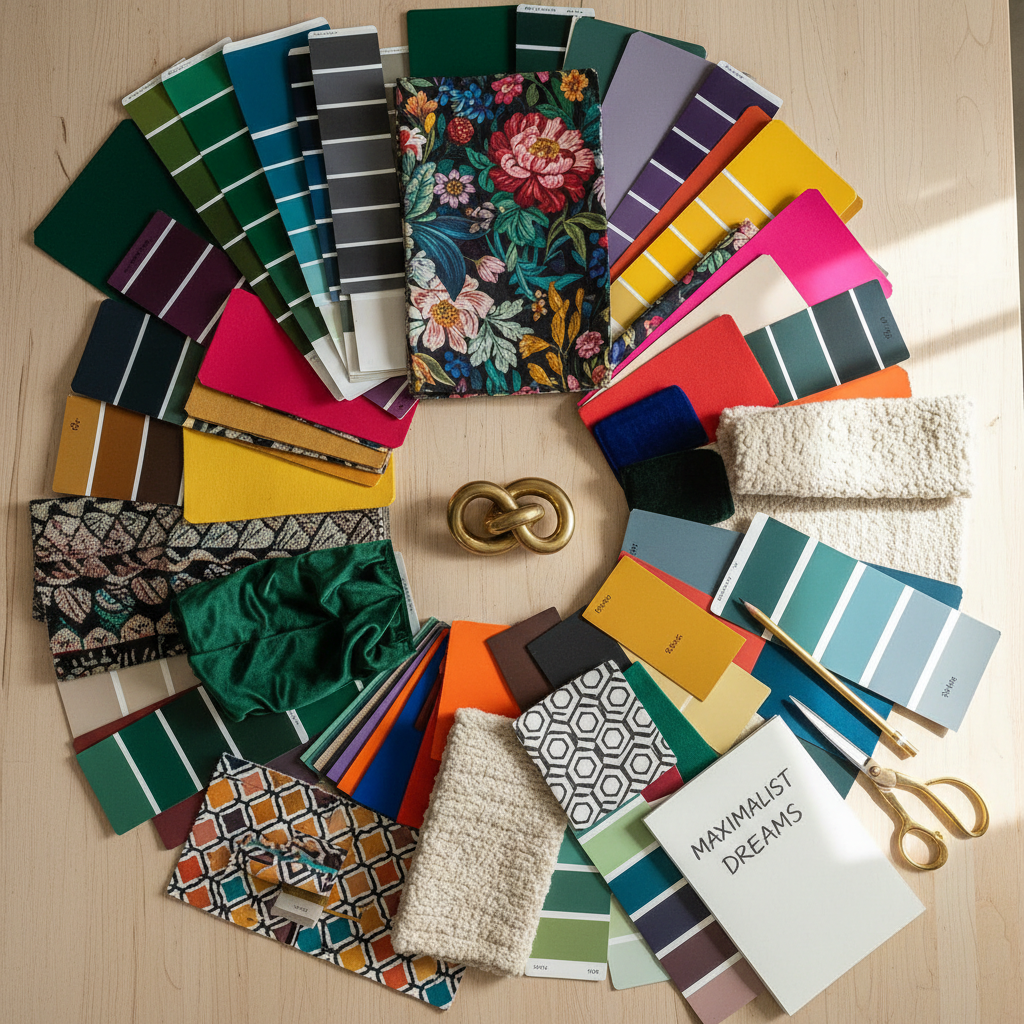
The “Controlled Maximalism” Framework: Color, Pattern, Texture, Story
When readers ask for maximalist home decor bold ideas that won’t overwhelm, this is the framework that usually keeps them on track.
1) Set a color hierarchy (not a strict palette)
Pick one dominant color, one supporting color, then two accents. Accents can rotate seasonally, dominant colors rarely should.
- Dominant: what covers the biggest visual area (wall color, rug, sofa).
- Supporting: shows up in multiple places (curtains, chairs, art background).
- Accents: small hits (vases, pillows, lampshades, book spines).
2) Mix patterns by scale
A simple rule that holds up in many homes, use one large-scale pattern, one medium, one small. If everything is medium, it can feel busy fast.
3) Add texture to make color feel richer
Texture is the “volume knob” you can turn up without adding more colors. Think velvet, linen, lacquer, rattan, wool, brushed metal, glossy tile.
4) Give the room a story hook
Not a theme park theme, just a thread: travel finds, vintage books, modern art, coastal kitsch, 70s curves, botanical obsession. The story is what makes abundance feel personal instead of staged.
Room-by-Room Bold Ideas That Actually Translate to Real Homes
You don’t need to redo the whole house. Pick the room where you spend time and where boldness will feel rewarding.
Living room
- Start with a statement rug that already contains 3–5 colors, then pull from it.
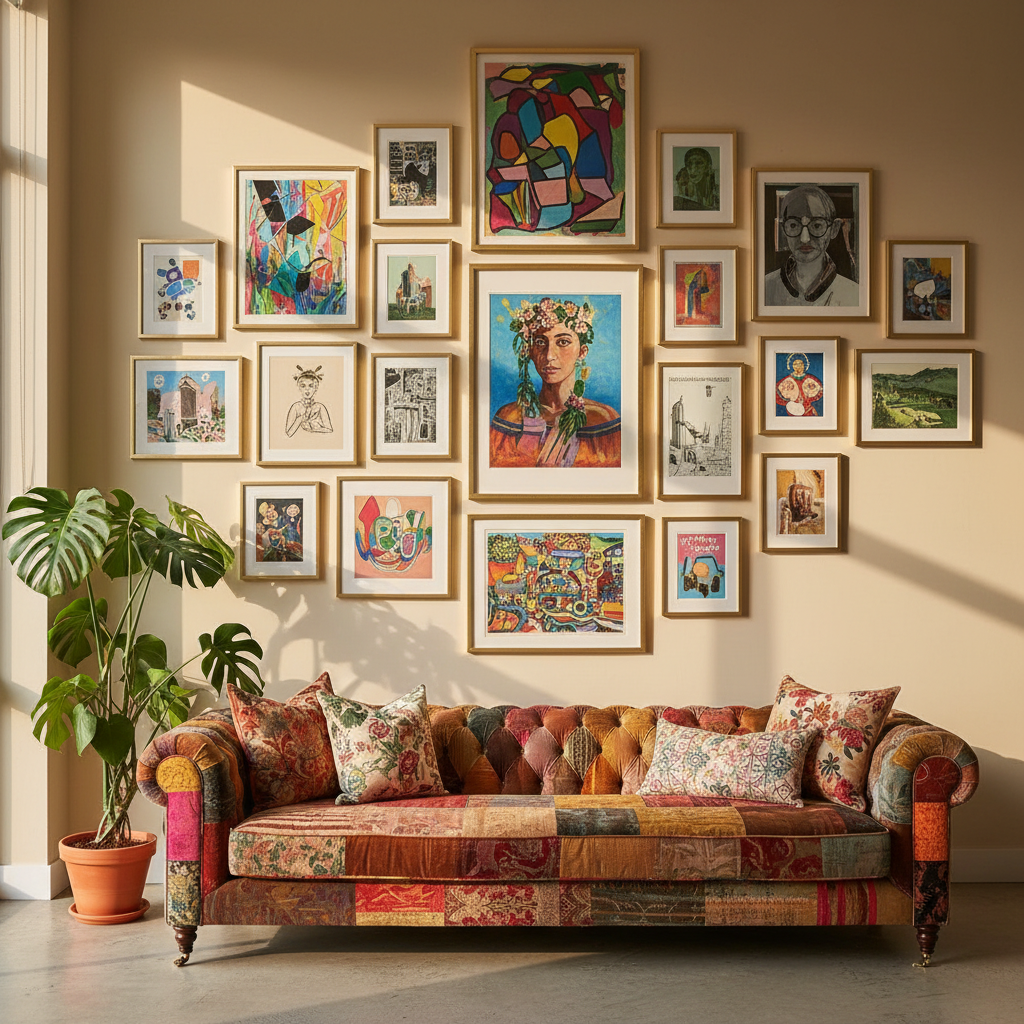
- Create a gallery wall with rules, repeat frame color (all black, all brass, or all wood) even if art styles vary.
- Layer lighting, one overhead, one floor lamp, one table lamp, mixed shapes but similar warmth (soft white bulbs).
Bedroom
- Try a bold headboard or a painted arch behind the bed, it reads dramatic without adding clutter.
- Go “quiet” on sheets, go bold on quilt, throw, and pillows, it’s easier to edit later.
- Add one unexpected material, like a glossy nightstand, a pleated shade, or a velvet bench.
Kitchen and dining
- Swap in colorful dining chairs with a neutral table, the contrast looks intentional.
- Use open shelving carefully, repeating shapes helps (same glassware style, same plate color).
- Art in the kitchen counts, especially if your cabinets are plain.
Bathroom
- Wallpaper one wall, keep the rest calmer, small rooms can handle bold patterns if you commit.
- Change the mirror and lighting before changing tile, it often gives a bigger payoff.
A Practical Shopping + Styling Plan (So You Don’t Overbuy)
This is where a lot of bold decorators get tripped up, the cart fills faster than the room can absorb. A plan keeps you from buying “pretty” but incompatible items.
| Step | What you choose | Why it helps |
|---|---|---|
| 1 | One anchor (rug, art, wallpaper, sofa) | Sets direction, prevents random additions |
| 2 | Two repeating colors | Creates cohesion across different objects |
| 3 | One pattern family (stripe, floral, geometric) | Makes mixing feel curated, not chaotic |
| 4 | Three textures | Adds depth without adding visual clutter |
| 5 | Finish with small “spark” items | Lets you adjust after the big pieces land |
Key point: buy big pieces slower than you think, but buy art faster than you think. Art is often what makes maximalism feel like a point of view.
Mistakes to Avoid (Even If You Love “More”)
These are the edits that separate a bold home from a stressful one.
- Skipping function: if you can’t set down a coffee mug, the room won’t feel welcoming.
- Overusing novelty prints: a little goes a long way, too many can read juvenile.
- Forgetting the floor: floors are a massive visual surface, rugs do more work than many realize.
- Buying sets: maximalism looks better when pieces have different origins, match by color or material instead.
- Not editing shelves: shelves need negative space, group items in odd numbers, vary height.
According to the U.S. Consumer Product Safety Commission, tip-over accidents can be reduced by anchoring dressers and tall furniture, which matters more in homes with kids or pets. If you add heavier objects up high, it’s worth reassessing stability, and if you’re unsure, a qualified installer can help.
Conclusion: Make It Bold, Then Make It Yours
Maximalism gets satisfying when you stop trying to prove you’re “good at it,” and start repeating the few things you genuinely like, color cues, materials, art subjects, even a certain kind of lamp.
If you want a clean next step, pick one anchor item this week, then build a small set of repeats around it. Your room will still feel bold, just without the headache.
FAQ
How do I start maximalist home decor if I rent?
Go for reversible moves, oversized art, bold rugs, layered curtains, peel-and-stick wallpaper in smaller areas, and statement lighting with plug-in options. The key is choosing one anchor and repeating its colors.
What colors work best for maximalism in small rooms?
Both bright and dark can work, small rooms often look great with confident color. If you worry about overwhelm, keep the palette tighter and use texture to add depth instead of adding more hues.
Can I mix different decor styles, like modern and vintage?
Yes, that mix is often what makes maximalism feel real. Use a unifier, repeat metals, keep a consistent wood tone, or echo one color across modern and vintage pieces.
What’s the easiest “bold” upgrade with the biggest visual payoff?
A large rug or a big piece of art usually changes the room fastest. Pillows and accessories help, but they rarely fix a room that lacks a strong base.
How do I mix patterns without making it look messy?
Start by varying scale, one large, one medium, one small, and repeat at least one color across all patterns. If it still feels loud, reduce the number of pattern types.
Is maximalism just clutter with better marketing?
It can be, if there’s no edit. Maximalism still uses intention, spacing, and a visual hierarchy. If items don’t have a place, or you avoid looking at certain corners, that’s a sign it needs trimming.
How many accent colors is too many?
In many homes, more than two or three accents gets hard to control unless your dominant and supporting colors stay consistent. If you love lots of colors, keep them inside art and textiles rather than everywhere.
If you’re trying maximalist home decor bold ideas and you want a more streamlined way to choose colors, patterns, and anchor pieces, a simple room plan or mood board can save time and help you buy fewer things you later regret.