
Small space walk in closet with double hanging rods is one of the fastest ways to gain usable storage without building a bigger closet, but it only works if rod heights, clearances, and your clothing mix actually match. Done right, you double your hanging capacity and stop fighting piles on the floor.
The catch is that “double hanging” isn’t a one-size-fits-all hack. If you hang long dresses, keep bulky coats, or share the closet with a partner, the wrong layout can make the space feel tighter, not smarter. The goal is simple: store more while keeping a clean visual lane so you can find things quickly.

In this guide, you’ll get practical rod-height ranges, a quick self-check to pick the right configuration, and a few layout patterns that work in tight walk-ins. I’ll also point out the mistakes that waste the most space, including a few that look great on Pinterest but disappoint in real closets.
Why double hanging works in small walk-ins (and when it doesn’t)
Most walk-in closets waste vertical space. A single rod leaves a big “air gap” under short garments like shirts, blouses, and folded-over pants. A second rod turns that empty zone into storage.
Double hanging is usually a good fit when:
- You own lots of short-to-medium length items: tops, skirts, folded pants, kids’ clothes.
- Your closet depth is standard (many are around 24 inches deep), so hangers sit correctly without rubbing doors or shelves.
- You can keep a reasonable walkway so clothes aren’t brushing you every time you turn.
It’s often a poor fit when your wardrobe is heavy on long garments. If half your closet is dresses and long coats, double hanging can still work, but usually only on one wall, with a separate long-hang zone elsewhere.
According to the National Association of Home Builders (NAHB), storage planning is most effective when it’s tailored to how a homeowner actually lives, not just what looks tidy in a showroom. Closets are the same story: design around what you hang most.
A quick self-check: is your closet a good candidate?
Before you buy rods and brackets, take 10 minutes to measure and sort your clothing types. This is where most people skip ahead and regret it.
Measure three things
- Back wall width and each side wall width (in inches).
- Depth from wall to the front edge of shelf/door (you want enough space for hangers).
- Clear walkway (comfortable movement matters more than people admit).
Count by category (rough is fine)
- Short hang: shirts, jackets, folded pants
- Medium hang: skirts, blazers, some uniforms
- Long hang: dresses, coats, jumpsuits
- Non-hang: shoes, bags, sweaters you fold
If 60%+ of your hanging items are short or medium, a small space walk in closet with double hanging rods tends to pay off. If long hang dominates, plan for a mixed system: one double-hang section plus one long-hang section.
Rod heights and spacing that usually feel “right”
Most frustrations with double rods come down to one issue: heights that look logical on paper but cause hems to bunch, hangers to collide, or clothes to drag.
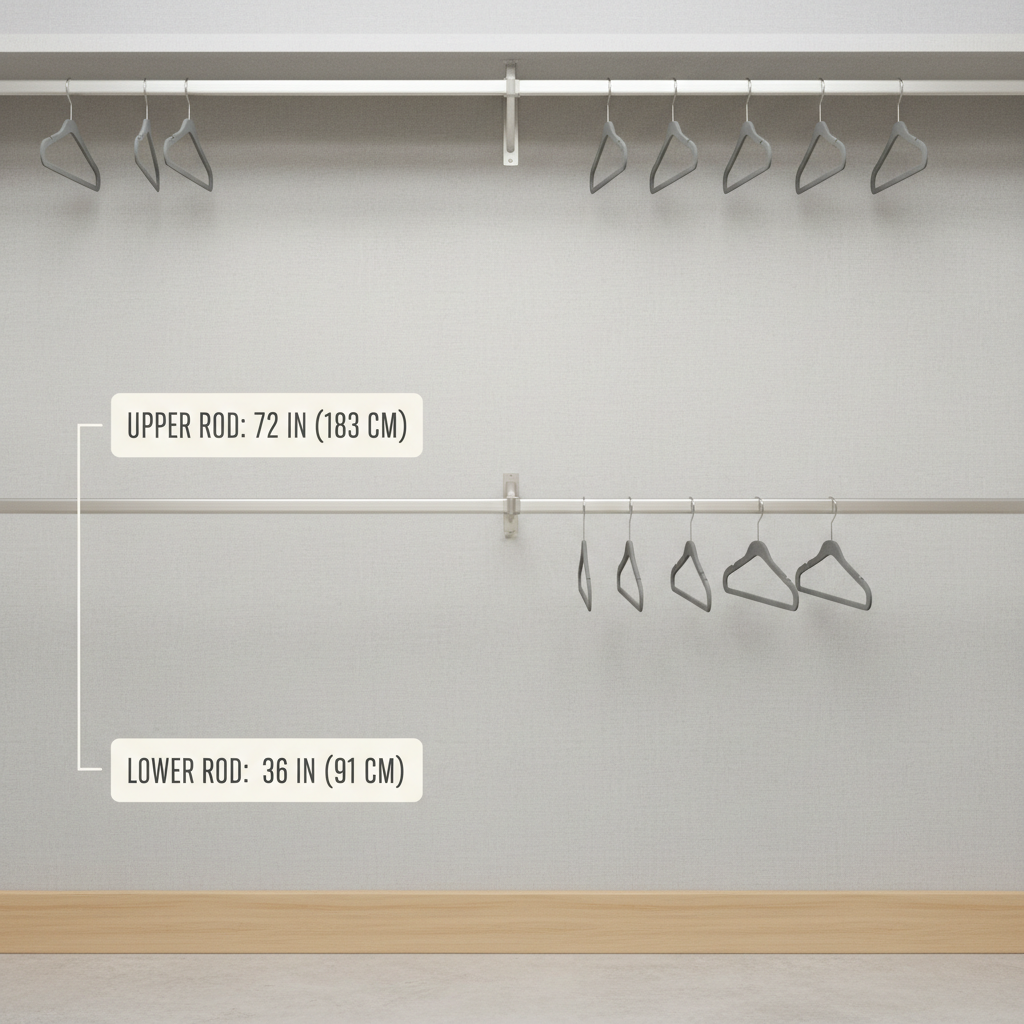
Typical starting ranges many organizers use (adjust for your height and hanger style):
- Upper rod: about 80–84 inches from floor
- Lower rod: about 40–42 inches from floor
- Space between rods: often 38–42 inches
Two quick rules that prevent most headaches:
- If you hang shirts on top, keep enough drop so the bottom hem does not touch hangers below.
- If you hang pants below, folded-over pants need less height, which can let you lower the bottom rod slightly and gain shelf space above.
When you can, mock it up with painter’s tape on the wall and hang 5–10 real items. It’s unglamorous, but it beats drilling twice.
Layout patterns that work in tight walk-in closets
In a small walk-in, layout is less about perfection and more about avoiding bottlenecks. Here are a few patterns that typically hold up in real homes.
One double-hang wall + one long-hang zone
Use double rods on the wall that holds the bulk of short items, then reserve a corner or the back wall for long garments. This is a common “best of both worlds” approach for couples.
Double-hang on both sides, shelves on the back
If your wardrobe is mostly short hang, this can maximize capacity while keeping the back wall for folded items, bags, and bins. It’s also easier to keep visually calm because you group categories.
Double-hang below, shelf above, slim shoe zone near the floor
This works when you need shoes inside the closet but can’t sacrifice the walkway. A shallow shoe shelf or angled shoe rails near the base can be enough without turning the floor into a pile.
Picking components: rods, brackets, shelves, lighting
A small space walk in closet with double hanging rods fails when hardware sags, rods spin, or shelves block your hangers. You don’t need luxury systems, but you do want the right parts for the load.
- Rod material: thicker metal rods resist bowing better than thin tubing; wood can look great but varies by system.
- Center supports: longer spans often need a middle bracket to prevent sag, especially with heavier coats.
- Shelf depth: too deep above a rod can make hangers awkward to grab; choose depth that matches your reach and hanger clearance.
- Lighting: bright, even light helps you keep categories organized. According to the U.S. Department of Energy, LEDs typically use less energy than traditional bulbs and run cooler, which can be helpful in enclosed spaces.
If you’re renting or avoiding major holes, tension systems and freestanding frames can work, but they usually trade stability for convenience. For heavy daily use, anchored brackets tend to feel more solid.
Planning table: match the setup to your wardrobe
Use this as a simple decision aid. It’s not “the” answer, but it helps narrow choices fast.
| Wardrobe mix | Recommended setup | What to watch for |
|---|---|---|
| Mostly shirts + folded pants | Double rods on primary wall(s) | Leave enough space between rods so hems don’t tangle |
| Balanced: shirts, pants, some dresses | One double-hang section + one long-hang section | Don’t “borrow” long-hang space for bins, you’ll lose it quickly |
| Lots of dresses/coats | Mostly long-hang + a small double-hang zone | Double hanging can create clutter if it forces long items to fold |
| Shared closet (two adults) | Zoned walls (his/hers) + shared long-hang | Agree on category rules, otherwise “misc” takes over |
Step-by-step: set up double hanging rods without wasting space
Here’s a practical sequence that keeps you from painting yourself into a corner.
- 1) Edit before you install. You don’t need to become a minimalist, but remove obvious non-wear items so measurements reflect reality.
- 2) Assign zones. Pick which wall gets double hanging and which area stays long-hang or shelves.
- 3) Confirm heights with real clothes. Tape lines, hang garments, open any doors, and check reach.
- 4) Install upper rod first. It sets the geometry for shelves and the lower rod.
- 5) Add the lower rod, then shoes/bins. Keep the floor as clear as possible, floor clutter is what makes walk-ins feel tiny.
- 6) Finish with labels and spacing. A few inches between categories is often more useful than cramming one extra hanger.
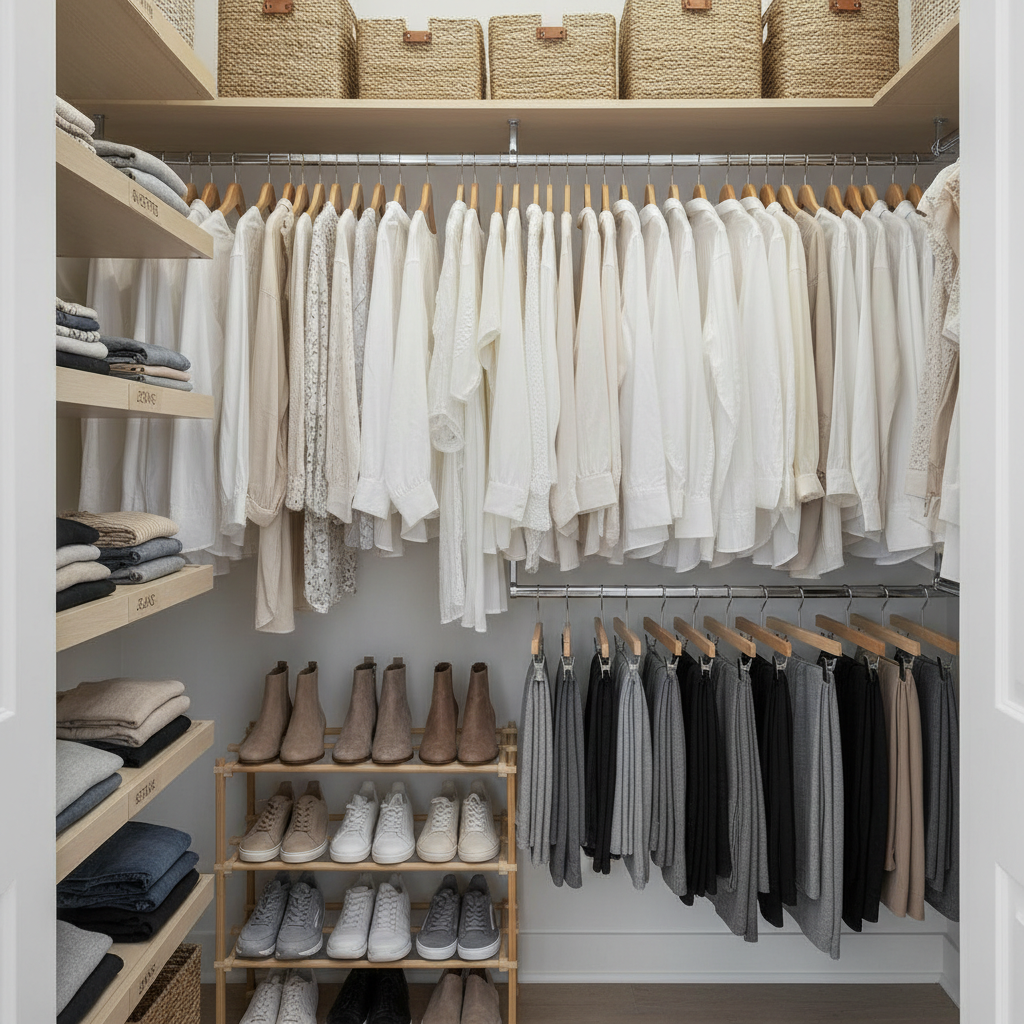
Common mistakes (the ones that quietly ruin the closet)
These are the problems that show up a week after install, when you’re annoyed and nothing “fits” the way you expected.
- Forgetting hanger thickness. Velvet hangers, wood hangers, and plastic hangers eat space differently, and a tight rod fills up fast.
- Putting double rods everywhere. Many closets need at least one long-hang area, even if it’s small.
- Overbuilding shelves above the rods. If the shelf blocks your hand, you stop using the rod properly.
- Ignoring daily workflow. If your “work clothes” live behind occasion wear, you’ll create piles because it’s faster than searching.
- Skipping support brackets. Sagging rods turn into jammed hangers and wrinkled clothes.
Key takeaways (save this before you shop)
- A small space walk in closet with double hanging rods works best when short-hang items dominate your wardrobe.
- Rod heights matter more than brands; test with real garments before drilling.
- Plan at least one long-hang zone if you own dresses or long coats.
- Stability beats gimmicks: proper brackets and center supports prevent sag.
- Keep the floor clear, it’s the easiest way to make a small walk-in feel bigger.
Conclusion: make the closet feel bigger by making choices
If your closet feels cramped, it’s usually not because you “need more space,” it’s because the space is doing too many jobs at once. Double hanging rods can be a clean fix when your wardrobe fits the format, and a frustrating one when it doesn’t.
Your next move is simple: measure the closet, count your long-hang items, then commit to one wall for double hang and protect a long-hang zone if you need it. If you do those two things, the rest becomes a lot easier.
FAQ
What is the ideal height for double hanging rods in a small walk-in closet?
Many setups land around 80–84 inches for the upper rod and 40–42 inches for the lower rod, but your clothes matter more than the “standard.” Test with the longest shirt and the bulkiest hanger you use.
Can double hanging rods work if I have a lot of dresses?
Yes, but usually not across the entire closet. Most people do better with one dedicated long-hang section, then use double hanging where short items live.
How deep should the closet be for hangers to fit comfortably?
Many closets are built around a depth that supports standard hangers, but in tight spaces you should confirm the hanger doesn’t rub the door or shelves. If it’s close, slim hangers and shallower shelving can help.
Is it better to put the double rods on the side walls or the back wall?
Side walls often work well because they keep the back wall available for shelves or a long-hang zone. The “best” choice depends on your door swing and the clearest walkway.
Do I need a center support bracket for closet rods?
If a rod spans a longer distance or holds heavier clothing, a center support is commonly recommended to reduce sag. Check the hardware manufacturer’s guidance for span limits and mounting requirements.
What hangers save the most space with double rods?
Thin, consistent hangers typically pack more neatly and keep rows aligned, which makes a small closet feel calmer. Just avoid ultra-flimsy options for heavy items.
What if I rent and can’t drill into studs?
Freestanding systems or tension-based options can work, but they may hold less weight and shift over time. If you’re unsure what your walls can handle, it’s reasonable to ask a contractor or building maintenance for guidance.
If you’re trying to plan a small space walk in closet with double hanging rods and want a faster path, start with a quick sketch plus three measurements, then choose a layout pattern from this guide and shop only for the components that match that plan, it saves money and avoids the “random organizer parts” trap.