
Small space reading corner with floor cushion setups work best when you treat them like a “micro-room”, not a random cushion on the floor. In a tight apartment or shared home, that difference shows fast: the nook either feels calming and usable, or it turns into clutter you step around.
The good news is you don’t need built-ins or a big budget. What you do need is a few clear decisions about placement, posture comfort, lighting, and where your book stack goes so it doesn’t migrate across the room.
I’ll walk through what tends to go wrong in small reading corners, how to quickly diagnose your space, and a practical plan for building a floor-cushion nook that still looks “designed” in 2026, even if it’s squeezed beside a bed or between a sofa and a window.
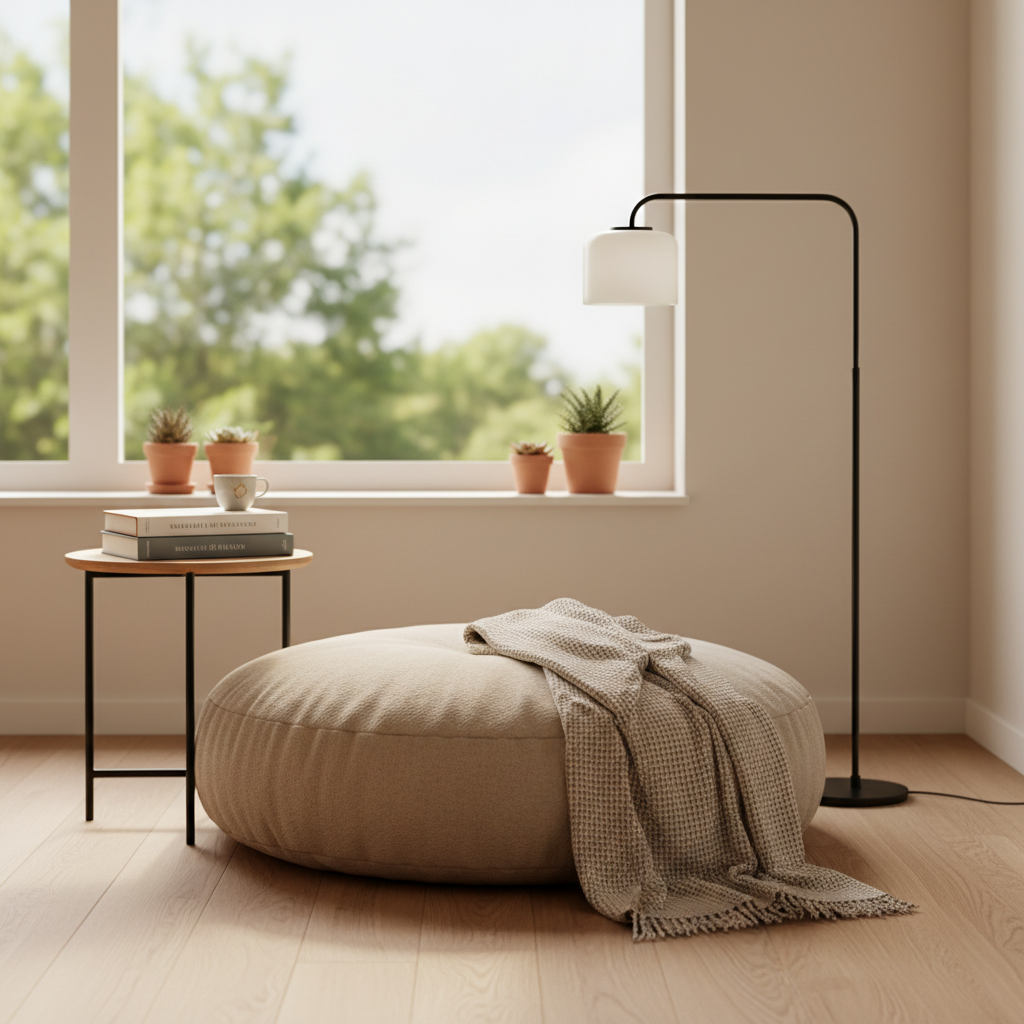
Why small reading corners feel “off” (and what usually causes it)
Most “it’s not cozy” complaints come from a few predictable issues. Not because you chose the wrong cushion, but because the corner doesn’t support real reading time.
- No posture support: a floor cushion without back support looks cute, then your shoulders start doing the work.
- Bad light: overhead lighting creates glare and shadows on pages, and many corners end up dim at night.
- Nowhere for the in-between stuff: phone, tea, glasses, Kindle, a throw, two current reads, and suddenly the floor becomes storage.
- Wrong scale: a bulky chair or oversized cushion makes the whole room feel smaller, even if it “fits”.
- Traffic path conflict: if you’re constantly shifting the cushion to walk through, you’ll stop using it.
According to the American Optometric Association (AOA), appropriate lighting can help reduce eye strain during near work. That matters here because reading corners often get less light than your main living area.
A quick self-check: what kind of nook can your space realistically support?
Before shopping, do a fast reality check. This saves you from buying a beautiful cushion that becomes a laundry landing zone.
2-minute measurement checklist
- Clear floor area: can you mark out at least about 30" x 30" for sitting plus a little elbow room?
- Back support option: is there a wall, sofa side, or sturdy surface you can lean against?
- Light source: do you have an outlet within reach for a lamp, or reliable daylight nearby?
- Small surface: can a narrow stool, plant stand, or wall shelf fit without blocking the walkway?
- Storage spot: where will 5–10 books live when you’re not reading?
Pick your nook type (most common in US apartments)
| Space you have | Nook style that works | What to avoid |
|---|---|---|
| Window corner, 2–3 ft wide | Floor cushion + wall shelf + floor lamp | Deep chair that blocks curtains or vent |
| Beside sofa | Floor cushion that tucks under side table | Scatter pillows with no “home” |
| Bedroom end-of-bed area | Low cushion + backrest pillow + clip lamp | Placing it where drawers need to open |
| Under stairs / awkward nook | Custom-ish: layered rug + cushion + sconce | Too-dark corners without a dedicated light |
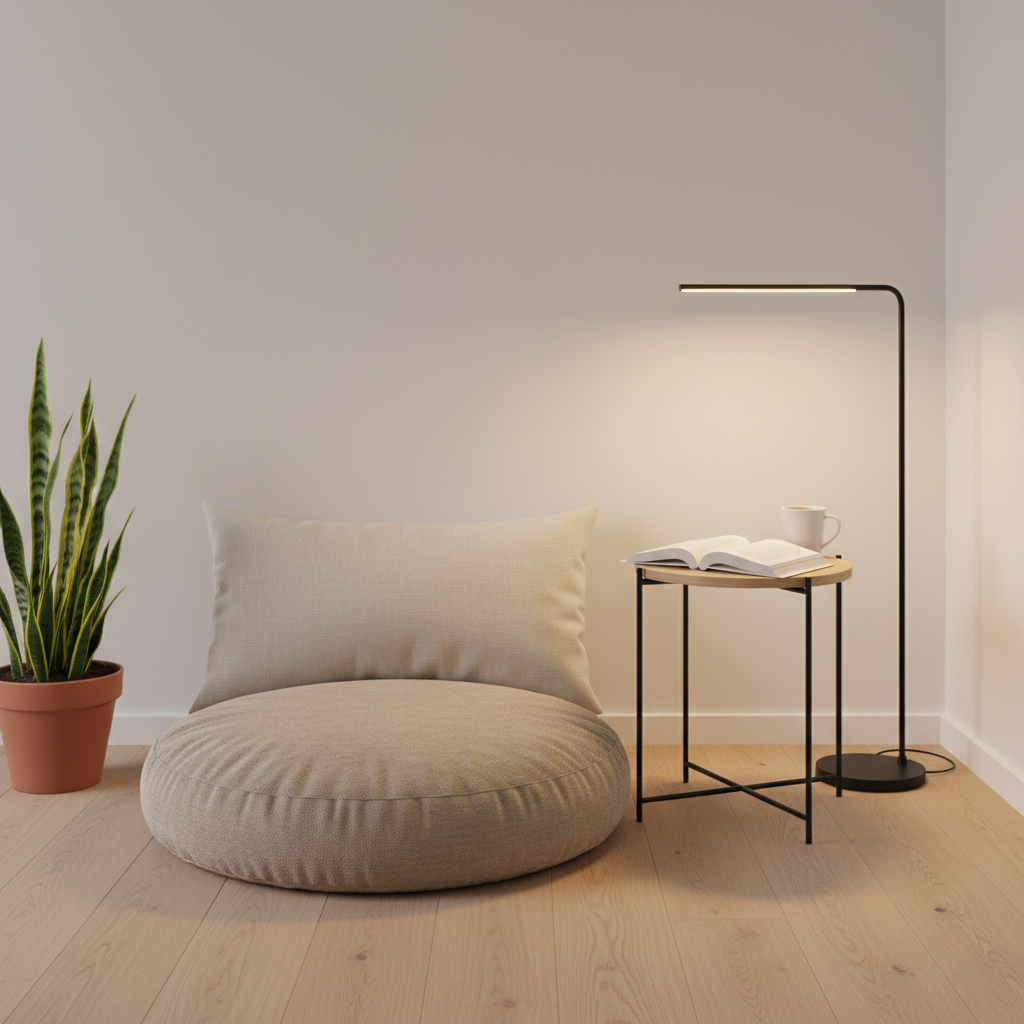
Design principles that make a floor-cushion corner feel intentional in 2026
Trends shift, but what reads as “finished” stays pretty consistent: visual boundaries, controlled clutter, and one or two materials that repeat elsewhere in your room.
1) Create a boundary (without building anything)
- Rug as an anchor: even a 2x3 or 3x5 rug signals “this is a zone”.
- Wall moment: one small art piece, a picture ledge, or a narrow shelf keeps the corner from looking temporary.
2) Keep the color story simple
- Pick one neutral base (cream, gray, warm tan) and one accent (olive, terracotta, navy).
- If your room already has patterns, choose a solid floor cushion and let the room do the talking.
3) Choose “low visual weight” pieces
- Leggy side tables, slim lamps, and wall shelves make a small space feel less packed.
- A chunky cushion can still work, but keep everything else lighter.
How to build your small reading corner step-by-step (without overbuying)
This is the part people skip. They buy the cushion first, then realize they still don’t like sitting there. Build the corner around comfort and use.
Step 1: Get the sitting setup right
- Floor cushion thickness: many people feel better with a thicker cushion, but the “right” height depends on hip/knee comfort.
- Add back support: a structured backrest pillow, a meditation back support, or even a firm sofa cushion against the wall.
- Consider an alternate posture: if cross-legged bothers your knees, set up for legs-extended with a second cushion under knees.
If you deal with persistent joint pain, numbness, or recurring discomfort, it may be worth checking with a medical professional or physical therapist for posture guidance. Comfort is personal and sometimes there’s more going on than “wrong cushion.”
Step 2: Fix lighting like you mean it
- Night reading: use a floor lamp or wall-mounted plug-in sconce so the light comes from the side, not straight overhead.
- Bulb choice: many readers prefer warm-white for coziness, but if you fall asleep mid-page, a slightly cooler bulb can feel more alert.
- Glare check: sit down with a book at night, then adjust lamp position until shadows stop cutting across the page.
Step 3: Add one surface, then stop
- A small side table, narrow stool, or wall shelf handles the essentials: drink, bookmark, charger.
- If you’re tight on space, try a C-table that slides partly over the cushion.
Step 4: Give clutter a “home”
- One basket for throws, magazines, and the extra pillow, so the corner resets in 30 seconds.
- One book limit: keep 5–10 books max in the nook, rotate the rest elsewhere.
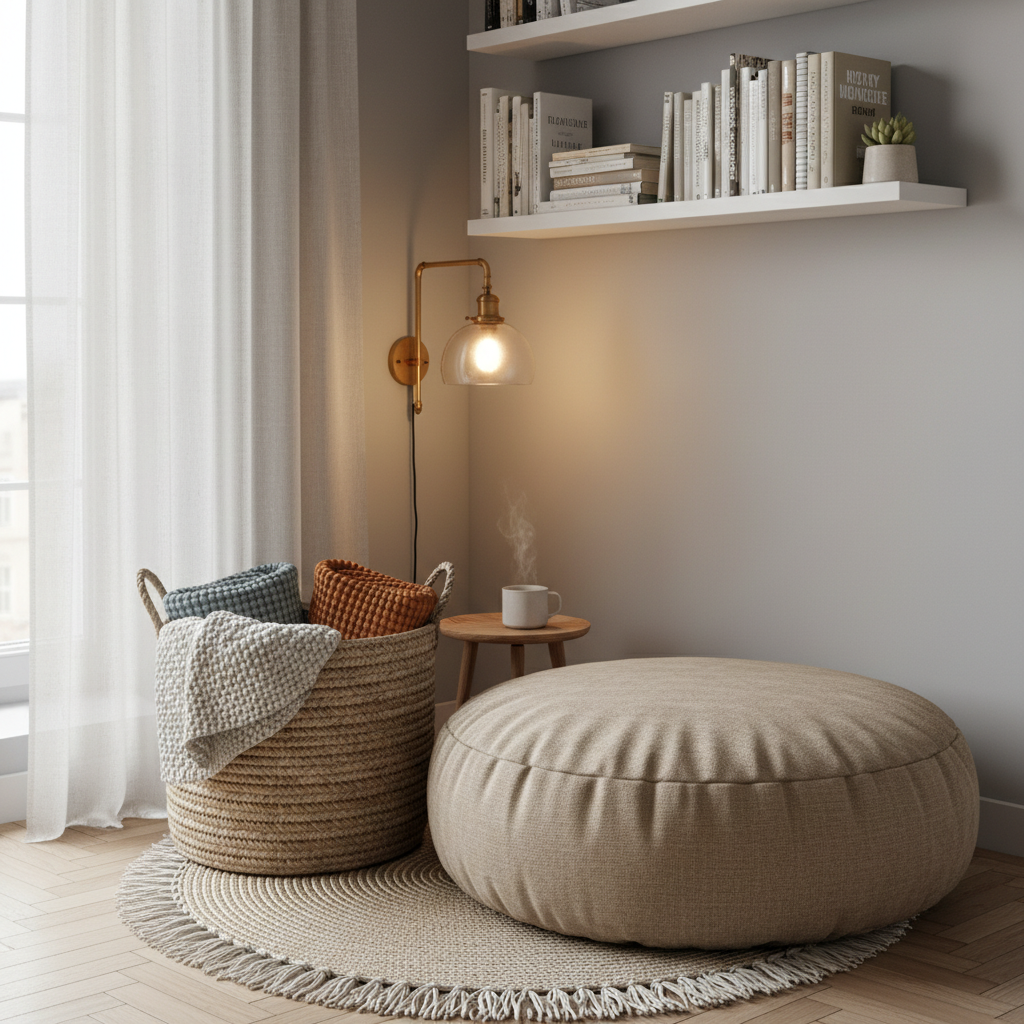
Smart product picks: what matters most (and what’s mostly hype)
You can spend a lot here, but you don’t have to. Focus on the parts that affect comfort and daily usability.
Floor cushion features worth paying attention to
- Fill and rebound: cushions that bottom out fast feel good for a week, then become frustrating.
- Cover fabric: textured weaves hide wear better than smooth fabrics, and removable covers make real life easier.
- Grip: if your cushion slides on hardwood, add a rug pad or choose a grippier base.
Things that often disappoint in small spaces
- Oversized “lounger” cushions that swallow the whole corner.
- Open shelving everywhere, if you already struggle with visual clutter.
- Decor-only lamps that look great but don’t light the page.
Key takeaways (save this)
- Comfort beats aesthetics for a reading nook you’ll actually use.
- Back support + side lighting fixes most “this corner feels wrong” problems.
- One surface, one basket keeps a small setup from turning messy.
Common mistakes to avoid (because they’re easy to repeat)
Some problems are sneaky. The corner looks fine in a photo, but you stop sitting there after a few days.
- Putting the nook where you pass through: if you have to move the cushion to vacuum or open a door, it won’t last.
- Ignoring temperature and drafts: window corners can feel chilly; a throw nearby can be the difference between “cozy” and “nope”.
- Over-styling with too many small items: small spaces look cluttered faster, so choose fewer, larger accents.
- Forgetting charging: if you read on a tablet or Kindle, plan a cable route that doesn’t become a trip hazard.
Conclusion: a small corner can still feel like your favorite seat
A small space reading corner with floor cushion isn’t about squeezing furniture into a leftover gap, it’s about making a tiny zone that supports one activity really well. Once the cushion has back support, the lighting hits the page, and your “reading mess” has a home, the corner starts to feel like it belongs in your room, not like an afterthought.
If you want a simple next step, pick the location first, then add only three things: a supportive cushion setup, a real reading light, and one small surface. Live with it for a week, and adjust from there.
FAQ
- How do I set up a small space reading corner with floor cushion without hurting my back?
Most people do better with back support against a wall plus a firm pillow or backrest, and a cushion thick enough that hips aren’t lower than knees. If pain persists, consider professional advice. - What size rug works for a tiny reading nook?
A small rug that fits under the cushion and a bit of foot space is usually enough to define the area. The goal is a visual boundary, not wall-to-wall coverage. - Is a floor cushion reading corner okay for kids?
Often yes, because it’s low and flexible, but keep an eye on tripping hazards, cords, and any unstable shelving. Safety needs vary by age and home layout. - Where should I place my reading corner in a studio apartment?
Window corners and the side of a sofa are common wins. Try to avoid the main walkway so you’re not constantly moving the setup. - What lighting is best for reading in a corner at night?
A dedicated lamp positioned to the side usually reads better than overhead light. According to the American Optometric Association (AOA), appropriate lighting can help reduce eye strain for near tasks. - How do I keep a reading nook from looking cluttered?
Limit the “in-nook” book count, add one basket for soft items, and commit to a single surface for the daily essentials. Small spaces reward clear rules. - Can I make a reading corner without a side table?
You can, but it’s harder to maintain. A wall shelf, a narrow stool, or a C-table often solves the “where do I put my drink” problem without eating floor space.
If you’re setting up a nook and want it to look cohesive without trial-and-error shopping, a curated set that pairs a supportive floor cushion with a slim lamp and a compact table can save time, especially in smaller US apartments where every inch has to earn its keep.