
How to clean wooden deck from mold and algae usually comes down to two things, using the right cleaner for what you’re seeing, and not scrubbing or pressure-washing so aggressively that you scar the wood.
If you’ve noticed black specks in shady corners, green film near planters, or a slick feeling after rain, you’re not alone. Besides looking bad, this growth can make a deck slippery and can shorten the life of stain or sealer if it keeps coming back.
I’m going to walk you through how to tell mold from algae, what to use based on your deck type, and a practical step-by-step process that works for most U.S. backyard decks. I’ll also call out the mistakes that quietly ruin boards, because that’s where people get burned.
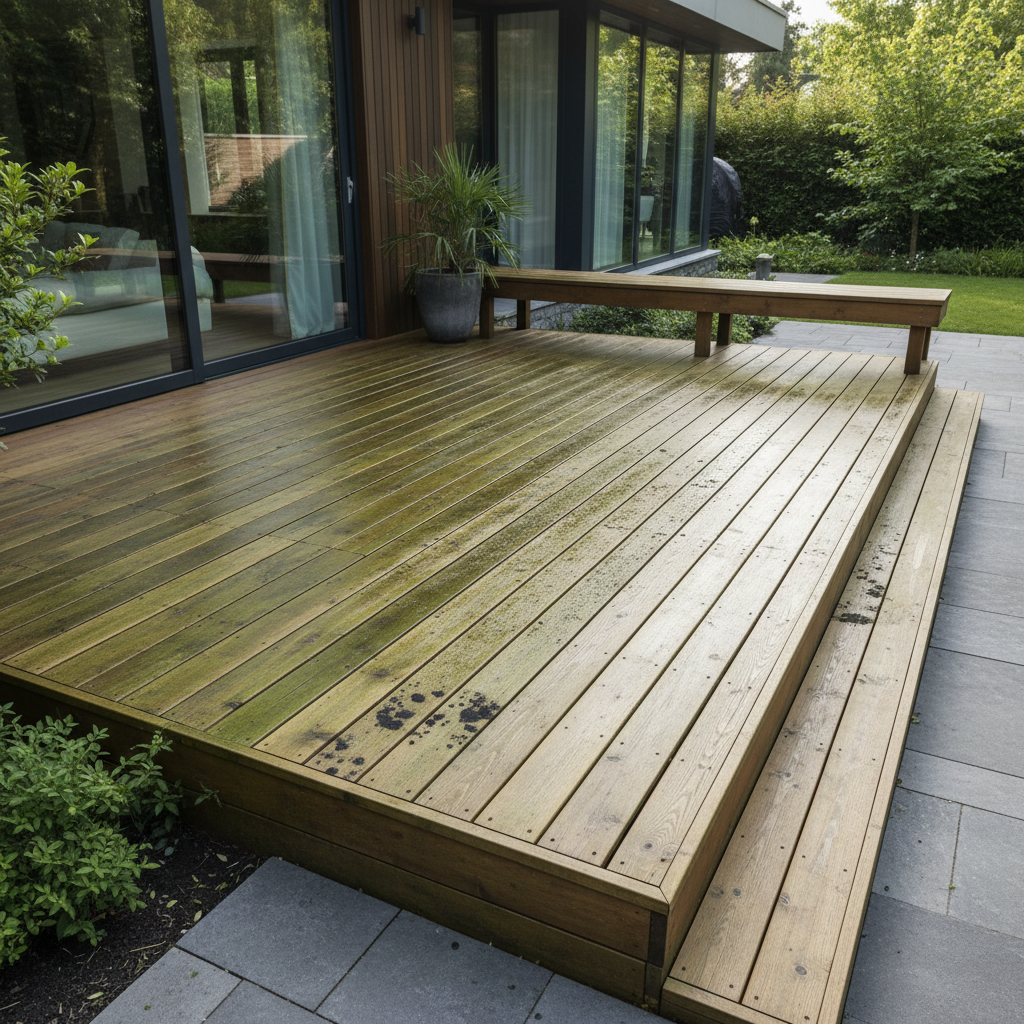
What you’re looking at: mold vs. algae (and why it matters)
Mold and algae often show up together, but they don’t always respond the same way to cleaners, and they can signal different moisture problems.
- Algae: usually green, sometimes brownish, tends to form a thin film and feels slick. It loves constant moisture and shade.
- Mold/mildew: often black or dark gray specks or patches, can look “stained” into the grain. It thrives on organic debris and damp wood.
- Other look-alikes: tannin stains, iron/rust stains, or old stain failure can mimic dark spotting. If a spot doesn’t lighten at all with mild cleaning, it might not be living growth.
Why care? If you treat everything like “mold” and jump straight to harsh bleach, you might lighten the surface while leaving roots and spores behind, and you may weaken wood fibers if you overdo it.
Quick self-check: do you need a simple clean, or a deeper reset?
Before buying products, do a fast reality check. This keeps you from using a sledgehammer on a thumbtack.
- Light film, no staining: algae haze that brushes off, minimal dark spotting.
- Moderate growth: slick areas, visible patches, returns every season.
- Heavy or recurring: black staining that stays after cleaning, widespread slickness, damp conditions that never change.
If boards feel soft, spongy, or splinter easily, cleaning alone won’t solve the underlying issue, and you may want a contractor to check for rot or drainage problems.
Choosing a deck cleaner: what works, what can backfire
You’ll see three common routes in the U.S., oxygen bleach cleaners, chlorine bleach mixes, and commercial deck washes. The “best” choice depends on your deck finish and how severe the growth looks.
According to the U.S. Environmental Protection Agency (EPA), mold cleanup should focus on removing the mold and controlling moisture, and people should take appropriate precautions to reduce exposure during cleaning.
Cleaner options at a glance
| Option | When it’s a good fit | What to watch out for |
|---|---|---|
| Oxygen bleach (sodium percarbonate) | Most routine deck cleaning, algae film, mild-to-moderate mold | Needs dwell time; can dry out if you work in hot sun |
| Chlorine bleach mix | Stubborn surface mold in small areas, fast visual brightening | Can harm plants, lighten wood unevenly, doesn’t always penetrate; never mix with ammonia/other cleaners |
| Commercial “deck wash” (varies) | When you want a labeled product for your deck type and finish | Read compatibility notes for stained/sealed wood and nearby landscaping |
| Pressure washing (tool, not cleaner) | Rinsing after chemicals, or careful cleaning by experienced users | Easy to etch wood, raise grain, and create fuzzy boards if pressure is too high |
Friendly rule: if you’re unsure what finish you have, start with the gentler option, then escalate only if results are clearly not enough.
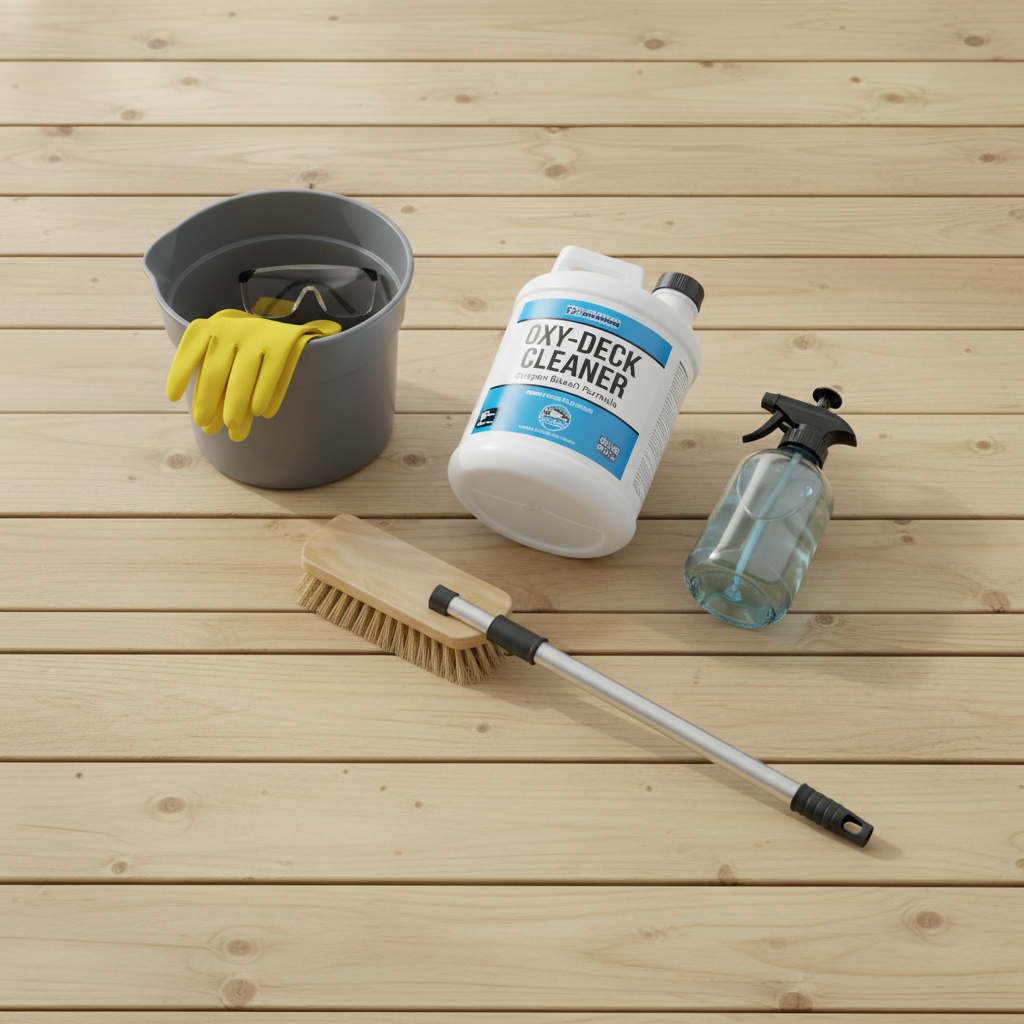
Step-by-step: how to clean a wooden deck from mold and algae
How to clean wooden deck from mold and algae goes smoother when you treat it like a small process, not one giant scrub session. Plan for 60–120 minutes for an average deck, plus drying time.
1) Prep the area (this is where most “why did it stain?” problems start)
- Sweep thoroughly, especially in corners and between boards where leaves collect.
- Move planters and furniture, then rinse loose dirt with a garden hose.
- Protect plants by lightly pre-wetting them and covering delicate beds if you’re using any stronger cleaner.
Work on a cloudy day or when the deck stays shaded, cleaners drying too fast is a common reason for patchy results.
2) Apply cleaner evenly
- Use a pump sprayer or watering can, and apply in manageable sections, like 6x6 feet.
- Keep the surface damp so the product can work, especially with oxygen bleach.
- Follow label directions for dilution and dwell time, because formulas vary a lot.
If you’re mixing anything yourself, keep it simple and never combine products. If there’s any doubt, stick to a ready-to-use deck cleaner.
3) Agitate with the right brush (not wire)
- Use a stiff nylon brush or a deck brush on a pole.
- Scrub with the grain, and focus on slick zones where algae clings.
- Avoid wire brushes, they can shred softwood and leave metal bits that rust.
4) Rinse thoroughly
- Rinse from the house outward so you don’t trap dirty runoff in corners.
- If you use a pressure washer, keep pressure conservative and use a wider fan tip, then stay moving. A “clean stripe” that looks impressive in the moment can become a permanent texture change.
After rinsing, walk the deck carefully, any remaining slick patch usually needs a second pass rather than harder blasting.
5) Let it dry, then reassess
Give it at least 24–48 hours to dry before you judge color and staining. Damp wood can look worse than it is, and you don’t want to rush into sanding or re-staining too early.
After-cleaning moves that keep mold and algae from coming right back
Cleaning fixes today’s problem, but recurrence is usually about moisture and shade management. That part sounds boring, but it’s what reduces repeat work.
- Improve airflow: trim back plants touching the deck, and avoid storing items tight against railings.
- Control debris: quick sweeping every week or two during wet seasons helps a lot, since leaves feed growth.
- Check downspouts: a single splash zone can keep one area constantly wet, and that’s where algae wins.
- Consider re-sealing: once fully dry, a compatible sealer can reduce water absorption. This is most useful if your previous finish has worn thin.
If you’re planning to stain, confirm the deck is clean and dry enough for coatings, many products need a moisture range and specific cure windows.
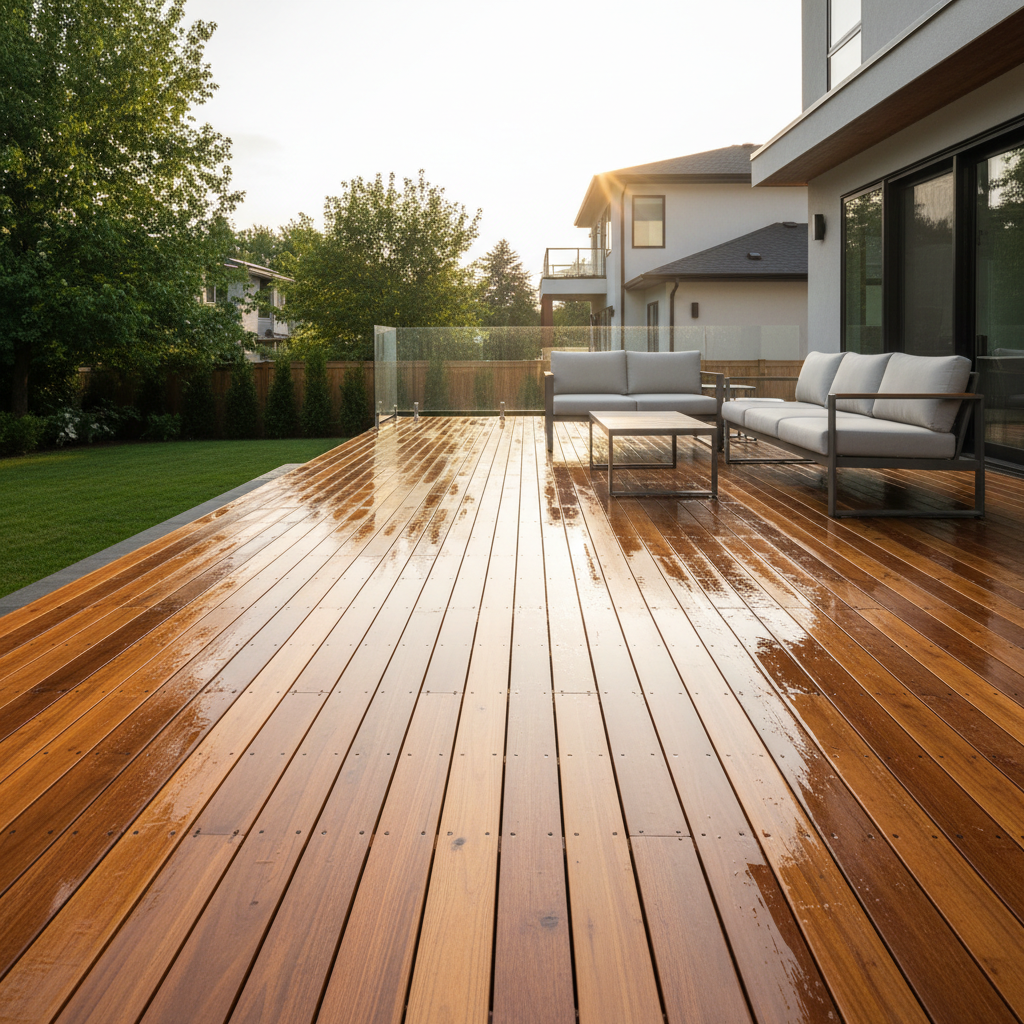
Common mistakes that waste time or damage wood
- Over-bleaching: it can brighten, but may not remove the underlying growth, and it can stress wood fibers if repeated often.
- Skipping dwell time: scrubbing immediately often means you work harder for less result.
- Pressure too high: etched boards hold water and dirt more easily, which can make future algae worse.
- Not rinsing enough: leftover cleaner can interfere with stain adhesion and may leave a chalky feel.
- Ignoring the moisture source: if sprinklers soak one corner daily, you’ll be back here soon.
When it’s worth calling a pro (or at least getting advice)
If you have widespread black staining that doesn’t lighten after a careful cleaning, or you suspect rot, structural issues, or water intrusion near the house, it’s smart to consult a deck professional. For health concerns, especially if someone in the home has asthma or mold sensitivity, consider asking a qualified specialist what precautions make sense for your situation.
Also, if your deck is older cedar/redwood with a fragile surface, a pro who knows how to avoid furring and gouging may save you money compared to fixing damage after an aggressive DIY wash.
Key takeaways
- Identify the growth: algae usually equals slick film, mold often equals dark spotting, and both love moisture.
- Start gentle: oxygen bleach cleaners cover most normal cases without being overly harsh.
- Technique matters: even application, dwell time, and thorough rinsing beat “stronger chemicals” most days.
- Prevent recurrence: airflow, debris control, and fixing constant wet zones reduce repeat outbreaks.
Conclusion: a cleaner deck, without beating up the boards
How to clean wooden deck from mold and algae is mostly about matching the cleaner to the mess, then being patient with dwell time and rinsing. If you do those well, you can usually get a big improvement without scarring the surface.
If you want one simple next step, sweep and rinse, then test your chosen cleaner on a small hidden area. If the test looks good, clean the full deck in sections, let it dry fully, and only then decide whether sealing or staining makes sense.
FAQ
How do I know if my deck has mold or just dirt?
Dirt usually rinses off and doesn’t feel slick. Mold tends to look like dark specks or smudges that cling in the grain, especially in shaded, damp areas. If you’re unsure, clean a small patch and see whether the “spots” lighten with a proper deck cleaner.
Can I use household bleach to remove algae on a wood deck?
Many people do, but it can be finicky and may harm nearby plants, plus it can lighten wood unevenly. For routine algae film, an oxygen bleach deck cleaner is often easier to control. If you use bleach, don’t mix it with other cleaners and rinse very thoroughly.
Will a pressure washer remove mold and algae by itself?
It can remove surface growth, but it can also etch wood and raise the grain if pressure is too high or the tip is too narrow. In many cases, a cleaner plus light brushing, then gentle rinsing, is safer for the boards.
What’s the safest way to protect plants while cleaning a deck?
Pre-wet plants with clean water, cover sensitive areas when using stronger products, and rinse plants again after you finish. Wind matters more than people expect, if it’s breezy, overspray travels.
How long should I wait to stain or seal after cleaning?
Often 24–48 hours is the minimum, but it depends on humidity, shade, and the product you plan to use. If the wood still feels cool and damp, waiting longer usually prevents adhesion problems.
Why does algae keep coming back on my deck?
Recurring algae usually means a moisture pattern hasn’t changed, shade, sprinkler overspray, poor drainage, or debris that stays wet. Cleaning fixes symptoms, but a small change like redirecting a downspout can make the biggest difference.
Is it normal for wood to look fuzzy after cleaning?
It happens, especially after aggressive pressure washing or stiff brushing on softer woods. Light sanding after the deck fully dries can help, but if fuzziness is widespread, it may be worth adjusting your cleaning method next time.
If you’re dealing with repeat slick patches every wet season, or you want a more “set it and forget it” routine, it may help to pick a deck-safe cleaner, a soft-wash application method, and a simple maintenance schedule you can actually stick to.