
Best natural wood coasters for coffee table shoppers usually want three things at once: no rings on the surface, no wobble under a mug, and a look that doesn’t scream “souvenir shop.” The annoying part is that plenty of “wood” coasters are either veneer, overly coated plastic-feel finishes, or they stain the first time a latte sweats.
This guide walks through what actually matters in 2026: wood species, sealants, backing, thickness, and how different drinks behave on real wood. I’ll also share quick checks you can do before you buy, plus practical care tips so your set stays good-looking longer than a season.
One quick reality check: wood is naturally porous, so performance depends heavily on finish and maintenance. If you expect zero marking with icy drinks every day, you may prefer a sealed or hybrid set, or pair wood with a tray.
What makes a wood coaster “best” for a coffee table (not a bar)
Coffee tables get a different kind of abuse than kitchen counters. People set cups down absent-mindedly, slide them, stack coasters, and sometimes leave condensation sitting longer than they should.
- Surface protection: The finish should resist water marks and mild heat from coffee or tea.
- Grip: A cork or silicone backing reduces sliding and helps prevent micro-scratches.
- Thickness and stability: Too thin and they warp, too thick and they look clunky. Many sets land around 0.25–0.5 inches.
- Size: 4 inches works for most mugs, 4.25–4.5 inches feels better for larger tumblers.
- Style consistency: On a coffee table, matching tone and grain matters more than in a kitchen.
According to USDA Forest Service resources on wood as a natural material, species and moisture movement influence how wood responds to humidity changes, which is why warped coasters are usually a materials-plus-finish problem, not “bad luck.”

Material choices: which woods work best (and why)
If you’re hunting for the best natural wood coasters for coffee table use, the “best wood” is the one that matches your lifestyle and tolerance for patina. Some woods dent less, others hide spots better.
Common wood options you’ll see in 2026
- Walnut: Rich, darker tone that hides small stains well. Often chosen for modern interiors.
- Oak: Visible grain, typically durable. Open grain can telegraph texture through thin finishes.
- Maple: Light, clean look, but water spots can show more if the finish is weak.
- Acacia: Varied grain and color. Quality varies by maker, so finishing matters a lot.
- Bamboo (technically grass): Often stable and eco-positioned, but typically uses adhesives in laminated construction.
In plain terms: denser woods generally resist dents better, but density alone won’t stop moisture marks. The finish and edge sealing are the real make-or-break details.
Finish and backing: the details that decide whether you get rings
People blame the wood, but most coaster “failures” come from the coating or the lack of one. Here’s what to look for, especially if you use iced drinks often.
- Hardwax oil: Keeps a natural feel, easy to refresh, but can need more maintenance with heavy condensation.
- Polyurethane or similar clear coat: More water resistant, sometimes looks a bit more “sealed.” Good for low-effort households.
- Lacquer: Can look sleek, but chips can happen if edges get knocked around.
- Unfinished or “raw” wood: Looks great in photos, but tends to absorb water and oils quickly. Better for occasional use or if you like patina.
Backings matter too. Cork grips well and feels classic, while silicone grips even more but can attract dust. Felt feels premium, yet it can trap moisture if the drink sweats heavily.
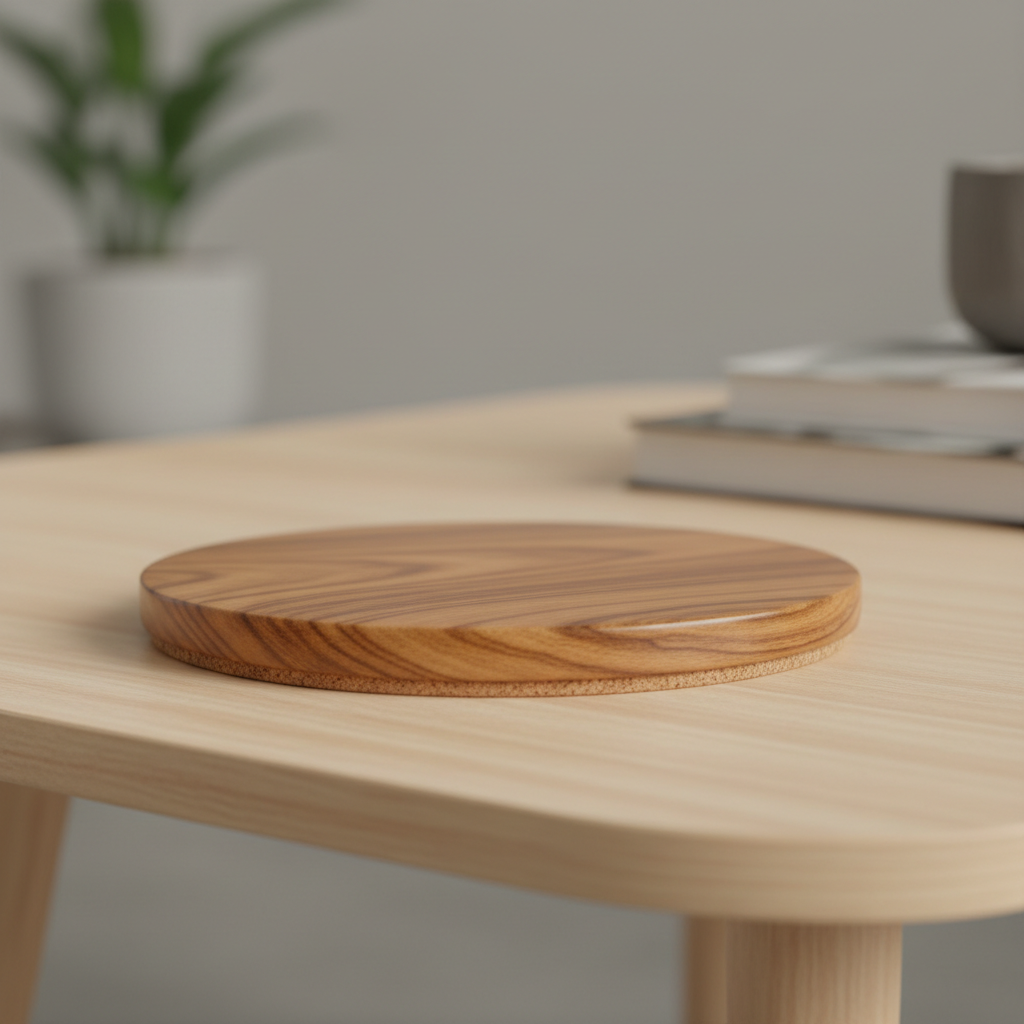
Quick self-check: which coaster type fits your routine?
Before you buy, be honest about your “drink habits.” This little checklist saves more regret than any trend list.
- If you mainly drink hot coffee/tea and clean up quickly, natural-feel finishes (hardwax oil) often work.
- If you drink iced coffee, soda, cocktails with lots of condensation, lean toward sealed finishes and a non-slip backing.
- If your coffee table is high-gloss, softwood, or easily scratched, prioritize cork/silicone backing over aesthetics.
- If kids or guests use the space, choose darker woods or more forgiving finishes, because perfection won’t last.
- If you hate upkeep, avoid “raw” wood no matter how pretty the listing photos look.
Comparison table: how to choose fast
Use this as a practical filter. It’s not about “good vs bad,” it’s about trade-offs.
| Type | Look & feel | Water/heat resistance | Maintenance | Best for |
|---|---|---|---|---|
| Walnut + clear coat | Warm, upscale, slightly sealed | Usually strong | Low | Everyday living rooms |
| Oak + hardwax oil | Natural texture, visible grain | Moderate | Medium | Minimalist, “natural” decor |
| Maple + hard finish | Bright, clean, modern | Moderate to strong | Low to medium | Light-toned interiors |
| Acacia (varied) + mixed finishes | Bold grain, rustic-modern | Depends on maker | Medium | Statement sets, gifts |
| Unfinished “raw” wood | Most natural | Low | High | Occasional use, patina lovers |
Practical buying tips (2026): what to check on listings and in-hand
A lot of 2026 product pages still hide the important stuff behind lifestyle photos. Here’s what I’d scan for before clicking Buy.
On the product page
- Material clarity: “Solid wood” should be explicit. If it says “engineered,” expect veneers or composites.
- Finish named: “Sealed” is vague. Look for polyurethane, lacquer, hardwax oil, or similar.
- Dimensions: Diameter and thickness. If thickness isn’t listed, that’s a mild red flag.
- Backing type: Cork/silicone/felt should be stated. Bare wood bottoms scratch tables.
- Edge profile: Rounded edges chip less and feel nicer in hand.
When you get them
- Put one on your table and nudge it with a finger. If it slides too easily, you’ll notice it every day.
- Do a cautious condensation test with a cold glass for 5–10 minutes, then wipe. Don’t leave it for an hour “to see what happens” unless you’re okay with marks.
- Check for finish consistency along the edge. Thin edges are where moisture sneaks in first.
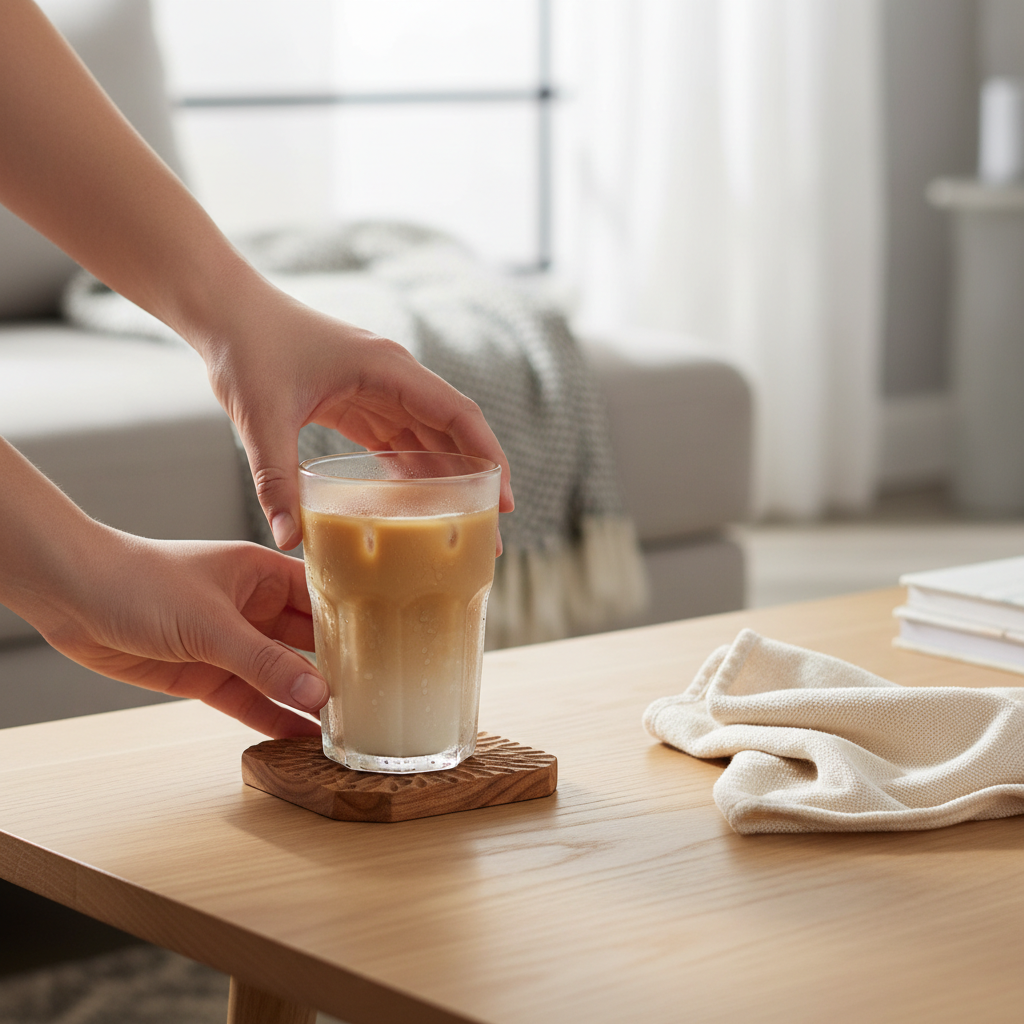
Care and maintenance that actually keeps them looking “natural”
Wood coasters age. That’s part of the charm, but you can steer it toward “warm patina” instead of “random blotches.”
- Wipe quickly: Standing water is the enemy, even with sealed finishes.
- Skip the dishwasher: Heat + water exposure tends to warp wood and weaken adhesives on backings.
- Use mild soap only: Harsh cleaners can dull finishes or soften wax layers.
- Refresh when needed: If you bought an oil/wax finish, a light re-application can restore water beading. Follow the maker’s instructions.
- Store flat: Don’t keep them pressed against a radiator or in a sunny window, uneven drying can encourage cupping.
According to FTC guidance on environmental marketing claims, terms like “eco-friendly” can mean different things depending on what’s substantiated, so if sustainability is your priority, look for clear sourcing notes (for example, FSC-certified wood) rather than vague green labels.
Common mistakes (and what to do instead)
- Mistake: Buying unfinished coasters for heavy iced drink use. Do instead: choose a sealed finish or add a thin absorbent insert on top.
- Mistake: Ignoring backing. Do instead: match backing to your table surface, glossy tables usually benefit from cork or silicone.
- Mistake: Expecting wood to act like stone. Do instead: accept minor character marks, or choose a hybrid coaster with a sealed top layer.
- Mistake: Using lemon/vinegar cleaners. Do instead: mild soap and water, then dry right away.
Conclusion: a simple way to pick your set
If you want a “set it and forget it” option, a darker solid wood like walnut or acacia with a clear protective coat and a cork or silicone backing is usually the safest path for a coffee table. If you love a raw, tactile look, hardwax-oil finishes can feel more natural, just be honest about wiping and occasional refresh.
Your next step can be simple: pick the size that fits your most-used cups, then choose the finish based on whether your daily drink is hot or cold. That decision prevents most buyer’s remorse.
Key takeaways
- Finish matters more than species for ring resistance.
- Backing prevents scratches and sliding, especially on glossy tables.
- Unfinished wood looks great but demands more care, particularly with condensation.
FAQ
What are the best natural wood coasters for coffee table use with iced drinks?
Look for solid wood with a clearly stated sealed finish (often polyurethane or a comparable clear coat) plus cork or silicone backing. Iced drinks create steady condensation, so “raw” or lightly oiled wood often shows marks sooner.
Do wood coasters prevent heat damage from hot mugs?
They usually help, but performance varies by thickness and finish. If you regularly use very hot ceramic mugs, choose thicker coasters and avoid finishes that soften with heat. If you’re unsure, test carefully on an inconspicuous surface.
Is bamboo considered “natural wood” for coasters?
Bamboo is a fast-growing grass and is commonly laminated into boards. Many people still shop it in the “wood” category, but if you want solid hardwood specifically, you’ll want to confirm the material details.
Why do my wood coasters stick to the glass?
That’s typically condensation creating suction, and it can be worse with very smooth sealed tops. A slight texture, beveled edge, or a different finish can reduce sticking, and wiping the coaster top helps too.
How do I remove water spots from wood coasters?
Start gentle: wipe dry, then use a barely damp cloth with mild soap and dry immediately. For oil/wax finishes, a light re-application sometimes evens out hazing. If spots persist, the finish may be compromised, and refinishing might be the realistic fix.
Are resin-coated “wood” coasters still a good choice?
They can be, especially if you prioritize water resistance, but the look and feel is less natural and scratches can show differently. If your goal is a natural tactile surface, a lighter sealant or hardwax oil usually feels closer to wood.
What coaster size fits most coffee mugs and tumblers?
Four inches fits many mugs, but 4.25–4.5 inches is more forgiving for wide tumblers and iced coffee glasses. If your drinkware varies a lot, sizing up slightly tends to reduce edge drips onto the table.
If you’re trying to narrow down options fast, focus on three specs in the listing: solid wood type, the named finish, and the backing material. If those aren’t clearly stated, it’s often a sign the set may look good in photos but feel fussy in real daily use.