
Best under sink organizers for kitchen setups are the difference between a cabinet that works every day and one that constantly fights you with leaks, awkward pipes, and wasted vertical space. The tricky part is not finding “an organizer,” it’s finding one that matches your plumbing layout, cabinet width, and how you actually store cleaning supplies.
If you buy the wrong style, you end up with drawers that won’t open, shelves that tilt, or a unit that blocks the shutoff valve, then it goes back in the box. This guide narrows choices by real constraints: U-shaped cutouts, pull-out clearance, humidity, and weight capacity.
We’ll walk through what to measure, which organizer types make sense in common U.S. kitchens, a quick comparison table, and a setup plan that doesn’t require a full weekend. I’ll also flag a few “looks great online” designs that often disappoint under a sink.
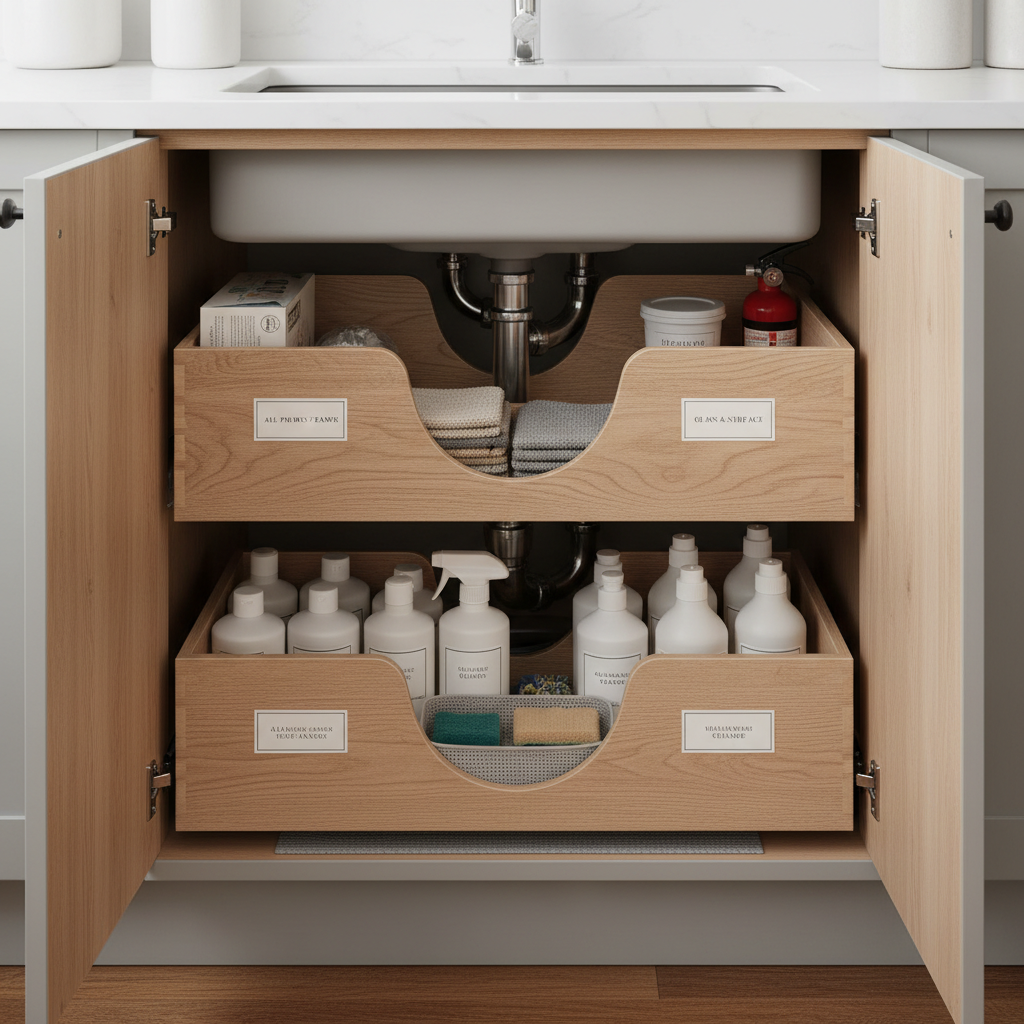
What makes under-sink storage hard (and why most products fail)
Under-sink cabinets behave differently than normal base cabinets because the “best” space is usually blocked by pipes, disposal units, filtration systems, or a bulky trap. Even a great organizer can feel useless if it assumes a flat, open box.
- Plumbing creates dead zones: The center area often can’t take a full shelf, so you need split-level storage or a U-cut.
- Moisture is normal: Small drips, condensation, wet sponges, and chemical bottles add up, metal finishes and cheap particleboard suffer.
- Access matters more than capacity: Deep cabinets swallow items, pull-outs usually “lose” some cubic space but win on daily usability.
- Safety and maintenance: Shutoff valves and cleanouts must stay reachable, storing harsh chemicals next to a disposal or electrical outlet needs a little caution.
According to U.S. Environmental Protection Agency (EPA), household hazardous waste like certain cleaners should be stored safely and kept in original containers, which is a good reminder that “cram it all in” is not an organization plan.
Quick comparison table: organizer types that actually work
This is the fastest way to narrow down the best under sink organizers for kitchen cabinets. Pick the row that matches your plumbing and how often you grab items.
| Organizer type | Best for | Watch-outs | Typical price feel |
|---|---|---|---|
| Two-tier pull-out drawers (stacked) | Wide cabinets, daily-access items | Needs height clearance; may clash with pipes | Mid to premium |
| U-shaped shelf / expandable shelf | Center plumbing, simple storage | Less convenient than pull-outs; can wobble if cheap | Budget to mid |
| Slide-out tray (single level) | Low clearance, short bottles | Doesn’t add vertical storage | Budget to mid |
| Door-mounted racks | Sponges, brushes, small sprays | Door hinges and closing clearance; avoid heavy loads | Budget |
| Clear bins + labels (no hardware) | Renters, odd-shaped cabinets | Requires discipline; easy to overfill | Budget |
| Pipe-friendly frame systems (modular) | Complex plumbing, filtration, disposal | More measuring, more parts | Mid to premium |
Before you buy: a 7-point measurement and fit checklist
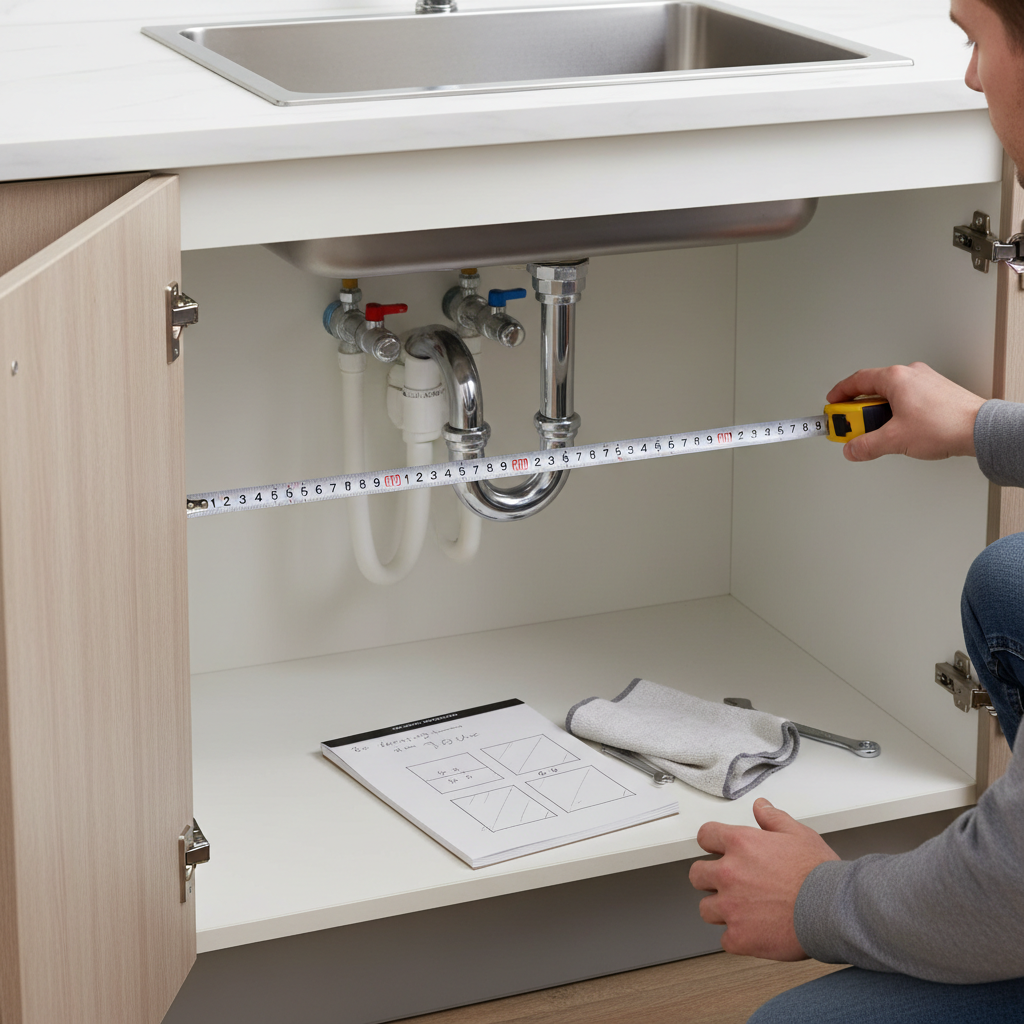
This part feels boring, but it saves returns. Grab a tape measure, your phone flashlight, and do a quick sketch. If you only do one thing, do this.
- Cabinet interior width: Measure wall-to-wall inside, not the door opening.
- Depth: Back wall to the inside edge of the face frame, many pull-outs need clearance.
- Usable height: From cabinet floor to the lowest obstruction (often the sink basin).
- Pipe “no-go” zone: Mark where the trap and supply lines sit, and how far they protrude.
- Valve access: Confirm you can reach shutoffs quickly after installing anything.
- Door swing and hinges: Door-mounted storage can hit shelves or bottles.
- What you store: Tall sprays, bulky detergent, trash bags, dish pods, hand soap refills, all want different shapes.
Key point: If your plumbing sits dead-center and low, U-shaped or split systems usually beat stacked drawers. If plumbing is pushed to the back or one side, you can often get away with a two-tier pull-out.
Top picks by situation (what to choose in 2026 kitchens)
Instead of listing dozens of brand names, here are the organizer “archetypes” that tend to be safest buys. Then you can match features when you shop.
1) If you want daily convenience: two-tier pull-out drawer units
For many households, this is the “I should’ve done this earlier” option. You pull the drawer out, everything comes to you, no kneeling and digging.
- Look for steel frames with rust-resistant coating and a solid base tray.
- Prefer smooth glides that feel stable when fully extended.
- Choose adjustable height shelves if you store tall bottles.
Skip this style if your trap sits right where the top drawer needs to slide, or if your cabinet height is tight.
2) If pipes block the center: U-shaped and expandable shelves
This is the common answer for older homes or rentals with awkward plumbing. It’s not as “slick” as a pull-out, but it uses space you already have without fighting the pipes.
- Choose a shelf with non-slip feet or a grippy base so it doesn’t shift.
- Expandable versions help when cabinet width is not standard.
- Pair with bins so small items don’t vanish behind the trap.
Many people overestimate how much a U-cut will hold, it’s better as a platform for bins than as a “stack everything” shelf.
3) If you’re a renter or hate drilling: bins, risers, and door caddies
Clear bins are underrated. They’re flexible, cheap, and when something leaks you can lift the mess out in one move. Door caddies can add space, but keep loads light to avoid stressing hinges.
- Use two bins max per “category” (dish, laundry, trash bags), more bins becomes its own clutter.
- Consider a slim bin just for backups, so daily-use items stay reachable.
- Pick labels you can wipe, under-sink grime is real.
Setup steps: a simple install that stays tidy
This is the part most guides skip: you can buy the right hardware and still end up with chaos if you load it wrong. Here’s a practical sequence.
- Empty and wipe: Clean the cabinet floor and corners, and let it dry fully.
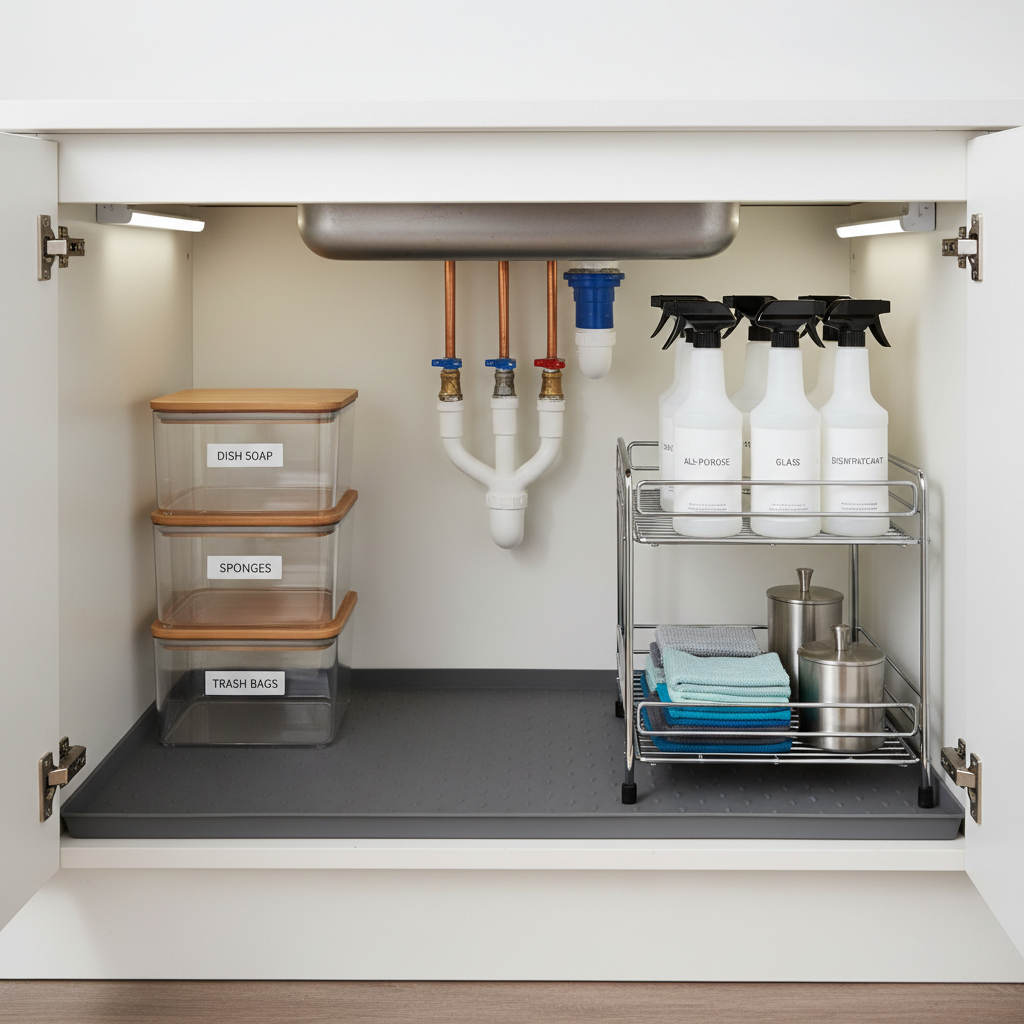
- Add a liner or drip tray: Even a basic waterproof mat helps you spot leaks early.
- Place by frequency: Daily items front-left or front-right, backups behind or higher.
- Separate “wet” and “chemical” zones: Sponges and scrubbers away from powders and paper products.
- Keep a clear path to valves: No organizer should require unloading half the cabinet to reach shutoffs.
If you’re installing a pull-out, check the manufacturer’s template and mounting method, some use adhesive pads, others require screws. When in doubt, a quick pre-drill (carefully) reduces splitting, but if you’re unsure about your cabinet material, a handyman can be the safer call.
Common mistakes that waste money (and how to avoid them)
A few missteps show up again and again with under-sink storage, especially when people shop by photos instead of measurements.
- Buying tall stacked drawers for short cabinets: The top tier hits the sink basin, then nothing opens smoothly.
- Ignoring the face frame: Some pull-outs need a flat interior side wall, face-frame cabinets can complicate mounting.
- Overloading door racks: Heavy sprays can pull the door out of alignment over time.
- Storing bleach next to ammonia-based products: Accidental mixing is a real risk; if you’re unsure, read labels and keep incompatible cleaners separated.
- No leak plan: A liner and a quick monthly glance prevent “mystery swelling” on cabinet bottoms.
According to Centers for Disease Control and Prevention (CDC), mixing certain household cleaners can create hazardous gases, so it’s smart to store them in separate bins and keep caps tightly closed.
How to decide in 60 seconds: the “best fit” rule
If you’re stuck between options, use this decision shortcut.
- If you have clear side space and decent height, choose a two-tier pull-out for daily items.
- If pipes sit center and low, choose a U-shaped or split shelf plus bins.
- If you can’t mount hardware or expect to move, choose bins + one simple riser.
For many homes, the winning combo is not a single hero product, it’s a pull-out for everyday bottles plus one bin for backups and one small caddy for sponges. That mix tends to feel “done” without turning into a storage project.
Conclusion: keep it functional, not perfect
The best under sink organizers for kitchen cabinets are the ones that respect your plumbing, keep valves reachable, and make daily items easy to grab without kneeling and rummaging. Measure first, then pick a style that matches your cabinet constraints, and finish with a liner and clear categories so you can spot leaks and clutter early.
If you want one action to take today, measure width, depth, and the pipe zone, then choose either a pull-out (if you have clearance) or a U-shaped shelf plus bins (if you don’t). Small win, big quality-of-life upgrade.
FAQ
What are the best under sink organizers for kitchen cabinets with a garbage disposal?
Many disposals reduce usable height, so low-profile slide-out trays or U-shaped shelves often fit better than tall stacked drawers. Measure from cabinet floor to the bottom of the disposal and leave room to service it.
Do pull-out under-sink organizers work with face-frame cabinets?
Sometimes, but it depends on the mounting system. Some units need flat side walls, while others include brackets that adapt to face frames. Check the product diagrams before buying, not just the photos.
How do I keep under-sink organizers from rusting?
Start with rust-resistant materials like coated steel or plastic, then add a waterproof mat and avoid storing dripping items directly on metal. If moisture is frequent, a quick wipe-down once in a while helps more than people expect.
Is adhesive mounting safe for under-sink pull-outs?
It can be fine for lighter loads on smooth, clean surfaces, but humidity and textured cabinet floors can reduce grip. If you plan to store heavy cleaners, screws or a more secure mounting method tends to be more reliable.
How should I store cleaning chemicals under the sink safely?
Keep products in original containers with labels intact, separate incompatible cleaners into different bins, and store them away from children and pets. If you have specific health concerns, it may be worth asking a medical professional or poison control for guidance.
What’s the easiest renter-friendly under-sink organization setup?
Two clear handled bins, one small caddy for scrubbers, and a waterproof liner usually cover most needs without drilling. The key is limiting categories so you don’t create “organized clutter.”
How do I deal with leaks without ruining the cabinet bottom?
A liner or drip tray gives you time to notice problems early, but it won’t replace a repair. If you see recurring moisture, swelling wood, or moldy smells, consider calling a plumber to diagnose the source.
If you’re trying to get your cabinet under control but keep running into pipe clearance, odd dimensions, or “nothing fits” frustration, a quick measurement pass plus a short list of must-have features can save a lot of trial and error, and make shopping for an organizer feel straightforward instead of random.