
Best storage bins for closet organization usually come down to one thing most people overlook, matching the bin to what you store and how you actually reach for it day to day. If the bin is too tall for your shelf, too floppy to stack, or too “pretty” to label, it becomes one more clutter object instead of a solution.
Closets are tricky because they mix categories fast, shoes, seasonal clothing, linens, bags, sentimental items, and a handful of random “I’ll deal with this later” stuff. The right bins create boundaries, so each shelf stops turning into a pile that collapses when you pull one thing out.
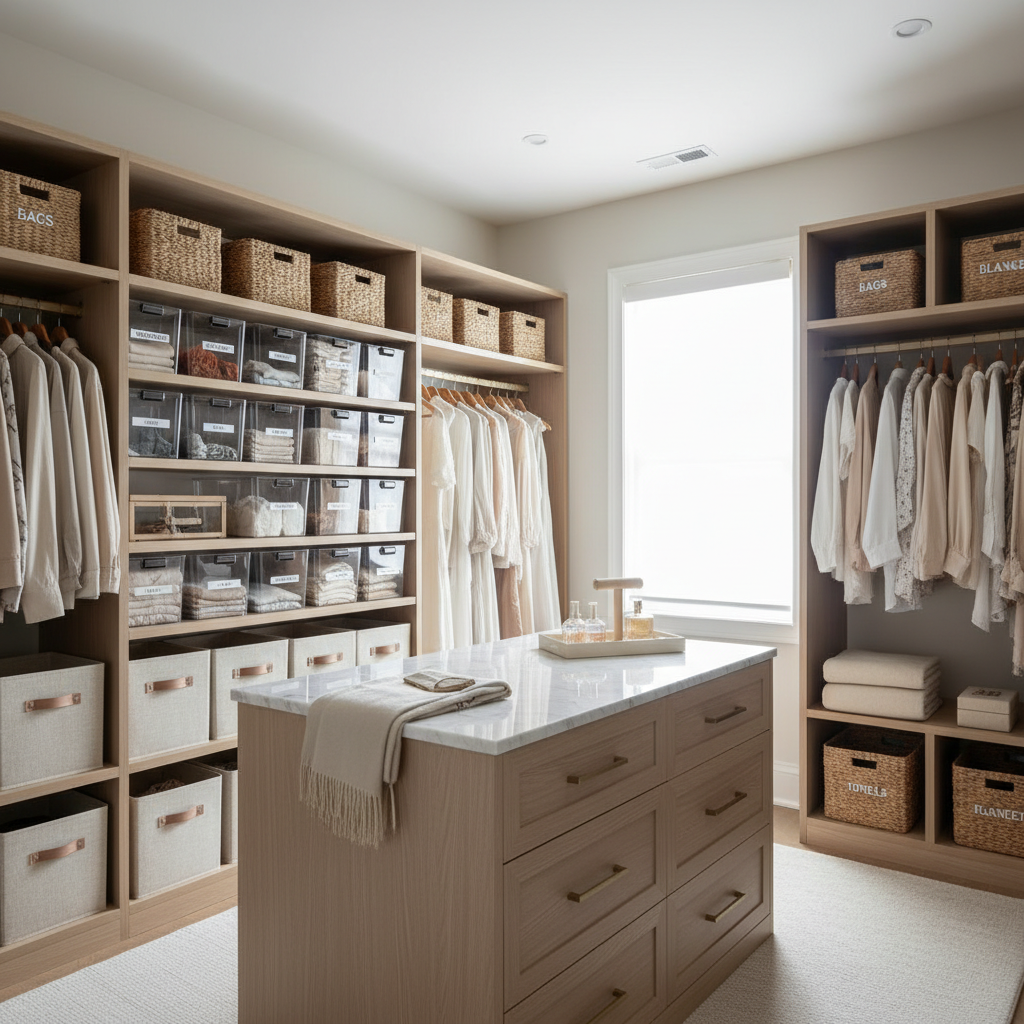
This guide helps you choose bins with fewer regrets, spot sizing mistakes before you buy, and set up a system that holds up after the first “busy week” hits. There’s also a comparison table, because shopping without one is how you end up with bins that don’t fit your shelves.
What makes a storage bin “best” for a closet
There’s no single best bin for every closet, but there are a few traits that consistently make bins work in real homes. Think access, visibility, and how your closet gets used when you’re in a hurry.
- Fits the shelf with breathing room: you want space to slide bins in and out without scraping knuckles or snagging fabric.
- Easy to pull: cut-out handles or sturdy front handles matter more than people think.
- Stable when stacked: if you plan to stack, look for rigid sides and a flat lid or rim that nests.
- Right visibility level: clear bins reduce “out of sight, out of mind,” while opaque bins look calmer but need labels.
- Label-friendly: smooth fronts or label frames beat textured weaves when you want labels that stick.
According to the U.S. Consumer Product Safety Commission (CPSC), cords and drawstrings can create strangulation hazards for children, so if you’re organizing a child’s closet, it’s usually smarter to avoid bins with long rope handles or loose straps, and place heavier bins on lower shelves.
Quick closet check: choose the right bin type in 3 minutes
Before you shop, do a fast assessment. This keeps you from buying “popular” bins that look great online and fail in your layout.
Measure what matters (not everything)
- Shelf height: measure the usable height, not just the opening.
- Shelf depth: many closets are 12–16 inches deep, but not always; bins that are too deep waste space or block doors.
- Reach zone: anything above eye level should be lighter and easier to pull.
Decide how you want to retrieve items
- Grab-and-go: open-top fabric bins or handled baskets.
- See-through scanning: clear plastic bins, ideally with a front label anyway.
- Dust protection: lidded bins for off-season clothing or linens.
If your closet is shared, prioritize bins that are fast to interpret, clear labels, consistent sizes, and no complicated lid systems.
Best storage bins for closet organization by category
Instead of naming a single “winner,” it’s more useful to match bin styles to what you store. Most closets need a mix, not one type.
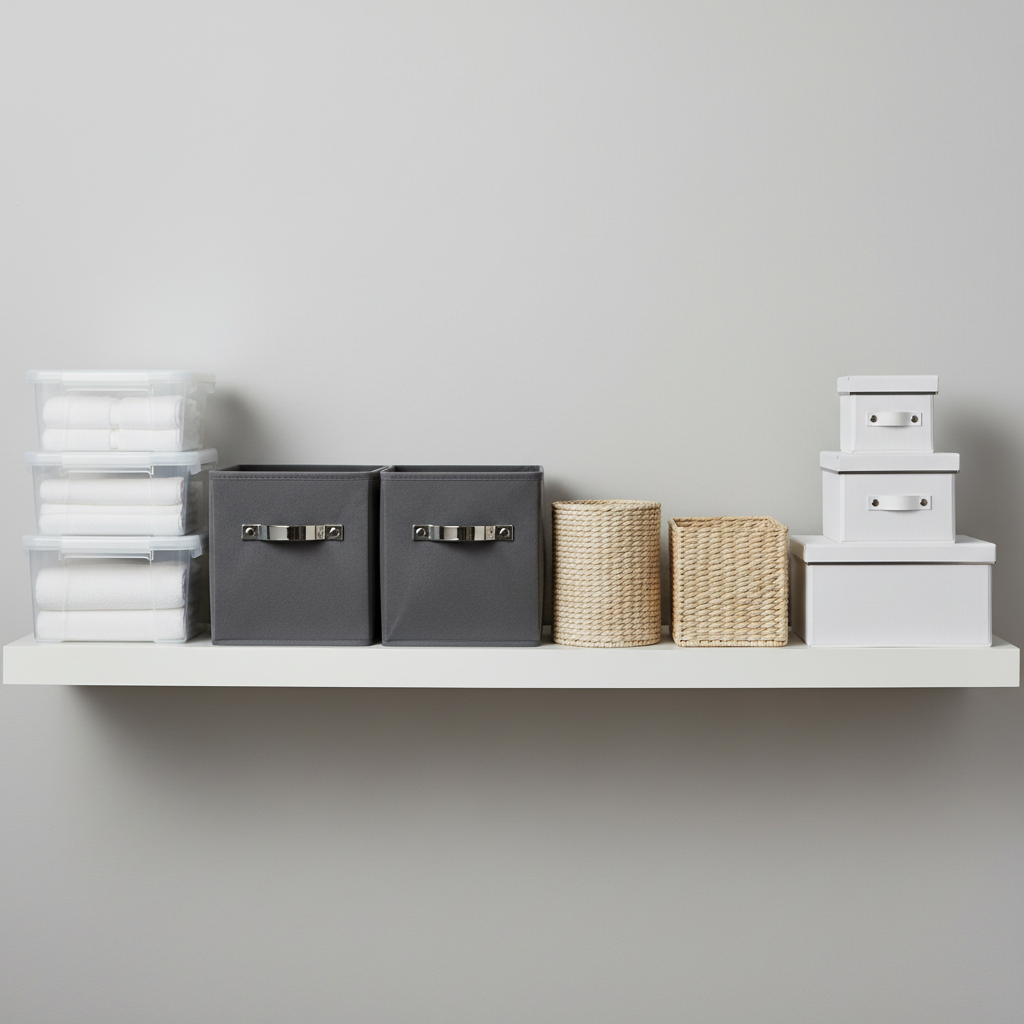
Everyday clothing and accessories
- Open-top fabric bins: great for belts, scarves, workout gear, kids’ clothes you rotate often.
- Divided bins or small drawer organizers: best for socks, underwear, hair tools, ties.
Shoes and handbags
- Clear shoe boxes: reduces duplicates and helps you actually wear what you own.
- Sturdy handled bins: for clutches, seasonal sandals, or “special occasion” shoes you don’t need weekly.
Seasonal and long-term storage
- Lidded plastic bins: better for basements/garages, but also useful on high closet shelves.
- Under-shelf/under-bed style bins: for sweaters or bulky items, especially in reach-limited closets.
Paper items and sentimental storage
- Document boxes: stackable, easy to label, less likely to crush.
- Photo-safe containers: if you’re storing prints, consider archival-safe options and, if needed, consult a preservation professional for valuable items.
Comparison table: pick a bin material that fits your closet life
Material choice decides how long bins last and how much friction you feel using them. Here’s a practical breakdown.
| Bin type | Best for | Pros | Watch-outs |
|---|---|---|---|
| Clear plastic (with or without lid) | Seasonal items, shoes, visual inventory | Visible, wipe-clean, often stackable | Cheap ones crack, lids can be annoying for daily use |
| Fabric bins (open-top) | Everyday accessories, kids’ items | Lightweight, easy pull, softer look | Can slump, may collect dust, labels may peel on textured fabric |
| Woven baskets | Blankets, bulky accessories, aesthetic shelves | Looks warm, breathable | Snags delicate fabric, sizing varies, harder to label cleanly |
| Metal wire bins | Laundry, towels, items that need airflow | Ventilated, durable | Small items fall through, can catch on knits |
| Collapsible bins with lids | Occasional storage, moving, guest-room closets | Stores flat when not used | Less rigid, stacking can be unstable |
How to set up bins so your closet stays organized
Buying the best storage bins for closet organization helps, but the setup is what keeps it from sliding back into chaos. The goal is to reduce decisions, not create a museum.
Step 1: Build zones that match your routine
- Prime zone (waist to eye level): daily categories, gym gear, work accessories.
- Upper zone: backstock, seasonal, linens.
- Lower zone: heavy bins, shoes, bags.
Step 2: Standardize sizes where you can
Closets look calmer, and stay calmer, when you repeat 2–3 bin sizes instead of mixing ten. It also makes replacing bins easier when one breaks.
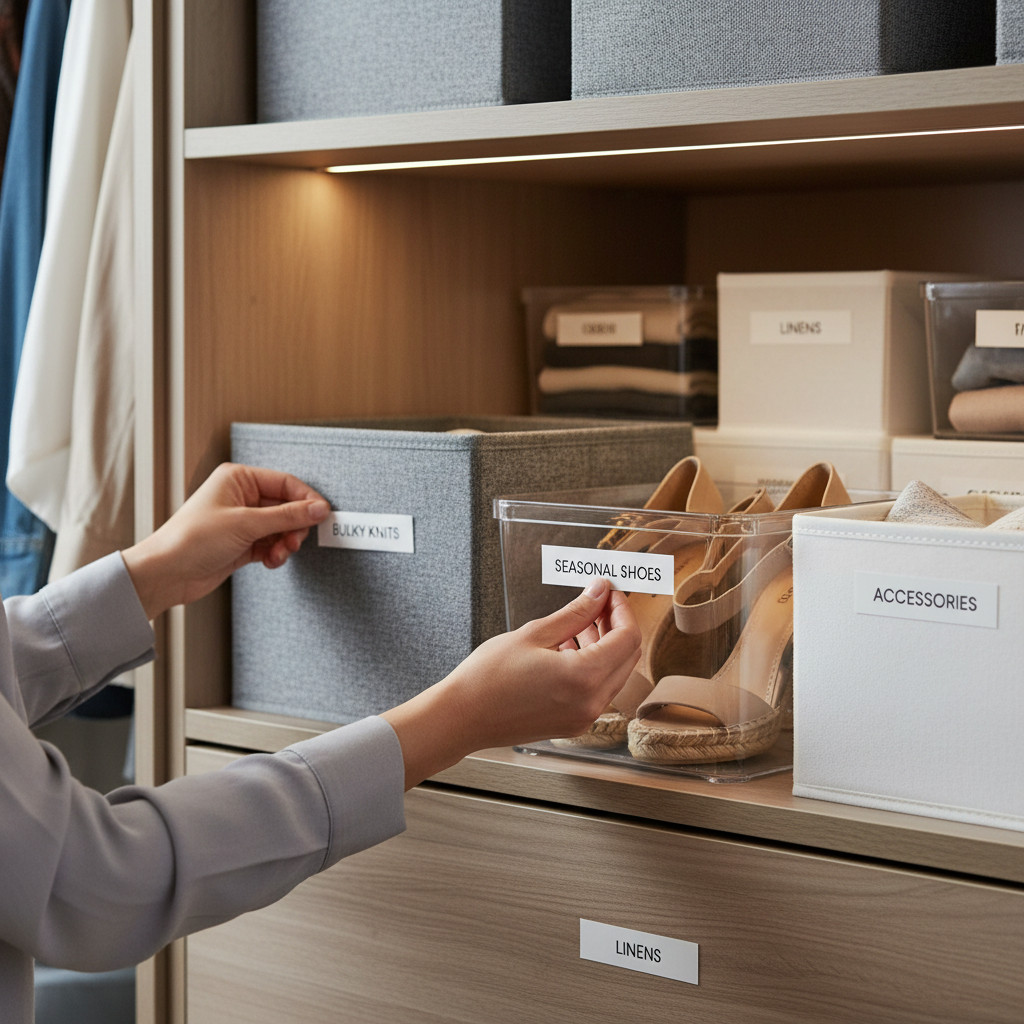
Step 3: Label in plain language
- Use the words you actually say, like “Cold Weather” instead of “Winter Apparel.”
- Put labels on the front, not the lid, lids get flipped around.
- If multiple people share the closet, add a tiny “example list” on the label, like “Hats, Gloves.”
Step 4: Keep a “quarantine bin”
This is the bin that saves you during busy weeks. Anything you’re unsure about goes here temporarily, and you review it weekly or monthly. It prevents random items from spreading across shelves again.
Common mistakes that make closet bins fail
A lot of people blame themselves for being “bad at organizing,” but often the problem is a bin choice that creates friction.
- Overbuying lidded bins for daily items: lids slow you down, then items land on top of the bin instead.
- Ignoring shelf depth: bins that sit too far back become dead space, you forget what’s inside.
- Choosing floppy bins for stacking: leaning stacks collapse, then you stop putting things away.
- Using one bin for mixed categories: “Accessories” turns into a black hole. Split into smaller bins.
- No label strategy: even clear bins benefit from labels, because you still don’t want to rummage.
If you’re dealing with moisture, pests, or strong odors, a closet bin won’t solve the underlying issue. In those cases, it’s usually smarter to address ventilation, leaks, or building conditions first, and consult a qualified professional if you suspect mold or structural moisture problems.
Buying checklist: what to look for before you add to cart
Use this as your quick filter when you’re comparing options online or in-store. It keeps you focused on function, not just aesthetics.
- Interior dimensions: product listings often show exterior size, confirm what actually fits inside.
- Handle comfort: if it hurts to pull, you’ll avoid using it.
- Stacking design: flat lid or nesting rim, and a base that doesn’t slide.
- Material smell: some plastics off-gas, if odor sensitivity is a concern, let bins air out before use and consider alternative materials.
- Return policy: closets are notorious for “almost fits,” returns save money.
Key takeaway: the best bin is the one you’ll actually use with one hand while you’re getting dressed, not the one that looks perfect in a styled photo.
Conclusion: the simplest way to choose the right closet bins
If you want a decision rule that works, pick bins based on access first, then visibility, then aesthetics. Most closets end up needing two workhorse styles, an open-top bin for everyday categories and a lidded bin for seasonal storage.
Your next move can be small: measure one shelf, choose one category that annoys you every week, and set up a labeled bin system just for that. Once that shelf feels easy, scaling to the rest of the closet becomes much less intimidating.