
How to choose right pillow size usually comes down to one thing: whether your pillow supports your neck without pushing your head too high or letting it drop too low.
If you’ve ever woken up with a stiff neck, shoulder tightness, or a weird “one-side headache,” the pillow size might be part of the problem, not just the pillow “quality.” Size affects alignment, and alignment affects how your muscles recover overnight.

This guide keeps it practical: what pillow sizes exist, which ones match your sleep position and body build, how bed size changes the choice, and a quick at-home test so you can tell if your current setup is working.
Pillow sizes, decoded (and what they really change)
Pillow “size” is mostly about width and length, but what your body feels is often the combination of size plus loft (height) and support (how much it compresses). A king pillow that goes flat can still fail you, while a standard pillow with the right loft can feel perfect.
Common U.S. sizes you’ll see:
- Standard (most common): works for many sleepers, easier to reposition, usually cheaper to outfit with pillowcases.
- Queen: extra width so the pillow “stays with you” if you move, without taking over the whole bed.
- King: wide, can reduce gaps if you toss and turn, sometimes used as a backrest pillow.
- Body pillow: long support for side sleepers, pregnancy, hip/knee comfort, and hugging posture.
- Cervical/contour: shaped for neck support; the label is about shape, but size and loft still matter.
One quick mindset shift: don’t buy size first, buy function first. Then pick the size that delivers that function for your bed and sleep habits.
Start with sleep position: your fastest shortcut
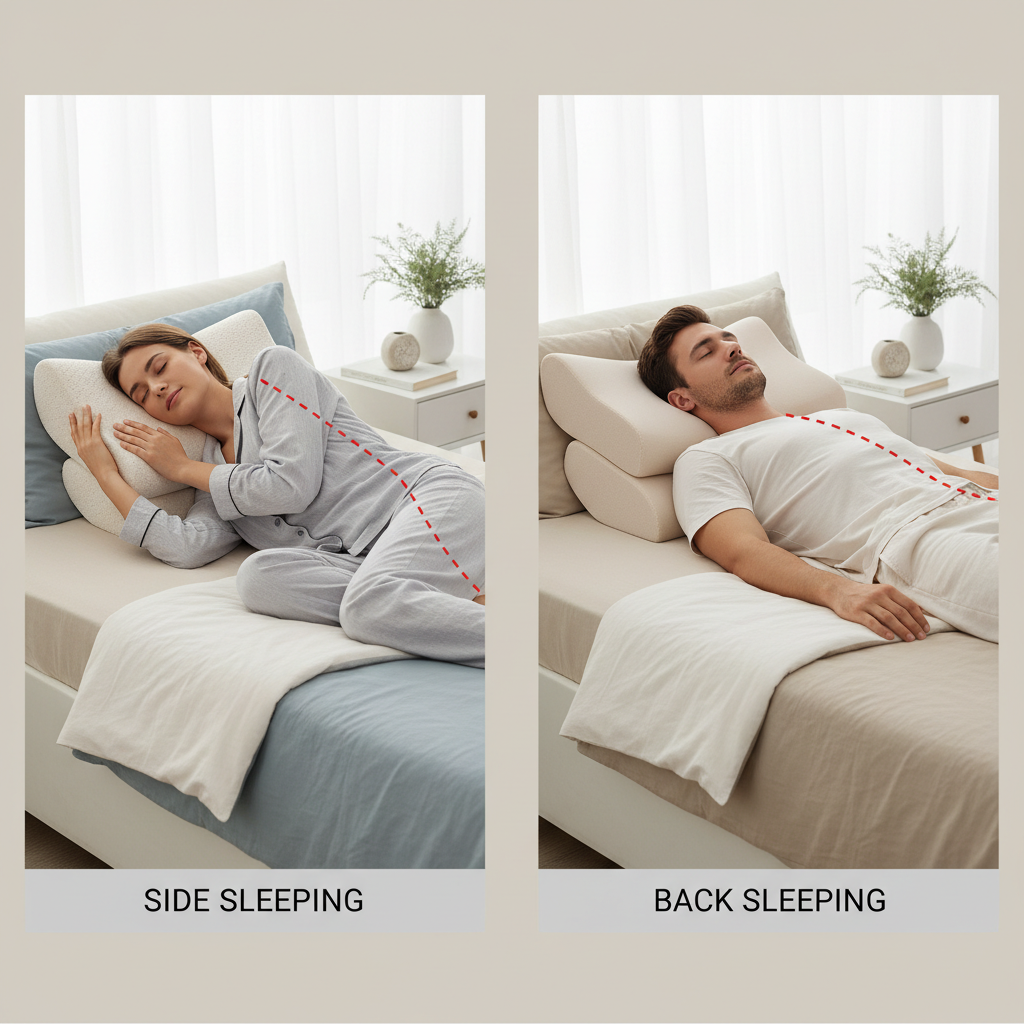
If you want to know how to choose right pillow size without overthinking it, start with your primary position. The goal is a neutral spine: your nose roughly in line with the center of your chest, not angled up or tucked down.
Side sleepers
Side sleeping usually needs more “fill” between ear and mattress. Many side sleepers do well with queen or king simply because the extra width helps the pillow stay under the head as you shift. What matters more is choosing a loft that matches shoulder width.
- Broader shoulders: often need a higher loft or firmer material.
- Narrower frame: often does better with medium loft to avoid neck tilt.
- Consider adding a body pillow to reduce shoulder/hip twist and keep knees stacked.

Back sleepers
Back sleeping usually prefers standard or queen so your head stays centered, plus a medium loft so your chin doesn’t tip toward your chest. Too large a pillow can encourage “pillow climbing,” where your shoulders end up on the pillow, which often feels cozy but can irritate the neck over time.
Stomach sleepers
Many stomach sleepers need the least height. A big, tall pillow can force the neck into rotation. If you can’t break the habit, think standard size and low loft, or even no pillow under the head, depending on comfort. If you have persistent pain, it may be worth discussing sleep posture with a clinician.
Combo sleepers (most people)
If you rotate between side and back, a queen often hits a sweet spot: enough width to stay put, not so wide that it crowds the bed. Material matters too; responsive fills (like latex or adaptive foam) often handle position changes better than very soft down-alternatives that “pancake.”
Match pillow size to your body: shoulder width, neck length, and firmness
This is where people get stuck, because pillow packaging rarely explains it clearly. Think of it as a simple geometry problem: your pillow needs to fill the space your body creates.
- Wide shoulders often pair well with a larger pillow (queen/king) plus firmer support so it doesn’t collapse.
- Longer neck may feel better with a slightly higher loft, not necessarily a bigger width.
- Smaller frame commonly benefits from standard/queen and a medium or adjustable fill.
According to the American Chiropractic Association, sleep posture and support that helps maintain spinal alignment can matter for comfort and musculoskeletal strain. That’s the underlying “why” behind sizing choices.
Also, be honest about your mattress: a soft mattress lets your shoulder sink, which can reduce the loft you need; a firm mattress does the opposite.
Bed size and room to move: practical fit (with a quick table)
Sometimes the right pillow size is simply the one that fits your bed and your reality. If you share the bed, if you like to sit up and read, or if you hate feeling crowded, that changes the decision.
| Bed size | Common pillow sizes that fit well | Why it works |
|---|---|---|
| Twin / Twin XL | Standard | Balanced width, less overhang, easier to reposition |
| Full | Standard or Queen | Enough width without taking over the bed |
| Queen | Queen (or Standard if you like space) | Good coverage for movement, still partner-friendly |
| King | King or Queen | More surface area, good for combination sleepers |
If you’re styling pillows for the look of the bed, that’s fine, but don’t let “matching the mattress width” override neck support. Decorative symmetry rarely fixes a sore neck.
A quick self-check: how to tell if your pillow size is wrong
Before buying anything, do this simple check for two or three nights. It’s not a lab test, but it catches obvious mismatch.
- Morning neck soreness that fades after you’re up: pillow height/support mismatch is a common suspect.
- Shoulder numbness (especially side sleepers): pillow may be too low, forcing the shoulder to take pressure.
- Chin tucked toward chest (back sleepers): pillow may be too high or too firm.
- Neck rotated for long periods (stomach sleepers): pillow may be too high, or you may need to adjust position.
- You keep folding the pillow: often a sign the size/loft combo isn’t meeting your support needs.
If you share a bed and your pillow constantly ends up half off the mattress, that’s a size issue more than a loft issue, and moving from standard to queen can help.
Practical ways to get the right fit (without buying five pillows)
Most people don’t need a whole pillow “journey.” You need a controlled way to test fit.
Option A: Use an adjustable-fill pillow
Adjustable pillows let you add or remove fill to tune loft while keeping the same outer size (standard/queen/king). If you’re between positions or between sizes, this reduces guesswork.
Option B: Fix loft first, then decide size
- If your current pillow feels close but slides around, keep the loft style and move up in width (standard → queen, queen → king).
- If your current pillow feels “too tall” or “too flat,” changing width won’t solve it; you need different fill or an adjustable model.
Option C: Pair a main pillow with a secondary support
Side sleepers often do better with a main pillow plus a small pillow between knees, or a body pillow. Back sleepers sometimes benefit from a small pillow under knees to reduce lower-back tension, which can indirectly change how the neck feels.
According to the National Sleep Foundation, sleep comfort and consistent support can influence sleep quality, and bedding choices are part of that overall setup. If pain persists, it’s reasonable to loop in a medical professional.
Common mistakes (the ones that waste money fast)
- Buying king size to “upgrade”: bigger is not automatically better, especially if loft is wrong.
- Ignoring pillowcase fit: a too-tight case compresses loft; a too-large case lets the pillow bunch and shift.
- Replacing size when the issue is firmness: if the pillow collapses at night, you’re chasing the wrong variable.
- Not accounting for mattress softness: your shoulder sink changes required loft more than most people expect.
If you’re prone to allergies or asthma, material choice matters too; it won’t change size, but it can change comfort. When in doubt, check product care labels and consider asking a clinician for guidance.
Conclusion: a simple decision rule you can use tonight
If you want a clean takeaway, use this: pick pillow size based on how much you move and how much bed space you have, then lock in loft based on your sleep position and shoulder width. That combination is what usually makes the difference.
Tonight, do two things: take 10 seconds to notice whether your chin tilts up or down when you lie still, and whether your pillow stays under your head when you roll. Those two observations often tell you more than a product label.
Key takeaways
- Side sleepers often prefer queen/king for coverage, but loft must match shoulder width.
- Back sleepers usually do well with standard/queen and medium loft.
- Stomach sleepers typically need low loft and simpler sizing.
- If you’re unsure, an adjustable-fill option reduces trial-and-error.
FAQ
How do I know what pillow size I need if I’m a combo sleeper?
Many combo sleepers land on a queen because it’s wide enough to “catch” your head as you turn, without crowding the bed. Then focus on a medium, responsive loft so it adapts when you switch from side to back.
Is a king pillow better for neck pain?
Not automatically. Neck pain is more often tied to loft and support than width. A king pillow can help if your issue is the pillow slipping away at night, but it can’t fix a height mismatch by itself.
What pillow size is best for a queen bed?
Queen pillows are a common match, but standard can work if you like more space or don’t move much. If you share the bed, two queen pillows can feel tighter than two standards, so comfort and space both matter.
Can pillow size affect snoring?
It can, indirectly. If your pillow keeps your head too flexed or too extended, breathing may feel less comfortable for some people. Snoring has many causes though, so if it’s persistent or severe, consider discussing it with a healthcare professional.
Should side sleepers use a body pillow instead of a bigger head pillow?
They solve different problems. A larger head pillow helps with head placement and staying on the pillow, while a body pillow helps hips and knees stay aligned. Many side sleepers get more comfort from adding the body pillow than from upsizing the head pillow alone.
How often should I replace my pillow?
It depends on fill type and how quickly it loses support. If you’re constantly folding it, it stays flat, or it no longer rebounds, that’s usually a sign it’s not supporting you well anymore.
Do pillowcases change how a pillow feels?
Yes, more than people think. A tight case can compress loft and make the pillow feel firmer and lower; an oversized case can let the pillow shift. If your pillow feels “off,” try a correctly sized case before replacing the pillow.
If you’re in the middle of swapping mattresses, moving in with a partner, or waking up with recurring neck tension, a quick pillow-size audit can save a lot of trial-and-error. If you want a more streamlined approach, start with one adjustable-fill pillow in the size that fits your bed, then tune loft over a week instead of buying multiple sizes at once.