
how to choose right bedding size usually comes down to two things people skip: measuring your mattress (not just the “Queen” label) and knowing which bedding item has its own sizing rules.
If you have ever bought a sheet set that pops off the corners, a duvet cover that swallows your comforter, or a bed skirt that drags, you already know why this matters, it is comfort, but it is also time and money.
In this guide, I will walk you through a practical sizing process, plus a quick-reference table and a few “real life” scenarios, so you can choose sizes that actually fit your bed and your sleeping style.
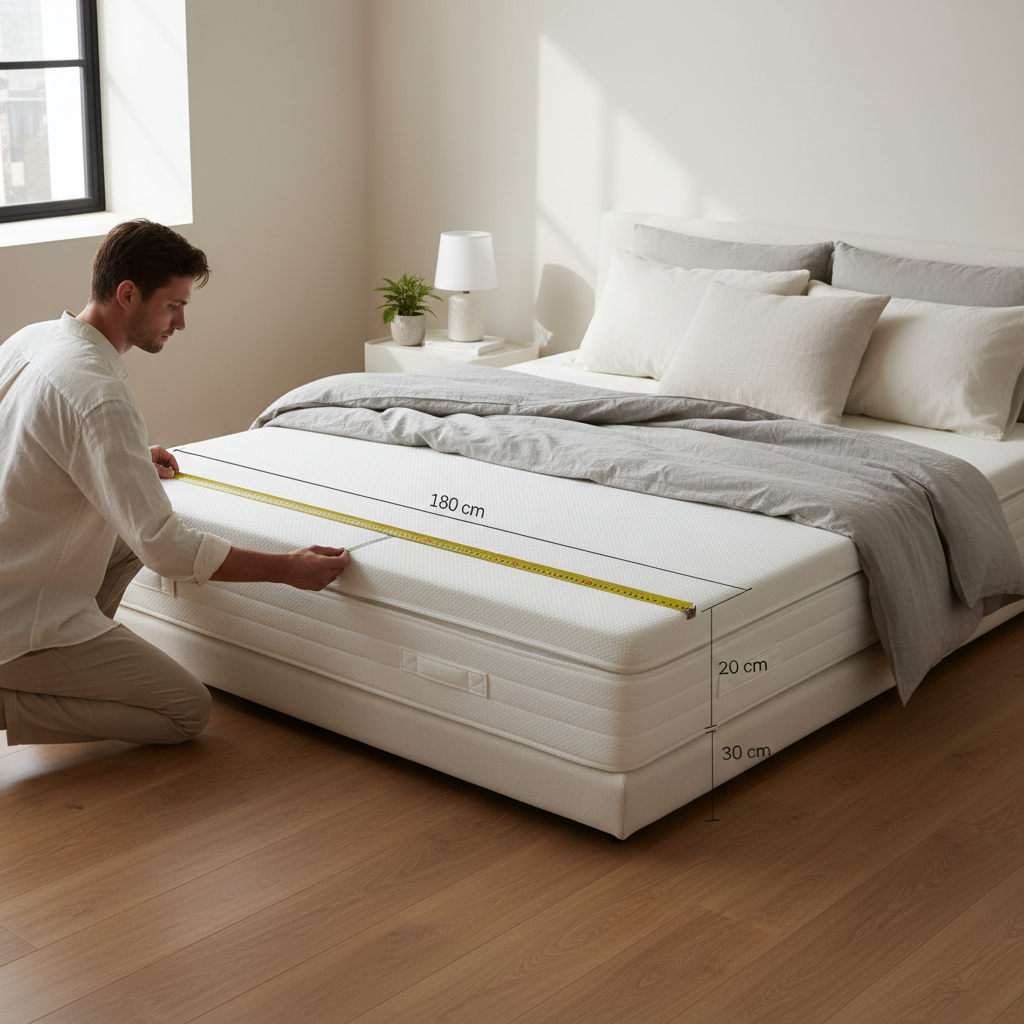
Start with the mattress label, then verify with a tape measure
Mattress sizes in the U.S. are fairly standardized, but mattresses vary in depth and sometimes run slightly larger or smaller, especially with pillow-top, foam, or “luxury” builds. That small difference is where fit problems show up.
Measure three numbers, then write them down before you shop:
- Width (side to side)
- Length (head to foot)
- Depth/height (top to bottom, including any topper you keep on)
If you use a mattress topper, count it as part of your mattress depth, many fitted sheets fail because shoppers measure the mattress only, then add a topper later.
According to the Federal Trade Commission (FTC), mattress labels should include size information and materials, so checking the tag can help, but measuring remains the safer move when fit matters.
Quick U.S. bedding size chart (and what it does not tell you)
This table helps you sanity-check what you see online. Still, treat it as a starting point, not a promise, because sheet pocket depth and duvet cover dimensions vary by brand.
| Mattress size | Typical mattress (W x L) | Common sheet set label | Common comforter/duvet label |
|---|---|---|---|
| Twin | 38" x 75" | Twin | Twin / Twin XL (brand-dependent) |
| Twin XL | 38" x 80" | Twin XL | Twin XL / Full (varies) |
| Full (Double) | 54" x 75" | Full | Full / Queen (varies) |
| Queen | 60" x 80" | Queen | Queen |
| King | 76" x 80" | King | King |
| California King | 72" x 84" | Cal King | Cal King |
What the chart does not tell you is the drop you want on the sides, the depth of your mattress, and how thick your comforter is. Those three details are usually where people misjudge how to choose right bedding size.
Sheets: pocket depth is the detail that makes or breaks fit
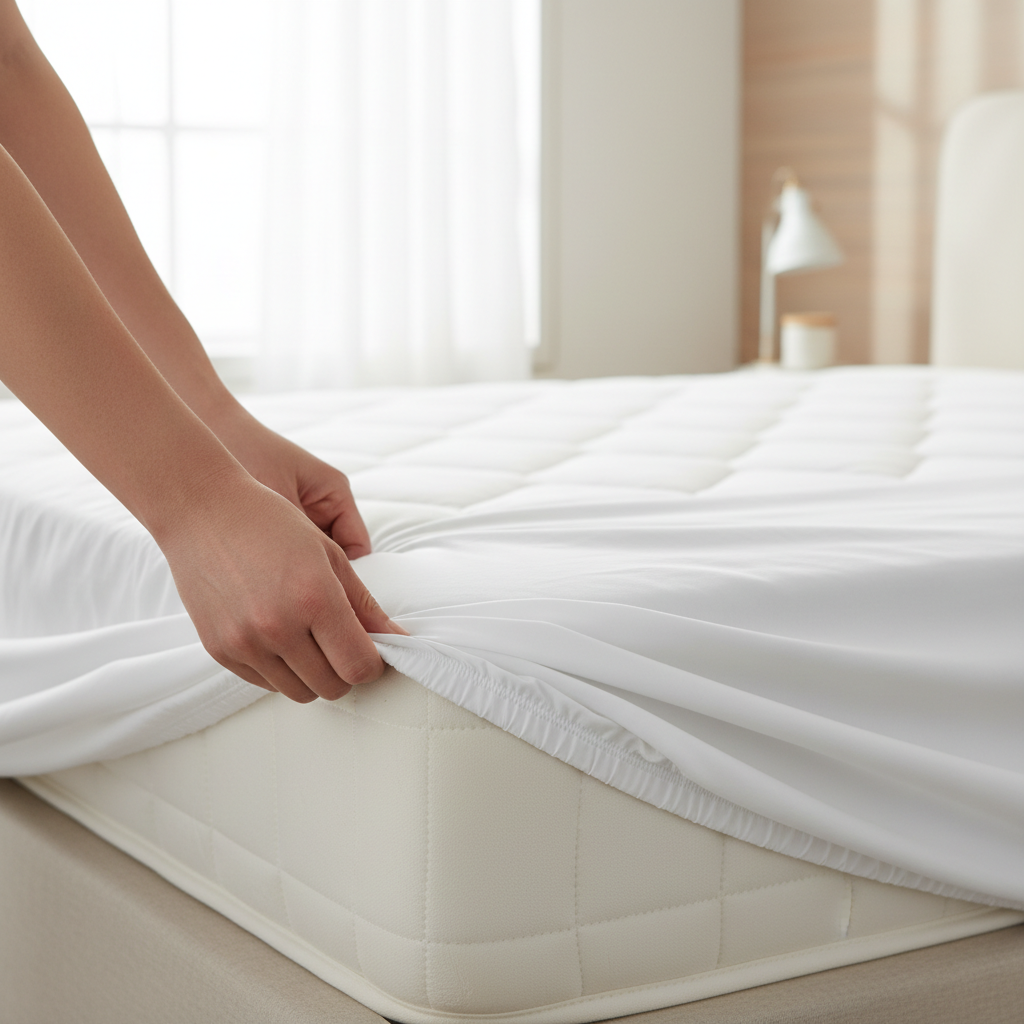
For sheets, “Queen” is only half the story, you also need to match fitted sheet pocket depth to your mattress height. Many brands call this “standard pocket,” “deep pocket,” or list inches.
A quick rule that works in many households: look for a fitted sheet pocket that is 1–2 inches deeper than your measured mattress depth, so the elastic can actually grip under the corners.
- If your fitted sheet slides off, it is often too shallow, or the elastic is weak.
- If it bunches a lot, it can be oversized, or your bed has a very slim profile.
- If you use an adjustable base, slightly deeper pockets often behave better during movement.
Also check top sheet dimensions if you care about tuck. Some people prefer a larger top sheet (for example, sizing up in a sheet set) because it stays tucked longer.
Comforters and duvets: decide based on coverage, not just mattress size
Comforter and duvet sizing is less standardized than mattress sizing. Two “Queen” comforters can feel totally different on the bed because brands cut for different drape, loft, and styling.
Pick the coverage you want
- Minimal drop: tidy look, easier for hot sleepers, may show more mattress side.
- Standard drop: covers the sides, works for most bedrooms.
- Oversized drop: cozy, hotel-style, helpful if you share the bed and fight over covers.
If you want more side coverage, many people size up a comforter or duvet insert (like using a King comforter on a Queen bed), but this only works if your duvet cover and washer capacity can handle the larger bulk.
Match duvet insert and duvet cover, then confirm dimensions
Duvet covers should list exact measurements, use those numbers rather than the generic label. When in doubt, choose a cover that is close to the insert size, small differences can cause shifting inside the cover.
According to the American Cleaning Institute (ACI), following care labels helps preserve textiles, so if you size up, double-check laundering instructions and whether your machine can wash and dry it safely.
Pillows, shams, and pillowcases: standard terms hide small mismatches
Pillow sizing looks simple until you realize “Standard” and “Queen” pillows can be close enough that a tight pillowcase feels annoying. If you like a fuller look, a slightly smaller case can work, but it may stress seams over time.
- Standard pillowcase typically fits Standard pillows, sometimes works for Queen if you do not mind a snug fit.
- Queen pillowcase gives more room, often looks less wrinkled.
- King pillowcase is for King pillows, also used as a more relaxed fit for Queen pillows.
For decorative shams, check closure style and insert size, a 20" x 26" sham usually wants a similar insert, but a slightly larger insert can make it look fuller if the fabric allows.
A quick self-check: which situation sounds like you?
If you are trying to choose sizes fast, this checklist points you to the most likely “gotcha” for your bed.
- You have a pillow-top or foam mattress: prioritize fitted sheet pocket depth and elastic quality.
- You share the bed: consider sizing up the comforter or choosing a wider cut for more coverage.
- You have a Twin XL (college, dorm, adjustable base): confirm 80" length for sheets and protectors.
- You use a topper or thick pad: measure with it on, then shop for deeper pockets.
- You hate fussing with bedding: look for “stay-put” features like stronger elastic, corner straps, or zipper duvet covers.
Step-by-step: how to choose right bedding size in 10 minutes
This is the process that prevents most returns, it is boring, but it works.
- Step 1: Measure mattress width, length, and depth, include topper.
- Step 2: Decide your comforter/duvet drop preference, standard vs oversized.
- Step 3: For fitted sheets, match pocket depth to mattress depth, give yourself a small buffer.
- Step 4: For duvet covers, match to insert dimensions, not just “Queen.”
- Step 5: Confirm return policy before you order, especially for opened bedding.
Key takeaway: mattress size names help you browse, but exact dimensions help you buy correctly.
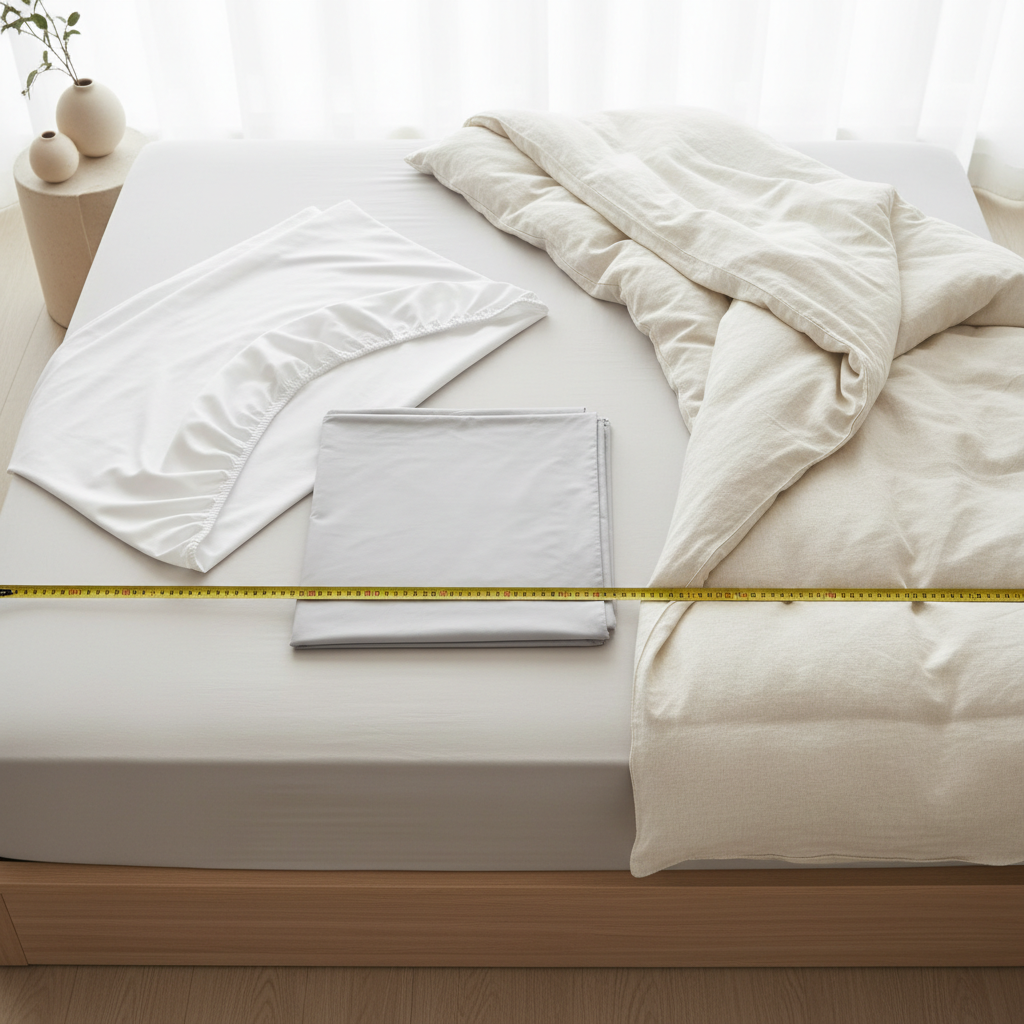
Common mistakes that lead to bad fit (and easy fixes)
Most sizing mistakes are predictable, and they usually come from shopping too fast or trusting one label too much.
- Mistake: Buying sheets by mattress name only.
Fix: Shop by pocket depth, then confirm width and length. - Mistake: Mixing Twin and Twin XL for kids or dorms.
Fix: Always confirm 75" vs 80" length. - Mistake: Sizing up a duvet insert but keeping the same cover size.
Fix: Size the cover to the insert, then verify both dimensions. - Mistake: Ignoring bed frame height when choosing a bed skirt.
Fix: Measure drop from box spring top to floor, then match the skirt drop. - Mistake: Oversizing everything for “extra cozy,” then hating the bulk.
Fix: Oversize only the comforter, keep sheets fitted to the mattress.
If you have persistent issues like overheating or skin irritation, bedding materials and washing routines may play a role, and in some cases it is worth asking a healthcare professional for guidance.
Conclusion: fit first, then shop for feel
Once you measure your mattress and match sheet pocket depth, the rest gets easier, you can choose style, fabric, and warmth without second-guessing. If you want one action to take today, grab a tape measure and write down width, length, and depth, then shop using exact dimensions instead of trusting the label alone.
FAQ
How do I choose bedding size if my mattress is between sizes?
Go by your measured width and length, then read the product dimensions. When you are close, sheets usually need to match tightly, while comforters can be more forgiving if you prefer extra drape.
Is “deep pocket” always necessary for a queen mattress?
Not always, many queen mattresses fit standard pockets just fine. Deep pocket matters when your measured depth is high or when you add a topper that pushes you over the sheet’s pocket range.
Can I use a king comforter on a queen bed?
Often yes if you want more side coverage, but confirm the comforter dimensions and check whether your washer and dryer can handle the extra bulk, that is where people regret it.
Why does my fitted sheet keep popping off the corners?
Most of the time the pocket depth is too shallow, or the elastic does not grip well. Corner straps or “stay-put” elastic can help, but only after you confirm you bought the right depth.
Do duvet covers run true to size?
It depends on the brand. Treat the printed dimensions as the truth, and compare them directly to your insert, small differences can cause bunching or shifting.
What bedding size do I need for a Twin XL dorm bed?
You typically need Twin XL sheets because of the 80-inch length. A Twin fitted sheet often leaves the foot end exposed and tends to slip more.
How often should I re-check my bedding size?
Any time you change the mattress, add a topper, or move to a different bed frame style. Even a small depth change can affect sheet fit more than people expect.
If you are still unsure how to choose right bedding size for your exact setup, a simple “measurement-first” checklist you can keep on your phone makes shopping much easier, especially when you compare brands with different pocket depths and comforter cuts.