
how to organize closet efficiently starts with one simple decision: your closet has to serve your real life, not an imaginary “someday” version of you.
If getting dressed feels slow, if you buy duplicates because you can’t find what you own, or if your closet looks “full” but nothing feels right, that’s usually an organization problem, not a “too small closet” problem.
This guide walks you through a practical setup: quick editing, a layout that matches how you use clothes, and a maintenance routine that won’t collapse after two weeks. You’ll also get a small checklist, a planning table, and a few mistakes worth avoiding.
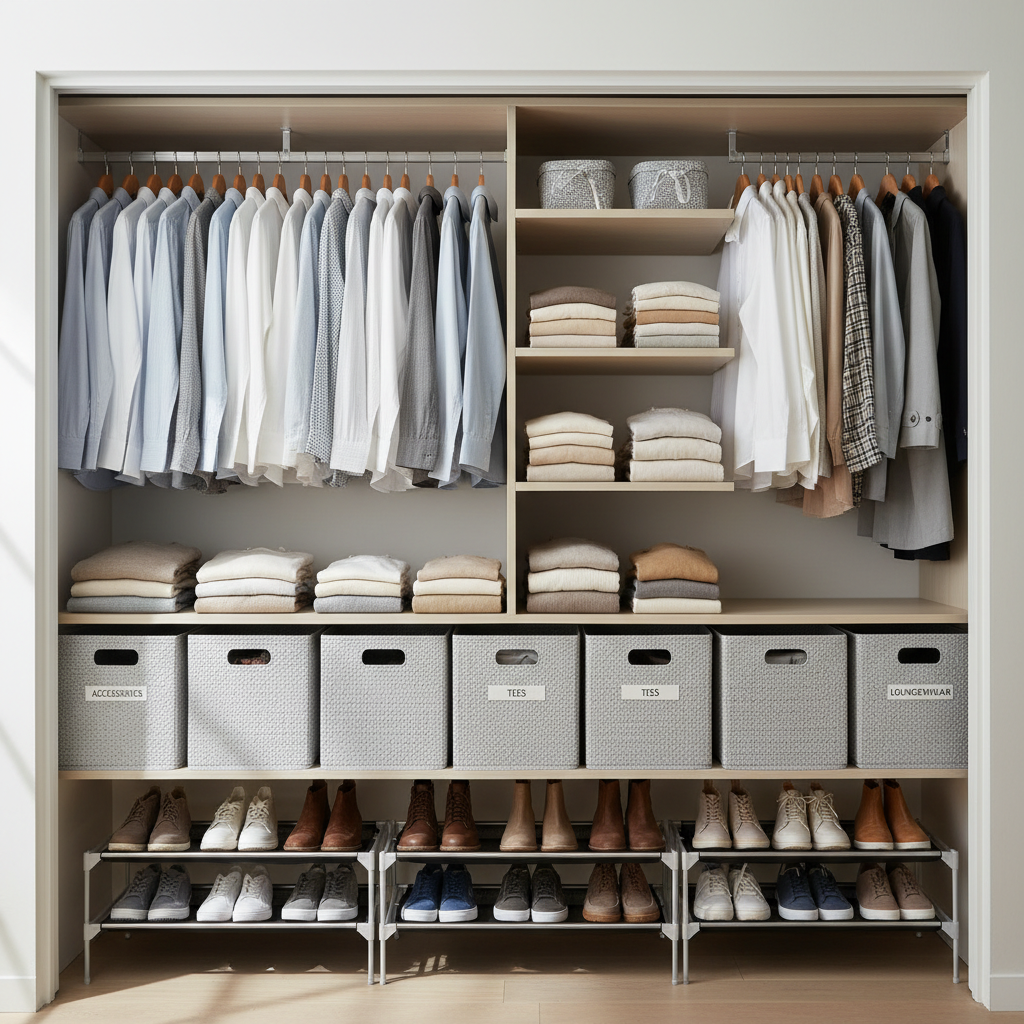
Start with a fast “reset” that doesn’t burn your whole weekend
The biggest reason closet projects fail is fatigue. People pull everything out, hit decision overload, then re-stuff items back in. A faster reset keeps momentum and still creates space to work.
Try a two-pass approach:
- Pass 1 (10–20 minutes): pull obvious no’s only, stained, torn, doesn’t fit your body today, you’d never wear it again.
- Pass 2 (20–40 minutes): skim the “maybes” and decide based on use, comfort, and whether it matches your current climate and routine.
Keep three bags nearby: donate, recycle/textile drop, and “relocate” (items that belong elsewhere). This prevents the classic “organized closet, messy bedroom” tradeoff.
Figure out what “efficient” means for your closet, not someone else’s
Efficiency can mean different things: faster mornings, less laundry chaos, or fewer “I have nothing to wear” spirals. Before you buy hangers or bins, get clear on your goal.
Use this quick self-check to define your target:
- If mornings feel rushed, prioritize visibility and a tight daily-wear zone.
- If outfits feel hard to build, prioritize grouping by category + color and keep “core basics” at eye level.
- If clutter keeps returning, prioritize limits (caps per category) and easy drop-zones for re-wear items.
- If storage feels impossible, prioritize vertical space and moving off-season pieces out.
According to NIH (National Institute of Mental Health), reducing environmental stressors can support overall well-being. A closet won’t fix everything, but a calmer, more predictable space often helps your day start smoother.
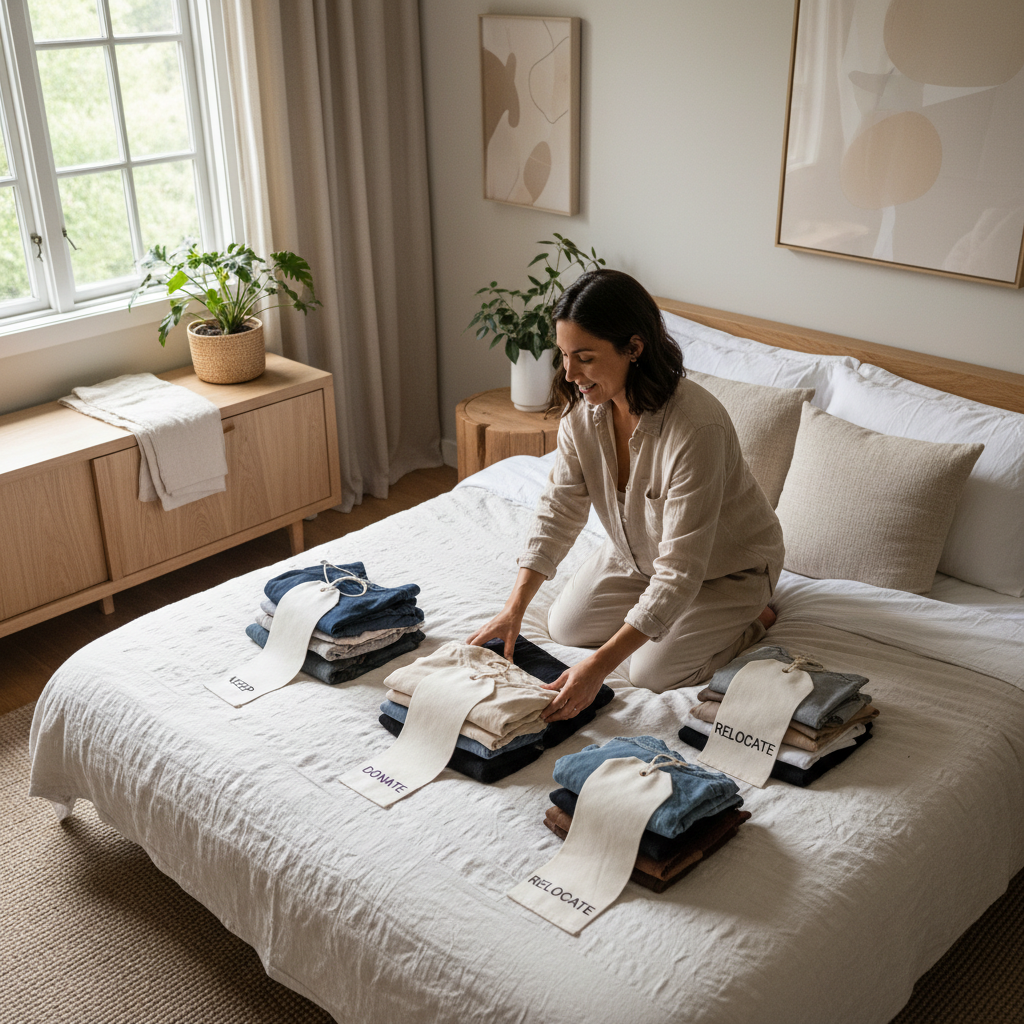
Build a simple closet map: zones that match how you actually dress
If you want to organize closet efficiently, the layout matters more than the containers. Think in zones, then assign the best real estate to what you reach for most.
Use these “default” zones (then adjust)
- Prime zone (eye to waist level): workhorse items you wear weekly.
- Upper zone: seasonal backups, special-occasion pieces, extra bedding.
- Lower zone: shoes, baskets, heavy items, foldables you don’t want falling.
- Quick-drop zone: a hook or small bin for “worn but not dirty.”
In many homes, the closet fails because everything competes for the prime zone. A small rule helps: if you haven’t worn it in the current season, it doesn’t get premium placement.
Choose an organizing method (this is where most people overcomplicate)
You have a few solid options, and the “best” one depends on your wardrobe mix. Pick one primary method, then use a secondary layer only if it truly helps.
| Method | Best for | Watch out for |
|---|---|---|
| By category (tops, bottoms, dresses) | Most closets, easiest upkeep | Can still feel chaotic if categories are huge |
| By frequency (daily vs. occasional) | Busy mornings, decision fatigue | Needs a seasonal refresh to stay accurate |
| By outfit/workflow (work, gym, weekend) | People who dress for “modes” | Harder if your weeks vary a lot |
| By color (within each category) | Visual shoppers, easy matching | Time-consuming if you don’t care about it |
A realistic setup: category first, then a quick color gradient for the categories you see most (shirts, pants). Skip color for things like pajamas, socks, or workout tees unless it truly helps you find items faster.
Make storage do the work: hang, fold, bin, or box (with clear rules)
The easiest closet systems give each item type a “home” that fits its behavior. If you fold something that always gets pulled out and tossed, it will look messy again fast.
What to hang vs. fold
- Hang: items that wrinkle easily, pieces you wear often and want visible, jackets, dresses, button-down shirts.
- Fold: knits that can stretch on hangers, tees, activewear, denim if you prefer stacking, lounge sets.
- Bin/contain: socks, underwear, belts, scarves, workout accessories, small handbags.
Small upgrades that usually pay off:
- Matching hangers reduce snagging and visual noise.
- Shelf dividers keep stacks from sliding into each other.
- Labels on bins prevent “miscellaneous drift,” especially for accessories.
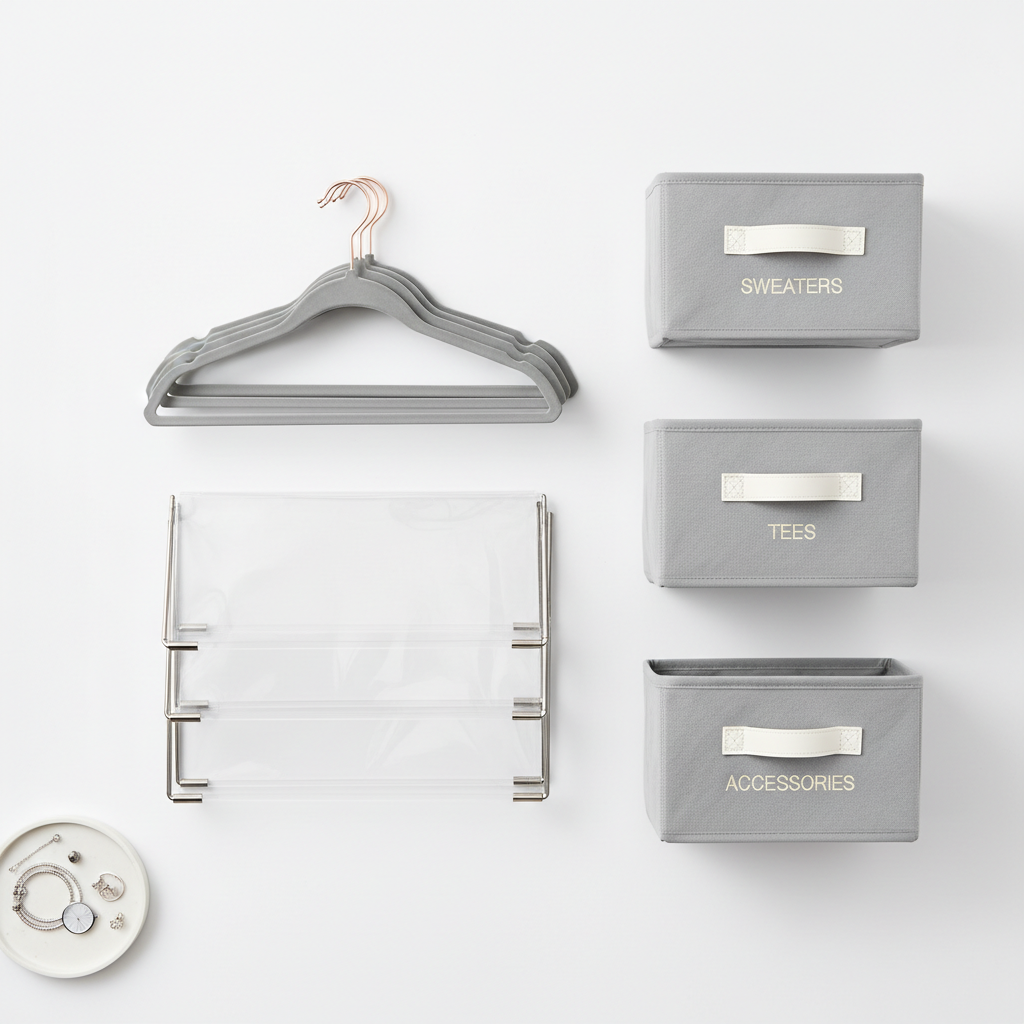
A step-by-step plan you can finish in one afternoon
If you want a clear sequence, use this. It’s designed to minimize backtracking, because that’s where time disappears.
- Step 1: Clear one section at a time, not the entire closet, start with hanging clothes.
- Step 2: Sort into keep, donate, relocate, and “decide later” (cap this at a small basket).
- Step 3: Assign zones, then put daily-wear back first so you feel immediate improvement.
- Step 4: Add containers only after items are placed, otherwise you buy the wrong sizes.
- Step 5: Do a five-minute “floor reset,” nothing stays on the floor when you’re done.
Key takeaway: you’re not aiming for a photo-ready closet, you’re building a system that stays usable when you’re tired.
Common mistakes that make closets feel messy again
A few patterns show up in almost every “it looked great for a week” situation.
- Keeping donation bags in the closet: they slowly become storage, move them to your car or entryway.
- Too many “someday” items: if it doesn’t fit your body or life now, it steals space from what you use.
- No re-wear plan: without a hook or bin, half-worn items migrate to chairs and floors.
- Overstuffed categories: if drawers won’t close, organization tools won’t fix the root problem.
- Buying containers first: pretty bins don’t solve unclear categories, they hide them.
Also, watch for safety issues: unstable stacks, heavy bins stored overhead, or step stools that wobble. If your closet layout forces you to climb awkwardly, it’s worth rethinking storage, and in some homes it may be smart to consult a professional installer.
Keep it organized with a low-effort maintenance routine
The maintenance plan is what makes the earlier work count. It should feel almost boring.
Weekly (5 minutes)
- Return strays to their zones, especially shoes and “re-wear” items.
- Flip hangers facing backward for pieces you wear, at the end of the month you can spot what never moved.
Seasonally (30–60 minutes)
- Rotate off-season clothing to upper zones or bins, then bring current-season items into prime space.
- Do a quick re-edit of the hardest category, often jeans, sweaters, or shoes.
When people ask how to organize closet efficiently for the long run, this is the honest answer: fewer “special projects,” more tiny resets you can actually keep doing.
When it makes sense to get extra help
If your closet is consistently unmanageable, it may not be about discipline. A few situations benefit from outside support:
- Space constraints: odd layouts, broken shelving, or no hanging bar, a handyman or closet company can add usable storage safely.
- Major life transitions: postpartum, caregiving, moving, or grief, decision fatigue is real, and a helper can speed the process.
- Persistent overwhelm: if clutter ties to anxiety or compulsive saving, consider a mental health professional for guidance that fits your situation.
According to the American Psychological Association, stress can affect daily functioning, and improving home routines can be part of broader coping strategies. If organizing triggers distress rather than relief, getting support is a reasonable next step.
Conclusion: a closet that saves time should feel boring in the best way
Once you set clear zones, cut down the categories that overflow, and stop asking storage bins to solve a decision problem, your closet usually becomes easier to live with. Pick one small action today: remove obvious no’s, or build a re-wear hook, and your next reset becomes much lighter.
Quick action plan: set a 30-minute timer, edit one category, then place daily-wear items at eye level. That alone often changes your mornings.
FAQ
What is the fastest way to organize a closet efficiently without taking everything out?
Work section by section, starting with hanging items. Pull only the obvious no’s first, then re-zone what stays so your most-used pieces sit at eye level.
How do I organize a small closet efficiently with limited shelves?
Use vertical space with a second hanging rod if possible, add slim hangers, and move off-season items to labeled bins. The goal is to protect the prime zone for daily wear.
Should I organize by color or by category?
Category is usually easier to maintain. Color can help within a category you look at often, but if it adds work you won’t keep up with, it becomes visual clutter again.
How many hangers do I really need?
Enough for what you actually hang, plus a small buffer. If your rod feels jammed, that’s a sign to reduce volume or switch some items to folding.
What should I do with clothes I’m not ready to donate?
Use a small “decide later” bin with a limit, and add a revisit date. Limits matter here, otherwise indecision becomes permanent storage.
How can I keep my closet organized when I’m always busy?
Build in a drop-zone for re-wear items and do a weekly five-minute reset. A system that relies on perfect folding every day usually fails in real life.
How often should I declutter my closet?
Many people do best with a seasonal check-in and a quick monthly scan for items that never get worn. Your climate and lifestyle can shift that schedule.
If you’re trying to organize closet efficiently but keep getting stuck on layout choices or what storage tools to buy, a simple closet “map” and shopping list can save time and prevent expensive trial-and-error, especially in small spaces.