
how to make small room feel cozy usually comes down to a few high-impact moves, not a shopping spree: control light, simplify the layout, add warmth through texture, and make the room feel intentionally “finished.”
If your space feels cold, cramped, or a little chaotic, it’s rarely because the room is too small, it’s because the room has too many competing signals, harsh lighting, no visual “rest,” or furniture that doesn’t match the scale.
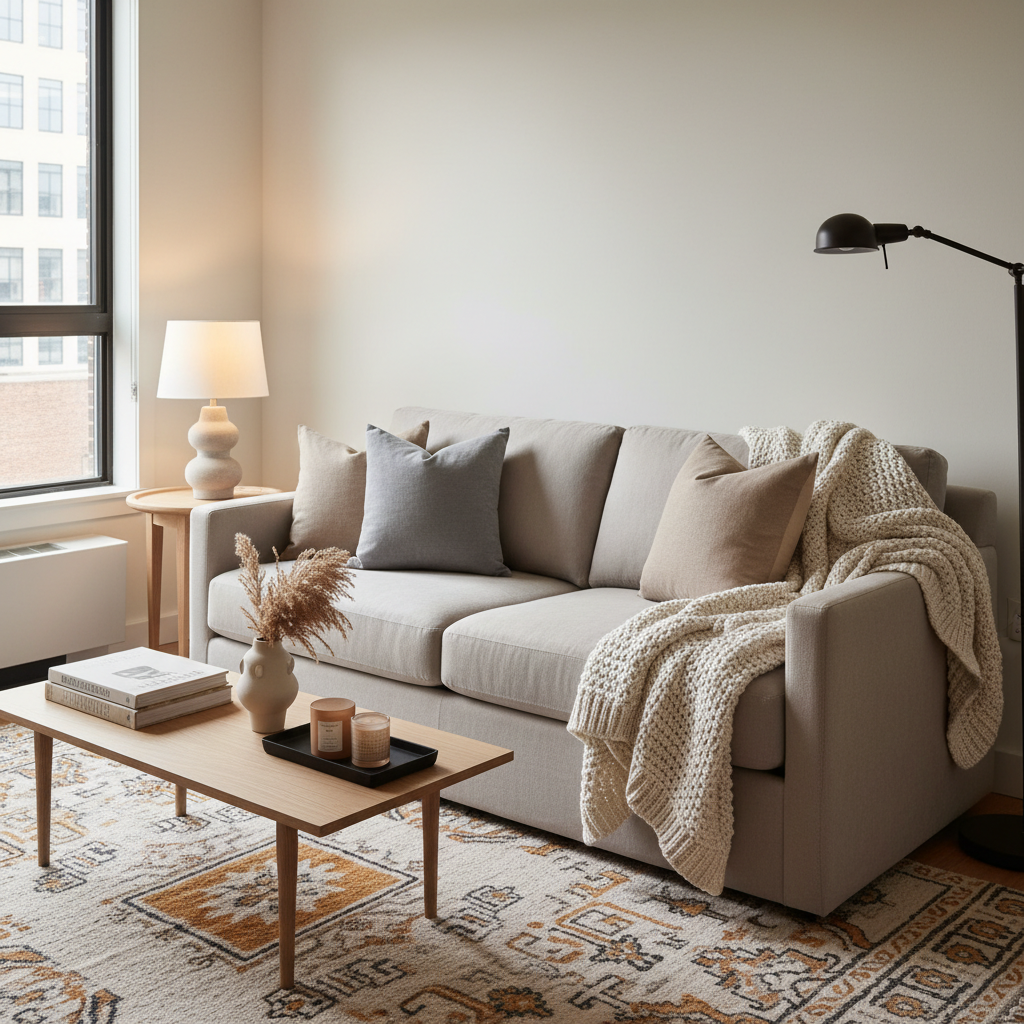
There’s also a common misunderstanding: cozy does not mean crowded. In many small rooms, cozy shows up when you create clear zones, soften edges, and give the eye a calm place to land.
This guide walks you through practical changes you can make in an afternoon, plus a quick diagnostic checklist and a few “don’t do this” traps that waste money fast.
Start with a quick diagnosis (so you don’t fix the wrong problem)
Before buying anything, identify what’s making the room feel uncomfortable. Small spaces amplify small mistakes, so clarity saves time.
- It feels harsh at night: lighting is too bright, too cool, or only from one ceiling fixture.
- It feels cluttered even when “clean”: too many small items, exposed cords, or no closed storage.
- It feels tight to move through: furniture scale is off, pathways are blocked, or layout fights the door swing.
- It feels unfinished: bare walls, no textiles, or no “anchor” piece like a rug or art.
- It feels dark and heavy: window treatments block light, colors are muddy, or too many dark pieces sit at eye level.
Pick your top two issues. Trying to solve five problems at once is how a small room ends up with random purchases and zero coziness.
Light is the fastest way to make a small room feel cozy
If you only do one thing, do this: replace “one bright light” with layered, warm lighting. It instantly softens the room and makes it feel intentional.
According to the American Lighting Association, layering ambient, task, and accent lighting improves comfort and functionality in a space.
What layered lighting looks like in a small room
- Ambient: a warm ceiling fixture or plug-in wall sconce, ideally on a dimmer.
- Task: reading lamp by the sofa or bedside, focused where you actually sit.
- Accent: a small lamp on a shelf, picture light, or LED strip behind a headboard for glow.
Simple lighting settings that usually work
- Color temperature: 2700K to 3000K for a warm, cozy feel.
- Dimmers: plug-in dimmers or smart bulbs if hardwiring isn’t an option.
- Placement: two light sources at different heights beats one bright overhead.
One more detail people skip: hide the glare. If you can see the naked bulb from your seat, the room often feels more “stark” than cozy.
Choose fewer, bigger anchors (the secret to cozy without clutter)
Small rooms get visually noisy when they have too many tiny decor pieces. Cozy is calmer when you use a few anchors that ground the space.
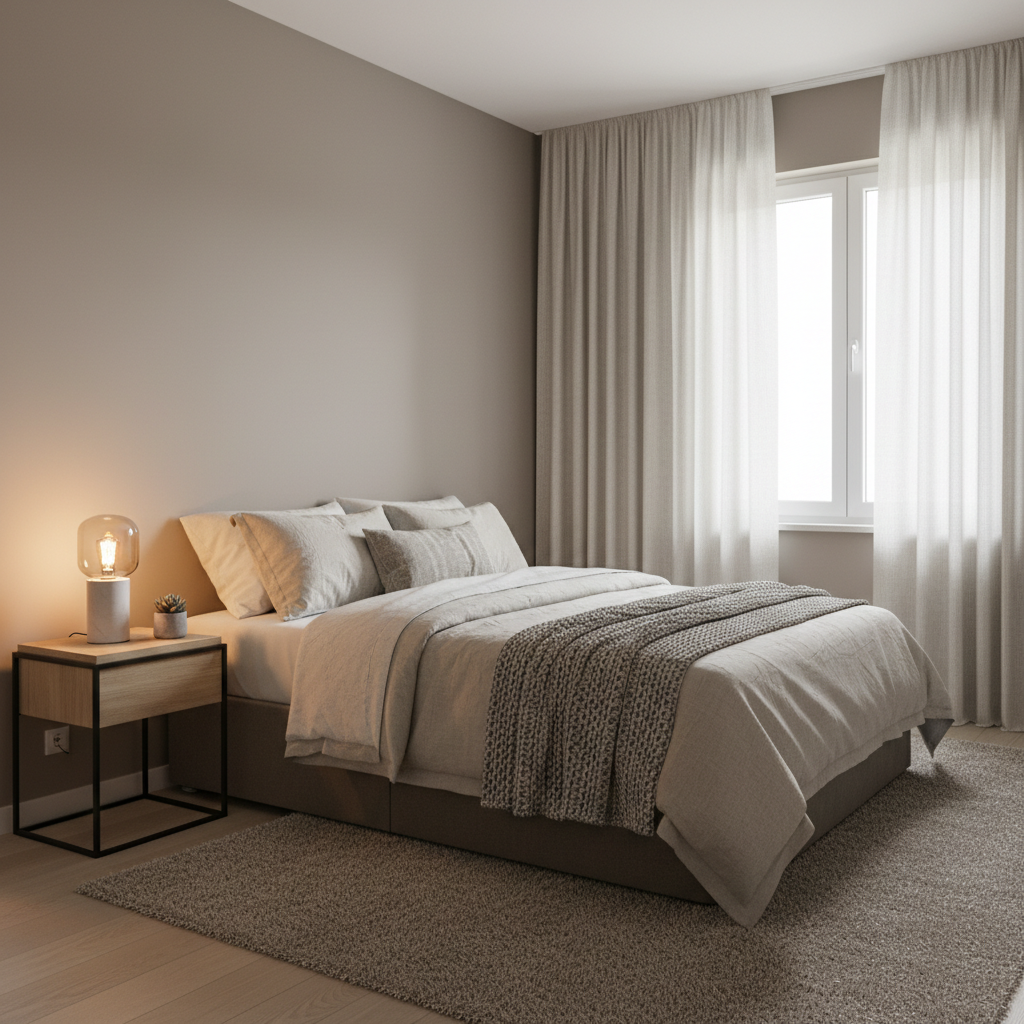
These anchors usually do more than extra trinkets:
- A rug with texture: defines a zone and softens sound.
- One statement art piece: gives the eye a “destination.”
- A substantial throw blanket: adds warmth visually and literally.
- A plant with real volume: one medium plant can beat three tiny ones.
If you’re debating rug size, the cozy choice is often slightly larger so furniture legs can sit on it, even just the front legs. Tiny rugs tend to make rooms feel chopped up.
Layout tricks that make the room feel calmer (even if it stays the same size)
When people search how to make small room feel cozy, they often assume the answer is “add stuff.” In reality, coziness shows up when the room becomes easy to live in.
Practical layout moves that work in many apartments
- Create a clear walking path: aim for an obvious route from door to main seating or bed edge.
- Float small furniture when it helps: pulling a sofa 2–4 inches from the wall can feel more breathable than smashing everything against it.
- Use one “drop zone”: a tray on a console or small shelf reduces visual scatter.
- Pick a focal point: window, art, TV, or bed, then orient the main piece toward it.
If you’re renting, focus on reversible changes: plug-in sconces, removable hooks, and furniture swaps, instead of anything structural.
Texture and color: the cozy formula most people underuse
Cozy rooms rarely rely on one texture. They layer a few, but stay inside a consistent palette so the room doesn’t feel busy.
An easy “cozy texture” checklist
- Soft: knit throw, boucle pillow, brushed cotton bedding.
- Natural: wood, rattan, linen, jute.
- Matte finishes: matte paint or ceramics reduce glare and feel calmer.
Color guidance that tends to look warm in small rooms
- Warm neutrals: ivory, oatmeal, taupe, warm gray.
- Muted earthy tones: clay, olive, rust, dusty blue.
- One deeper accent: use it in a pillow, art, or a single wall if you like moodier coziness.
Paint can help, but it’s not mandatory. Often, just switching bulbs to warm and adding a rug changes the “temperature” of the space more than a full repaint.
A simple game plan (choose your scenario)
Here’s a practical way to act without overthinking. Pick the scenario that matches your room and do the steps in order.
Scenario A: The room feels cold and uninviting
- Swap bulbs to 2700K–3000K, add a second lamp at a different height.
- Add one tactile layer: textured throw or rug.
- Bring in one warm-toned element: wood tray, tan pillow, warm art.
Scenario B: The room feels cluttered and stressful
- Remove small items from surfaces, keep only 1–3 pieces per surface.
- Use a basket or lidded box for “daily mess” (remotes, chargers, mail).
- Hide cords with simple clips or cord covers.
Scenario C: The room feels smaller than it should
- Upgrade to fewer, larger decor anchors (especially rug and art).
- Choose furniture with legs or lighter visual weight.
- Hang curtains higher and wider to frame the window, not block it.
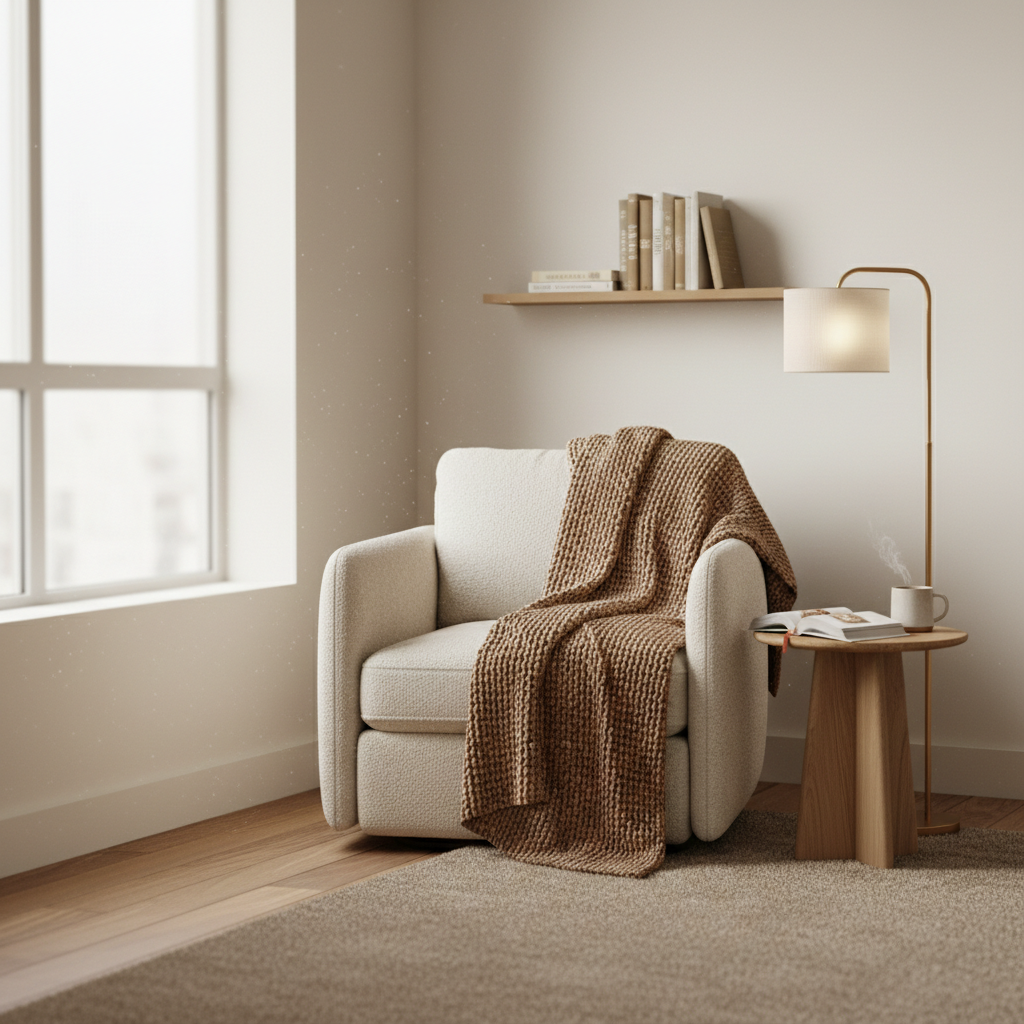
Small detail, big payoff: when you repeat one material twice, like black metal in a lamp and a picture frame, the room reads more cohesive, which people often experience as “cozy.”
What to buy first (and what can wait): a quick table
If you’re on a budget, prioritize the items that change comfort and mood immediately, then layer in extras later.
| Priority | Item | Why it helps | Common mistake |
|---|---|---|---|
| High | Warm bulbs + 1–2 lamps | Sets the mood and softens the whole room | Relying on one bright overhead light |
| High | Rug (proper size) | Defines zone, adds warmth and quiet | Buying a rug that’s too small |
| Medium | Throw + 2 pillow covers | Adds texture without taking space | Too many patterns at once |
| Medium | Closed storage basket/box | Reduces visual clutter fast | Open bins that still look messy |
| Low | Extra decor objects | Finishes styling, but not essential | Buying decor before fixing lighting/layout |
Common mistakes that stop a small room from ever feeling cozy
- Too many tiny items: it reads as clutter, even if each piece is “cute.”
- Ignoring scale: oversized furniture can work, but only when the layout stays walkable.
- Cool bulbs with warm decor: mixed lighting temperatures can make a room feel off.
- Pushing everything to the perimeter: sometimes it helps, sometimes it creates a ring of furniture and a dead center.
- Decor with no function: in a small room, a pretty item that also stores, lights, or softens wins.
If you’re renting, be careful with candles, extension cords under rugs, or overloaded power strips. If anything feels questionable, it’s smarter to consult a licensed electrician or your building management.
Key takeaways (so you can act today)
- Layer warm light before buying decor, it changes the entire vibe.
- Go bigger on anchors like rugs and art, and reduce tiny clutter pieces.
- Make movement easy with a clearer pathway and a simpler layout.
- Use texture + a tight palette to create warmth without visual noise.
If you do nothing else this week, add a second warm lamp and clear one surface completely, that combination tends to make small spaces feel noticeably calmer.
FAQ
How can I make a small room feel cozy without painting?
Start with warm bulbs, add a lamp, then bring in texture through a rug or throw. In many rooms, those changes create more “warmth” than paint because they affect both light and touch.
What lighting makes a small room feel cozy at night?
Warm light in the 2700K–3000K range, plus at least two sources at different heights. A dimmer helps because the cozy setting at 9 p.m. is rarely the same as what you want at 6 p.m.
Do mirrors actually help a small room feel cozy?
They can, but it depends on what they reflect. If the mirror bounces natural light or a pleasant view, great. If it reflects clutter or a harsh light source, it can make the room feel more chaotic.
How do I make a small bedroom feel cozy with minimal furniture?
Prioritize bedding texture, a warm bedside lamp, and one grounded element like a rug. Even a simple room can feel intentional when the lighting is soft and the textiles feel substantial.
What colors make a small room feel cozy but not dark?
Warm neutrals and muted earth tones tend to read cozy without swallowing light. If you like deeper colors, keep them to one area, like an accent wall or a few textiles, instead of spreading dark tones everywhere.
How do I make a small room feel cozy when I have a lot of stuff?
Use closed storage for the “daily pile,” keep surfaces sparse, and group similar items so they look intentional. Often, it’s not the amount of stuff, it’s that everything is visible at once.
How to make small room feel cozy on a tight budget?
Spend first on warm bulbs and one lamp, then add a thrifted basket for clutter control. After that, look for one large anchor piece, like a rug or oversized art print, instead of several small decor items.
If you’re trying to make a small room feel cozy but you keep second-guessing scale, layout, or what to buy first, a simple room plan and a short, prioritized shopping list often saves money and prevents the “random decor” problem.