
how to decorate a small bathroom without clutter comes down to one thing: you’re not “adding decor,” you’re editing what stays visible, then choosing a few pieces that earn their space.
If your bathroom feels tight, the problem usually isn’t the square footage, it’s the visual noise, too many bottles on the vanity, mismatched finishes, open shelves turning into a catch-all, and towels that never quite look intentional. The fix is less about buying more, more about making the room read calmer.
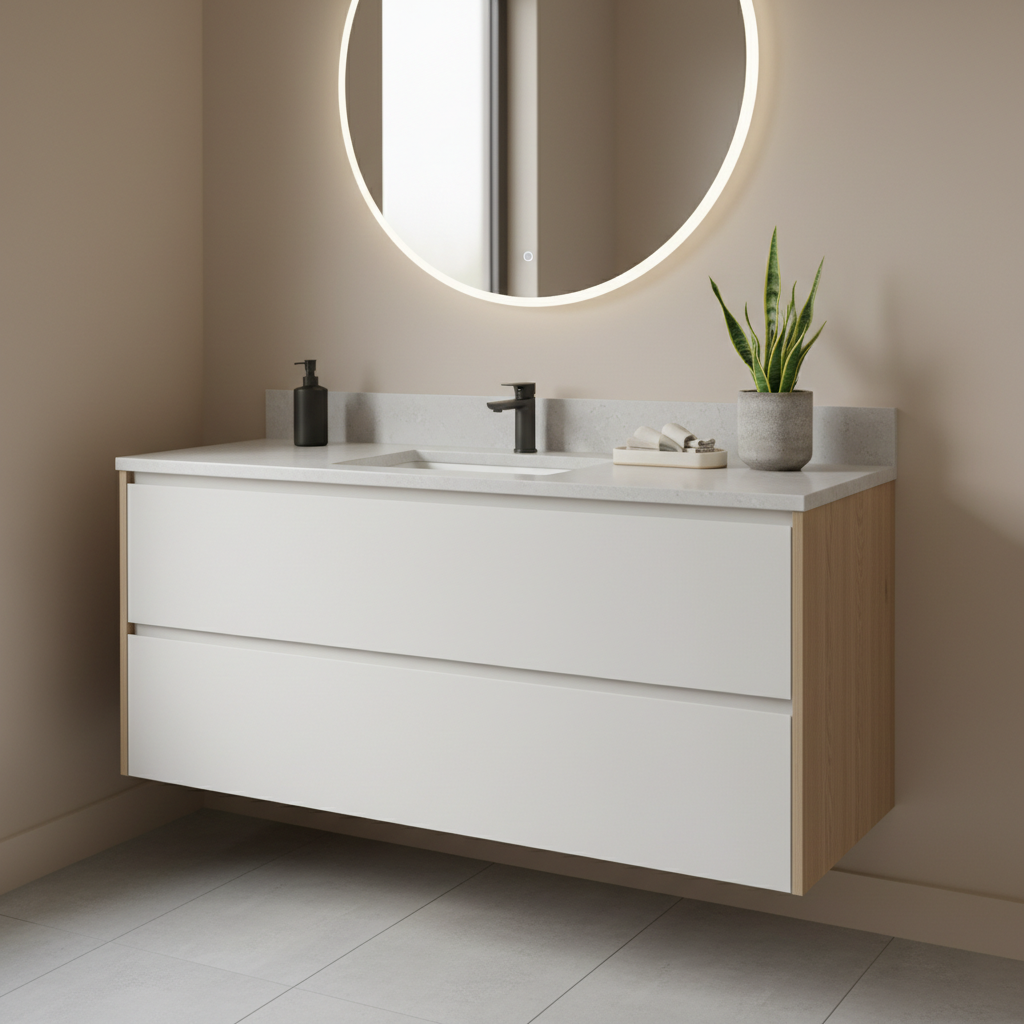
This guide focuses on decisions that actually change how a small bathroom feels: what to hide, what to standardize, what to hang on the wall, and what to stop storing in the bathroom altogether. You’ll get a quick self-check, a practical plan, and a few “good taste” rules that keep you out of clutter jail.
Start with a simple rule: keep surfaces boring on purpose
In a small bathroom, the countertop, tank top, and shower ledge are “high-attention zones.” If they look busy, the whole room feels messy even after you clean.
A good target is one functional item + one styling item per surface. Anything more should live inside a cabinet, drawer, or a container with a lid.
- Countertop: soap + a small tray (or nothing else)
- Toilet area: a lidded canister for extra rolls, or a slim stand, not both
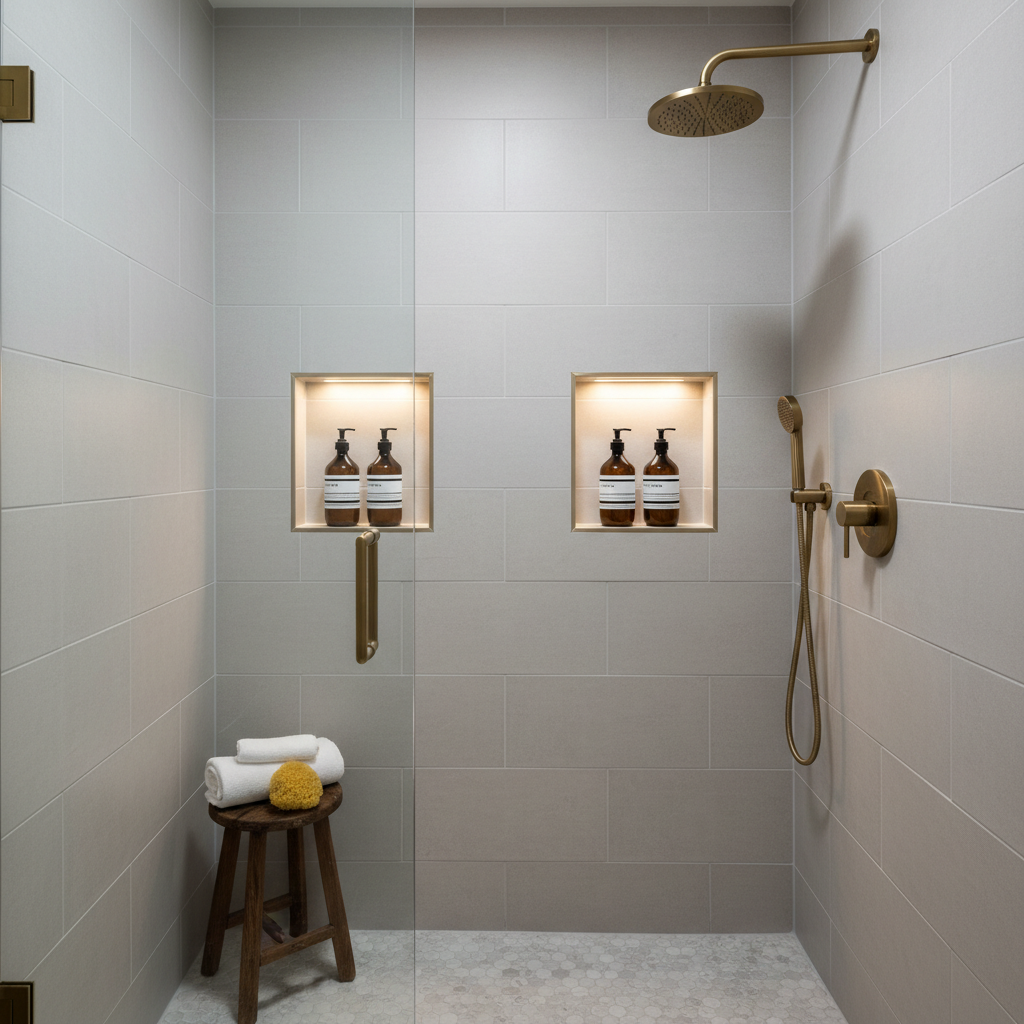
- Shower ledge: one matching set of bottles, not a lineup of half-used products
According to EPA (United States Environmental Protection Agency), bathrooms often have elevated moisture, so reducing exposed items also helps limit dust-plus-humidity grime that builds up on bottles and decor.
Why small bathrooms get cluttered (and what’s usually causing yours)
Most “decor clutter” is really storage problems wearing a cute outfit. These are the patterns that show up most in real homes.
- Too many categories on display: skincare, haircare, meds, cleaning supplies, candles, spare razors, and random samples all competing for attention.
- Open storage without boundaries: floating shelves look great in photos, but they need strict limits or they become a rotating junk exhibit.
- Duplicates everywhere: two half-empty shampoos, three conditioners, five travel minis “just in case.”
- No “backstage” zone: if there’s nowhere to hide the unpretty stuff, it lands on the counter.
- Decor that isn’t bathroom-friendly: woven baskets that warp, framed art without protection, and porous materials that don’t love humidity.
Once you see which bucket you’re in, decorating without clutter becomes a lot less mysterious, and a lot more mechanical.
A quick self-check: are you actually dealing with clutter, or layout friction?
Before you buy organizers, check what’s really happening. If you answer “yes” to a few of these, you’ll get better results from layout and storage changes than from new decor.
- You can’t clear the counter in under 60 seconds.
- You store daily items in three different places because nothing fits well.
- The toilet tank holds “temporary” items that never leave.
- Your shower has more than 6 bottles visible.
- Hand towels rotate between looking nice and becoming a laundry pile.
- You avoid opening a cabinet because it’s packed and annoying.
If that sounds familiar, treat “decor” as the final step, not the first. Otherwise you’ll decorate on top of friction, and it won’t stick.
Declutter fast without getting stuck: the 20-minute edit
You don’t need a full weekend to reset the room. Try this quick pass, it’s designed for people who hate long organizing projects.
Step 1: Clear one zone completely
Pick one: vanity top, shower, or toilet area. Remove everything, wipe the surface, then only return what you use daily.
Step 2: Make “daily,” “weekly,” and “rare” piles
- Daily: stays accessible, but not necessarily visible
- Weekly: stored in a bin or drawer, easy to grab
- Rare: move out of the bathroom if possible (back stock, travel kits, extra tools)
Step 3: Standardize what you see
Decanting isn’t mandatory, but visual consistency matters. Even switching to matching bottles for soap and lotion can make the room feel twice as calm.
Key point: you’re not trying to own fewer things overnight, you’re trying to make fewer things visible at once.
Decorate with “closed storage first,” then add one focal point
If you want to know how to decorate a small bathroom without clutter, this is the part many people skip: you need at least one place where messy reality can disappear.
Closed storage ideas that don’t feel bulky
- Over-the-toilet cabinet (shallow depth), good for rentals if it’s freestanding
- Vanity drawer inserts for daily items so the countertop stays clear
- Medicine cabinet upgrade with adjustable shelves if you’re remodeling
- Slim rolling cart that tucks between vanity and wall, best if you can hide it mostly out of sight
Then choose one focal point, not five
Small bathrooms look better when they have a single “moment.” Pick one:
- Statement mirror (arched, thin frame, or warm wood)
- One piece of wall art sized correctly, not a collage of tiny frames
- One special light fixture if you can swap it
Everything else supports that focal point. When you try to make every corner interesting, the room reads crowded.
What to buy (and what to stop buying): a practical cheat sheet
Decor shopping is where clutter sneaks back in. This table helps you choose items that add style without adding mess.
| Goal | Usually works well | Often turns into clutter |
|---|---|---|
| Make it feel calmer | Matching dispensers, one tray, neutral textiles | Multiple small decor objects, busy patterns |
| Add warmth | Wood-toned mirror frame, warm bulbs, linen-look towels | Extra baskets with no job, too many candles |
| Improve function | Hooks, drawer dividers, wall-mounted holder | Countertop organizers that grow over time |
| Look “styled” fast | One plant (realistic faux is fine), one framed print | Lots of small frames, decorative bottles you never use |
When in doubt, buy items that replace something, not items that join the party.
Small-bathroom styling moves that look good and stay low-maintenance
These are the upgrades that tend to hold up in day-to-day life, even with kids, roommates, or a packed schedule.
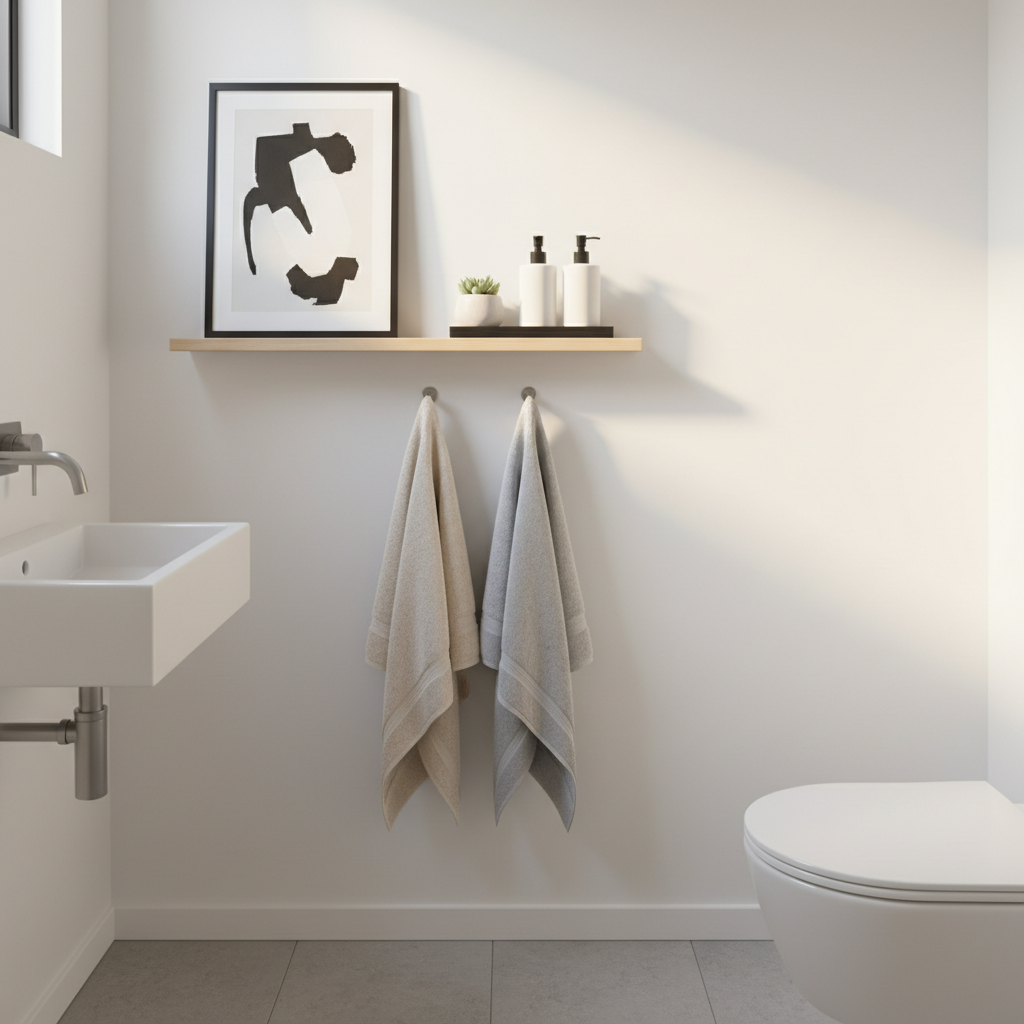
1) Hang towels like you mean it
Use two hooks or a double bar so towels can actually dry. A towel that never dries becomes a recurring mess and can contribute to odor or mildew, which is worth avoiding in a small space.
2) Use a tray as a “container boundary”
A tray makes two items feel intentional, and it limits creep. If it doesn’t fit on the tray, it doesn’t live on the counter.
3) Keep color count low
A simple palette usually reads cleaner: pick one metal finish (chrome, brushed nickel, brass) and keep textiles within two related tones.
4) Go vertical, but keep it closed when possible
Wall cabinets, a tall slim unit, or shelves with lidded boxes can add storage without making the room feel smaller. Open shelves can work, but only if you treat them like a display, not a pantry.
5) Choose one “soft” element and one “hard” element
Example: plush towels (soft) plus a clean-lined mirror (hard). This balance keeps the room from feeling either sterile or overly decorated.
Common mistakes that create clutter even in “minimal” bathrooms
- Using organizers as permanent parking lots: bins help, but if the bin stays on the counter, you just rebranded clutter.
- Keeping every product in the shower: store backups elsewhere, and keep the active set tight.
- Too many tiny upgrades: a new soap dish, new jar, new sign, new plant, it adds up fast in a small footprint.
- Ignoring lighting temperature: mixed bulbs can make even a clean space feel “off.” If you’re changing bulbs, keep color temperature consistent.
- Decor that can’t handle humidity: if you notice warping, rust, or peeling, swap to materials designed for bathrooms.
If you keep falling back into clutter, it’s rarely a willpower issue. It’s usually a system issue: no place for daily items to disappear.
When it’s worth calling a pro (or at least getting help)
Sometimes the barrier isn’t styling, it’s the room itself. Consider professional help if:
- You see recurring moisture problems, peeling paint, or persistent mildew, a contractor or remediation specialist may need to assess ventilation and surfaces.
- Your bathroom has unsafe storage behavior, like items falling from high shelves; a handyman can install proper anchors, hooks, or a recessed cabinet.
- You’re planning electrical or lighting changes; for many situations, hiring a licensed electrician is the safer route.
According to CDC (Centers for Disease Control and Prevention), mold exposure can affect health for some people, so if you suspect a larger issue behind “bathroom mess,” it’s reasonable to ask a qualified professional for guidance.
Conclusion: a small bathroom can feel styled without feeling full
Learning how to decorate a small bathroom without clutter is mostly about choosing what stays visible, then committing to a few simple limits, one focal point, one finish direction, and surfaces that stay intentionally quiet. Do the edit first, add closed storage second, then decorate like you’re curating, not collecting.
If you want a clean next step, pick one zone today, clear it completely, and set a “two items max” rule for that surface. You’ll feel the difference before you buy anything.