
How to add texture to living room on budget comes down to one thing, layering what you already have with a few high-impact, low-cost swaps that make the room feel finished.
If your living room looks “flat” in photos, or it feels a little sterile even after you tidy up, you’re usually missing texture, not more furniture. Texture is what gives a space depth: rough next to smooth, matte next to glossy, soft next to structured.
The good news, you don’t need custom built-ins or expensive art to get there. Small moves like a nubby throw, a woven basket, or a lamp shade with linen can change the entire vibe, especially when you stack a few textures on purpose.
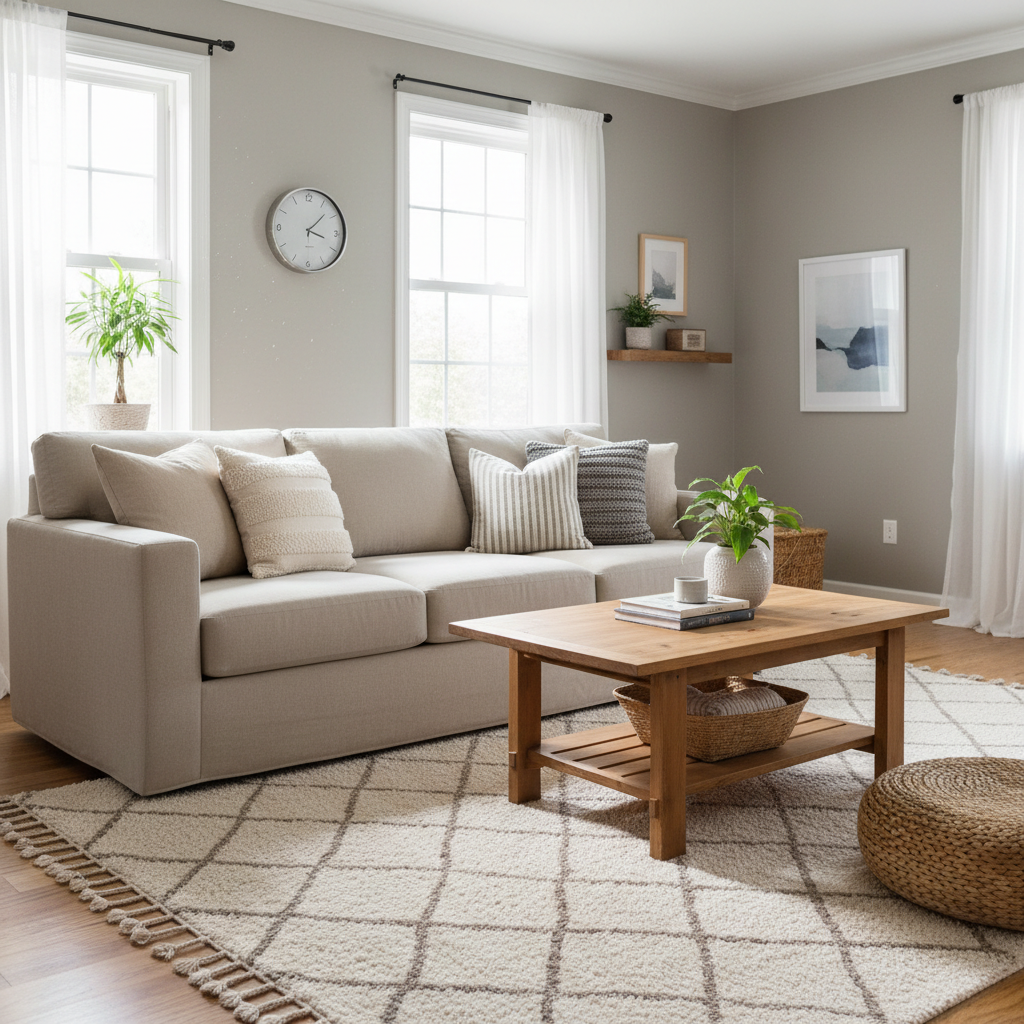
What “texture” actually means in a living room
People often think texture equals “more stuff,” but it’s really about surface variation. Your eye wants contrast, even if your color palette stays calm.
- Soft texture: knits, fleece, chenille, velvet, boucle, cotton throws
- Natural texture: rattan, jute, seagrass, unfinished wood, stoneware
- Hard texture: metal, glass, ceramic, lacquered finishes
- Visual texture: patterns, ribbing, slub fabric, aged finishes that read as tactile
According to The American Society of Interior Designers (ASID), good interior design supports comfort and well-being, and tactile materials are one of the most direct ways to make a room feel more livable. You don’t need to chase trends, you just need enough contrast for the room to feel intentional.
Why your room feels flat (common budget traps)
Most “flat” rooms share a few patterns, and none of them require a big spend to fix.
- Too many matching sets: sofa + loveseat + identical pillows often reads like a showroom
- Everything is the same finish: all matte black, all chrome, all glossy white
- One texture everywhere: microfiber couch, smooth rug, smooth curtains, smooth walls
- Lighting is doing all the work: one overhead light makes texture disappear
Say it plainly, if your living room is mostly smooth surfaces, even great furniture can look underwhelming.
Quick self-check: do you need more texture or just better layering?
Run this fast checklist before you buy anything. If you check three or more, texture is your missing ingredient.
- Your sofa has fewer than 3 pillows or they’re all the same size and fabric
- You have one rug and it’s low-pile, solid, and similar to the sofa color
- Your window treatment is bare, or it’s a single smooth panel with no contrast
- Your coffee table styling is mostly glass/metal without something organic (wood, woven, ceramic)
- Your decor is all small objects, nothing chunky (basket, big bowl, larger plant)
- Your lighting is mainly overhead, little to no lamp glow
If you only check one or two, your room may be fine, it might just need editing and better placement. Texture can’t fix clutter.
Budget-friendly ways to add texture fast (highest impact first)
When money is tight, you want changes that show up immediately. These usually do.
1) Upgrade your pillow mix, not the pillow count
A good “cheap but rich-looking” formula: two solids + one textured + one pattern. Keep colors in the same family, vary the fabric.
- Textured pick: boucle, chunky knit, faux fur, slub linen
- Pattern pick: subtle stripe, small-scale geometric, vintage-style print
- Tip: use pillow covers, not new inserts, and keep inserts slightly larger than covers for a fuller look
2) Add a throw that looks tactile from across the room
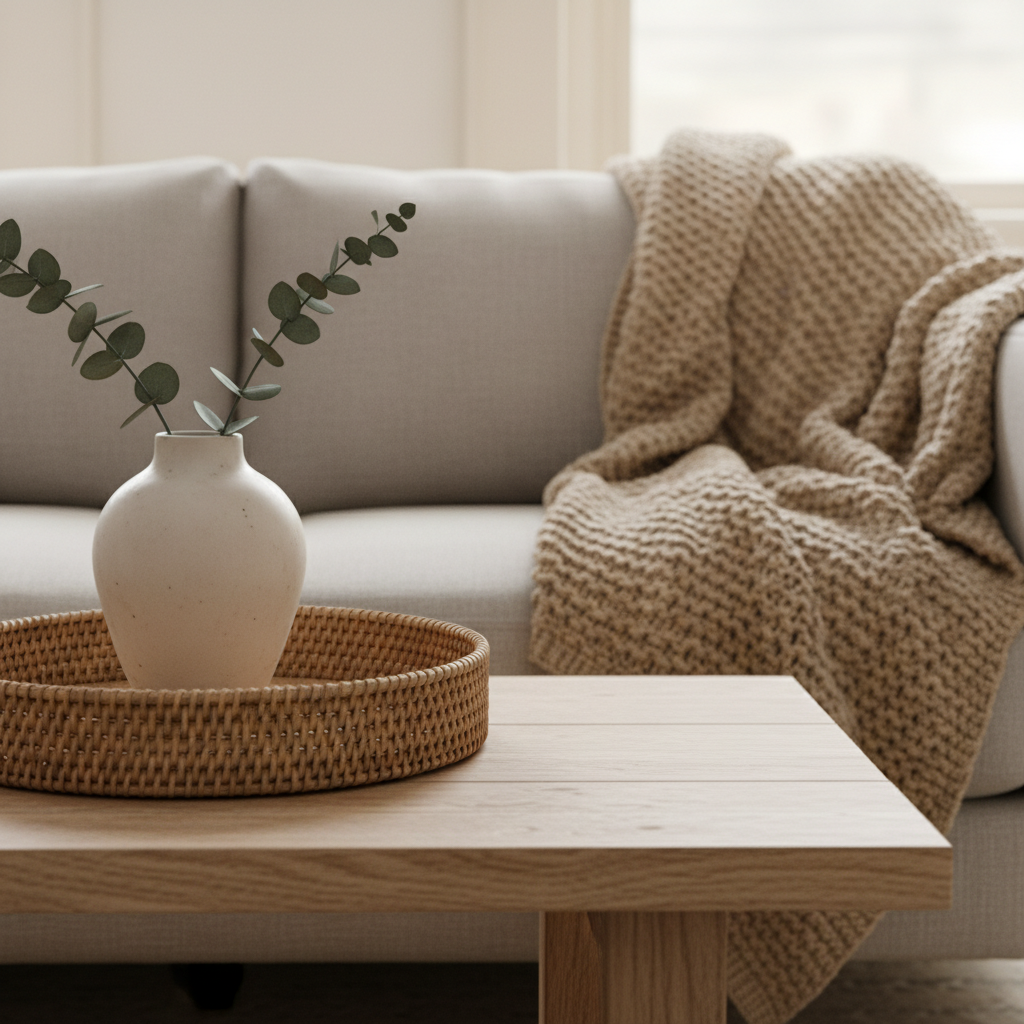
This is one of the easiest answers to how to add texture to living room on budget, because a throw reads at a distance. Go for chunky knit, waffle weave, brushed cotton, or a light faux fur.
3) Bring in one natural “weave” element
Woven pieces instantly soften a space. Pick one: a lidded basket, a seagrass hamper, a rattan tray, or a jute stool. The key is scale, small woven coasters won’t move the needle much.
4) Mix matte and shiny finishes on purpose
If your room is all matte, add one glossy ceramic lamp, a glass vase, or a brass-toned frame. If it’s all shiny, bring in matte pottery or unfinished wood.
5) Add texture through plants (real or convincing faux)
Leaves add organic shape and shadow, which reads like texture. One larger plant often works better than three tiny ones, especially in a corner.
Room-by-room style moves: sofa, floors, walls, and tables
Instead of shopping randomly, pick the area that feels most bare and build texture there.
Sofa zone (where texture matters most)
- Layer: pillow mix + throw + one different material nearby (wood side table, woven basket)
- If your sofa is leather or faux leather, add softer fabrics to balance the “slick” surface
- If your sofa is already plush, bring in structured texture like a woven tray or metal lamp
Floors (rug choices that don’t blow the budget)
- Flatweave: durable, easy to clean, can look thin unless paired with a soft throw/pillows
- Low pile with pattern: hides wear, adds visual texture, often the safest pick for families
- Jute: strong texture for cheap, but can feel rough and may shed; a smaller soft rug layered on top helps
Walls (texture without remodeling)
- Hang curtains with a bit of body: linen-look, cotton canvas, subtle slub
- Use one oversized art piece, not a cluster of tiny frames that reads busy, not textured
- Consider peel-and-stick options cautiously, samples first, and avoid high-humidity walls
Coffee table and shelves (the “touch points”)
- Use a trio: something smooth (glass/candle), something matte (ceramic), something woven/wood
- Books add texture when stacked, especially with a small object on top
- Leave breathing room, texture looks better with negative space
A simple 30-minute plan (no shopping required first)
If you want a quick win tonight, do this in order. It’s not glamorous, but it works.
- Step 1: Remove anything that’s tiny, random, or purely decorative clutter
- Step 2: Move one textured item you already own into the living room (blanket, basket, ceramic bowl)
- Step 3: Create one contrast moment: soft next to hard, woven next to smooth, matte next to shiny
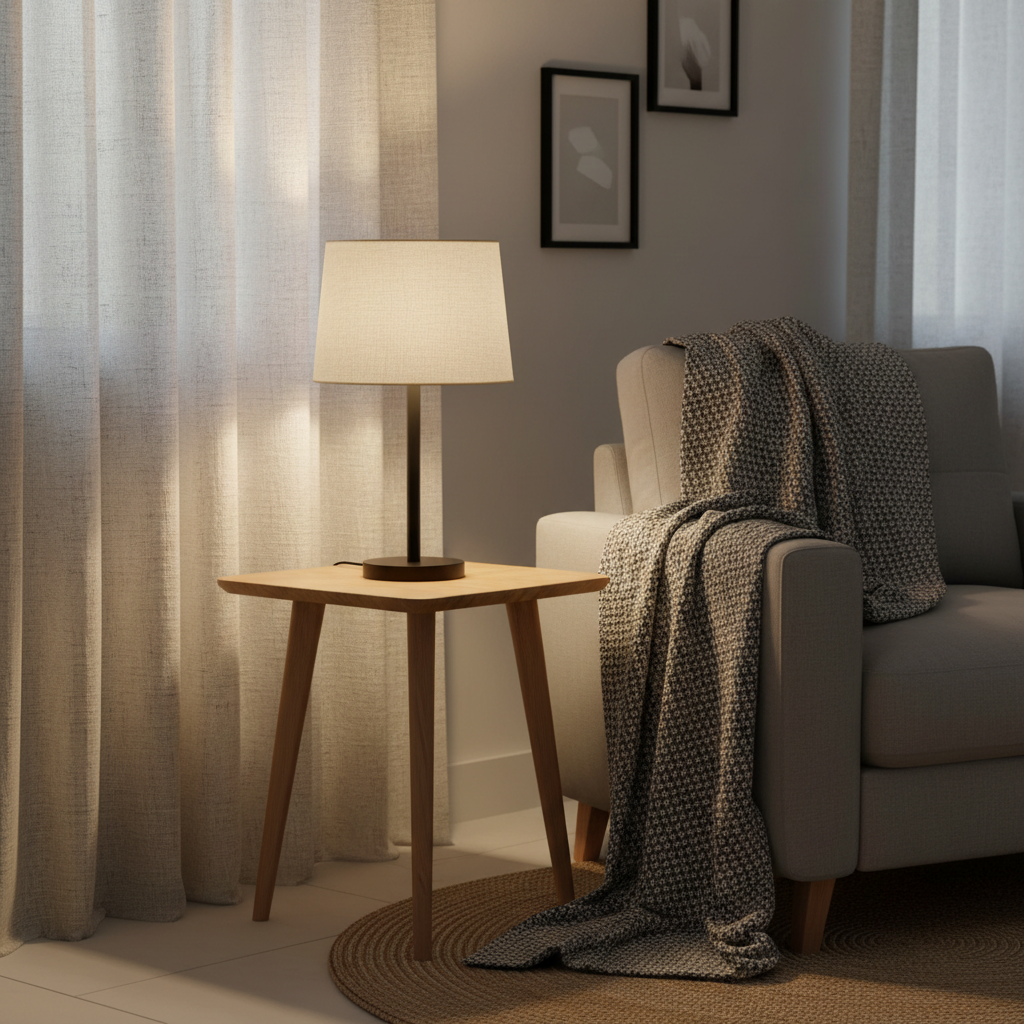
- Step 4: Fix lighting: add a table lamp, or swap to a warmer bulb if the room looks icy
According to ENERGY STAR, LED lighting can reduce energy use compared with traditional bulbs, and in practice it also gives you more choices for warmth and brightness. Just pick the right color temperature for comfort.
Budget texture swaps: what to buy first (and what to skip)
If you do decide to spend, spend where texture reads from across the room. This table helps you prioritize.
| Item | Why it helps | Budget approach | Common mistake |
|---|---|---|---|
| Throw pillow covers | Instant fabric contrast | Buy 2-4 covers, keep inserts | All same fabric or size |
| Throw blanket | Adds softness and depth | One chunky or woven piece | Too thin to show texture |
| Basket / woven tray | Natural weave breaks up smooth surfaces | Go bigger than you think | Tiny baskets that look like clutter |
| Area rug | Largest texture surface | Patterned low-pile or jute + layer | Wrong size makes room feel off |
| Lighting (lamp/shade) | Reveals texture via shadows | Swap shade to linen-look | Cold bulb that flattens everything |
Skip for now: tiny knickknacks, trendy sculptures, and anything that adds visual noise without adding a new material.
Common mistakes when adding texture on a tight budget
- Buying everything in one store run: it often looks matchy, even if each item is cute
- Overdoing “cozy”: too many fuzzy items can feel heavy, mix in crisp cotton, wood, or metal
- Ignoring scale: a room needs at least one or two larger textured pieces to register
- Forgetting function: scratchy rugs and shedding throws look good, then annoy you daily
- Using only beige: neutrals work, but you still need contrast in finish, pattern, and weave
Key takeaways (keep this simple)
- Texture is contrast, not clutter or more decor
- Start with the sofa: pillows + throw usually give the fastest payoff
- Add at least one natural element: woven, wood, or pottery
- Lighting matters, warm layered light makes texture visible
- If you buy anything, buy what reads from across the room
Conclusion: a richer-looking room without a big spend
If you’re trying to figure out how to add texture to living room on budget, focus on a few tactile upgrades that show up at a distance, then edit the rest. One good throw, a smarter pillow mix, and a natural woven piece often do more than a cart full of small decor.
Pick one zone today, the sofa or the coffee table, and add a single contrast you can feel with your eyes. After that, let the room sit for a day, you’ll usually know what’s still missing.