
how to arrange throw pillows on armchair neatly usually comes down to two things, scale and intention, because most “messy” chairs are just wearing pillows that are too big, too many, or sliding with no support.
If your armchair sits in a living room corner or next to a sofa, it quietly becomes a visual anchor, and pillows are the fastest way to make it look styled instead of temporary. The good news, you do not need a designer eye, you need a repeatable setup you can reset in 10 seconds.
This guide gives you a few reliable arrangements, a quick self-check to diagnose what’s going wrong, and practical fixes for slipping, sagging inserts, odd proportions, and “why does this look fine in photos but not in my house” moments.
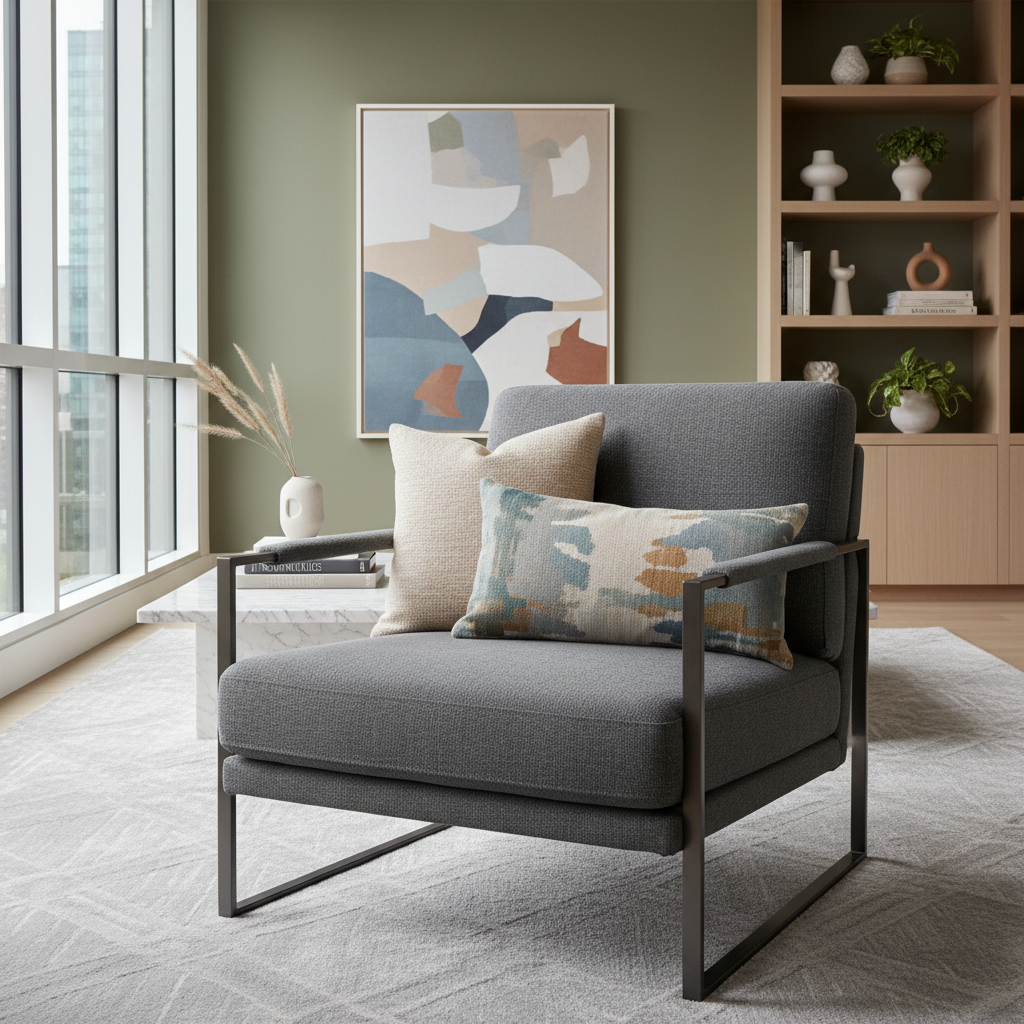
Why throw pillows look “messy” on an armchair (real-world reasons)
Most armchairs are narrower than people think, especially compared with a sofa, so pillows that look normal on a couch can overwhelm a chair fast. When that happens, the chair looks crowded, and the seat becomes unusable, which makes the whole setup feel accidental.
- Wrong size for the chair width, a 22x22 pillow on a compact chair often reads bulky rather than cozy.
- Inserts are underfilled or overfilled, so corners collapse or the pillow domes like a ball.
- Slippery fabrics like velvet, leather, or performance weave can cause constant sliding.
- No “backstop”, if the chair back is angled, a pillow needs support or it slumps forward.
- Too many patterns competing, the eye reads it as clutter even when the pillows are aligned.
According to The American Society of Interior Designers (ASID)... thoughtful scale and balance matter more than buying more decor, which is a polite way of saying, fewer well-chosen pillows tends to look cleaner than a pile.
A quick self-check: which situation are you in?
Before you rearrange anything, take 30 seconds and identify the problem type. This keeps you from “fixing” it by adding another pillow.
- My pillow blocks the armrests → size is too large, or you need a slimmer lumbar option.
- It slides down every time someone sits → fabric friction is low, add grip or a support pillow behind it.
- It looks fine head-on, weird from the side → chair back angle needs a wedge or a smaller back pillow.
- It looks flat and cheap → insert fill is weak, consider a fuller insert or a down-alternative upgrade.
- It looks busy → pattern scale or color contrast is fighting the chair upholstery.
If you want a fast photo test, stand where guests enter the room, glance at the chair for two seconds, then look away. If you remember “pillow pile” more than “nice chair,” it’s probably too much.
3 neat arrangements that work in most American living rooms
When people ask how to arrange throw pillows on armchair neatly, they often expect one magic layout. In reality, you pick a layout based on whether the chair is for looks, for daily sitting, or for lounging.
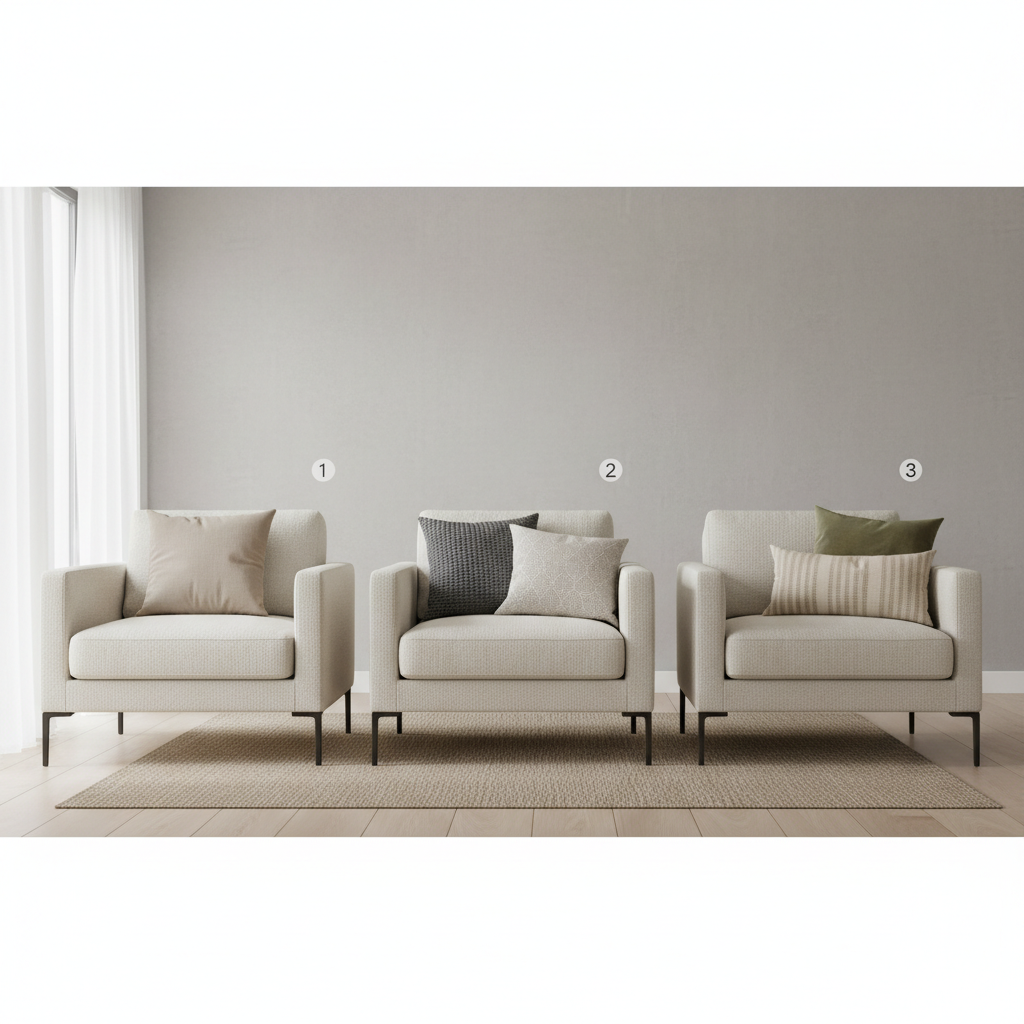
Layout A: One pillow, centered (cleanest and most “neat”)
Use one pillow and place it centered against the chair back, with the bottom edge lightly touching the seat. This is the most forgiving option for small chairs and for chairs with bold upholstery.
- Best for: accent chairs, reading nooks, tight corners
- Style tip: pick a texture (bouclé, knit, linen) instead of a loud print
Layout B: Two pillows, layered (cozy but still controlled)
Put the larger pillow at the back, then a slightly smaller one in front, both aligned to the chair centerline. Keep the front pillow sitting a bit higher so it looks intentional, not slumped.
- Best for: medium to large armchairs, family rooms
- Common sizes: 20x20 back + 18x18 front, or 22x22 back + 20x20 front on a wide chair
Layout C: One square + one lumbar (most “tailored”)
Set a square pillow at the back, then place a lumbar pillow across the lower third. This reads neat because the shapes are different, and the lumbar naturally suggests posture support.
- Best for: chairs people actually sit in, office corners, nursery gliders
- Common lumbar size: roughly 12x20 to 14x22
Size, insert, and fabric: the quiet details that make it look polished
Neat styling is rarely about the arrangement alone, it’s about whether the pillow behaves. If you hate “re-fluffing,” focus here.
| What you see | Likely cause | Practical fix |
|---|---|---|
| Pillow collapses, looks tired | Insert underfilled or low-loft | Use a fuller insert, often 1–2 inches larger than cover size |
| Pillow looks like a balloon | Insert too large or too firm | Size down insert, or choose a softer fill |
| Edges look wrinkled | Cover too loose, thin fabric | Steam lightly, consider a better-structured cover |
| Pillow constantly slides | Slick upholstery or cover fabric | Add a discreet gripper pad or a lower-friction back pillow |
For a crisp look, the “karate chop” top crease can work on some fills, but it can also look forced on very structured pillows. If you like a relaxed vibe, skip it and focus on full corners instead.
Step-by-step: a 2-minute method you can repeat every day
This is the quick reset I recommend when you want the chair to look tidy without fuss. It’s also the simplest way to maintain how to arrange throw pillows on armchair neatly after people actually use the chair.
- Start with the chair empty, smooth the seat and back so you see the true angle.
- Place the “anchor” pillow first, usually the largest one, centered and pushed back firmly.
- Add the second pillow only if needed, layer it slightly higher and keep edges parallel to the chair seams.
- Do a symmetry check, look at the chair from 6–8 feet away, adjust by inches, not by big moves.
- Lock it in, if slipping happens, add a thin gripper pad behind the pillow where it touches the chair back.
If the chair is a daily seat, a lumbar-only setup often stays neat longer than stacked squares, because it does not fight the armrests as much.
Common mistakes that waste time (and make the chair unusable)
Some styling advice online assumes the chair never gets sat in. In real homes, that’s where things go sideways.
- Using sofa-scale pillows on a compact chair, it looks plush for five minutes, then it looks cramped.
- Forcing perfect symmetry in a casual room, slight asymmetry can look more natural, but keep the edges tidy.
- Mixing too many shiny textures, velvet + leather + satin can read slippery and busy at once.
- Ignoring the chair’s arms, if pillows hide the arms, the chair loses its shape, which is usually the point of an accent chair.
- Buying covers first, inserts later, inserts drive the look, covers are just the outfit.
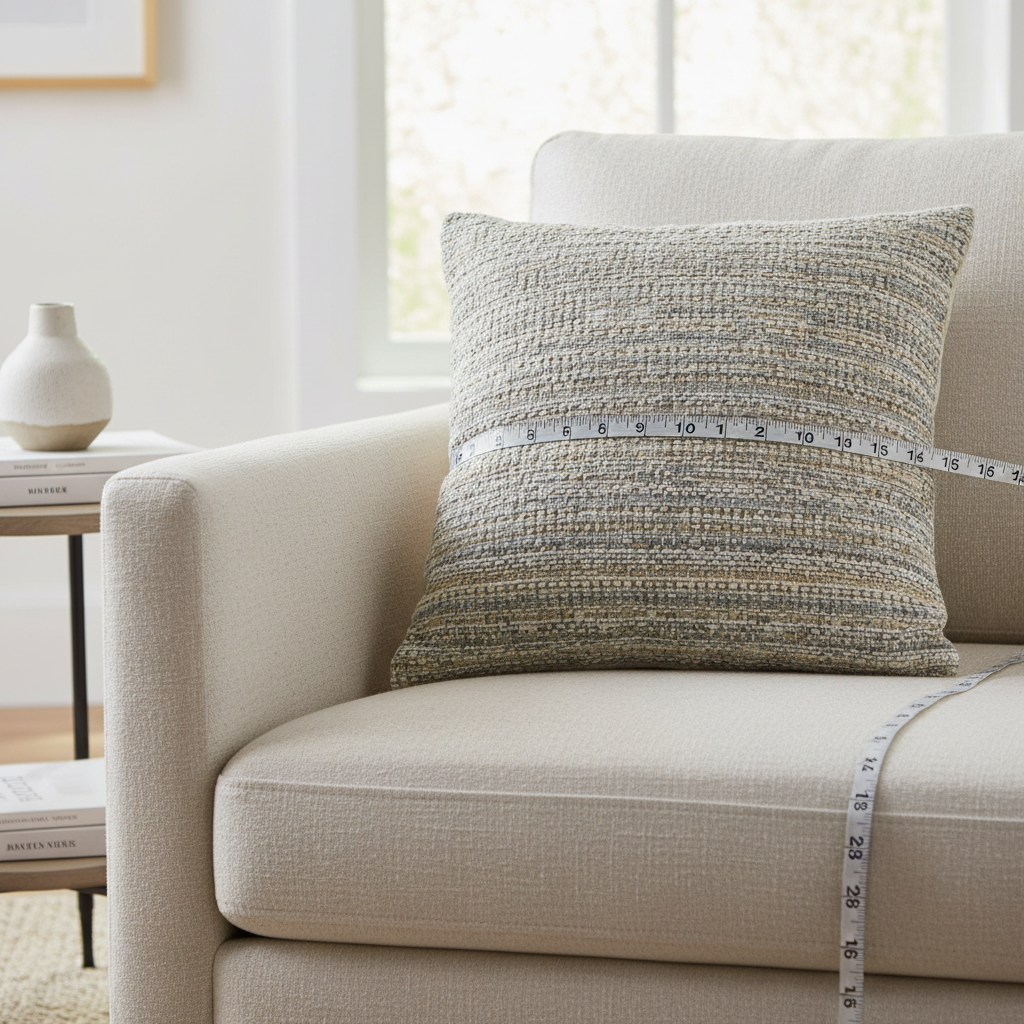
When it’s worth asking for help (or changing the plan)
If you’ve tried two or three layouts and the chair still looks awkward, the issue may be the chair scale in the room, not your pillow skills. A very low-back chair, a deep lounge chair, or a recliner often needs different proportions than standard “accent chair” tips.
- If you have back pain or posture concerns, a lumbar pillow may help, but comfort needs vary, it can be worth asking a healthcare professional for personalized advice.
- If the chair sits in a high-traffic spot, consider a single durable pillow cover, easy-off, washable, and not precious.
- If you’re styling for staging or listing photos, a designer or stager can quickly spot proportion issues, sometimes a throw blanket swap does more than extra pillows.
According to Better Homes & Gardens... mixing texture and pattern works best when you keep a consistent color story, which is a helpful north star when you feel tempted to add “one more cute print.”
Key takeaways (save this)
- One pillow centered is the neatest default for most armchairs.
- Layered looks stay polished when sizes step down, not equal.
- Full inserts matter more than fancy covers for a crisp shape.
- Sliding issues are usually fabric friction, not your arrangement skills.
- When in doubt, remove one pillow, the chair should still look like a chair.
Conclusion: a neat armchair setup should feel easy to reset
If you take one thing from this, let it be this, how to arrange throw pillows on armchair neatly is less about creativity and more about choosing a layout that matches the chair size and how your home actually runs. Start with a one-pillow setup, get the insert fullness right, then add a second pillow only when it improves both comfort and the silhouette.
Action step: try Layout A today, snap a quick photo from across the room, then test Layout C if you want it to feel more tailored without adding bulk.
FAQ
- How many throw pillows should be on an armchair?
Most of the time, one or two is enough. Three can work on an oversized chair, but it often looks cluttered on standard accent chairs. - What size throw pillow looks best on a standard armchair?
Many standard chairs handle 18x18 or 20x20 well, depending on width and back height. If the pillow covers the arms, size down or switch to a lumbar. - How do I keep pillows from sliding off a leather armchair?
Leather is slick, so use a gripper pad behind the pillow, pick a more textured cover, or use a lumbar that “locks” into the seat-back angle better. - Is it okay to use one pillow instead of two?
Yes, and it often looks more intentional. One well-chosen pillow can highlight the chair shape and keep the seat usable. - Should throw pillows match the sofa?
They do not need to match exactly, but they should relate, usually through a shared color, material, or pattern scale. If everything matches perfectly, it can feel like a showroom. - How do I mix patterns without making the chair look busy?
Limit it to one patterned pillow and keep the other solid or textured. If the chair fabric is already patterned, go solid on the pillows. - What’s the fastest way to make pillows look “full” again?
Fluff the insert, push the pillow back into the chair corner, and square the bottom edge. If it still looks flat, the insert fill may be the real issue.
If you’re trying to get a cohesive look across a sofa and a pair of chairs, or you want pillows that keep their shape without constant adjusting, it may be easier to plan a small “pillow set” by size and texture so your armchair always resets neatly in a few seconds.