
Best small ceiling fans for small bedrooms come down to fit, airflow you can actually feel, and noise control, because a fan that overwhelms the room or whines at night quickly turns into regret.
If you’re shopping for a compact bedroom, you’re probably balancing three things at once: limited ceiling clearance, a bed that sits close to the fan, and a room that gets stuffy fast. The good news is that modern “small” fans can still move plenty of air, especially with efficient DC motors and better blade designs.

What tends to trip people up is assuming “small room” means “any fan under 42 inches.” In reality, the right choice depends on ceiling height, whether you need a light kit, and how sensitive you are to sound. Below is a practical way to pick a fan that fits, feels comfortable, and doesn’t look out of place.
What “small bedroom” means for ceiling fan sizing
Most small bedrooms in the U.S. land somewhere around 8x10 to 12x12. In many cases, fans in the 29–42 inch range work well, but the room layout matters as much as square footage.
- Under 75 sq ft (tiny office/box room): typically 29–36 inch fans, or consider a flush mount if clearance is tight.
- 75–144 sq ft (common small bedroom): typically 36–42 inch fans.
- Low ceilings (often 8 ft): lean toward flush-mount or low-profile models to keep safe head clearance.
According to ENERGY STAR..., efficient ceiling fans can help with comfort while using less energy than many other cooling options, especially when paired with an AC thermostat strategy. That doesn’t mean a fan “cools” air, but it can improve perceived comfort via airflow.
Key specs that matter more than “looks” in a small room
A compact bedroom is less forgiving. Specs that feel minor online can become obvious at 2 a.m.
Airflow (CFM) and airflow “feel”
CFM is airflow volume. Higher CFM can help, but blade pitch, motor design, and mounting height change how it feels at the bed. Many small-room fans land roughly in the 2,500–5,000 CFM range, and that’s often plenty for a bedroom.
Noise and motor type (DC vs AC)
Many newer compact fans use DC motors, which often run smoother and offer more speed steps. AC motors are common and can be perfectly fine, but in budget models you may notice more motor hum or wobble if install isn’t dialed in.
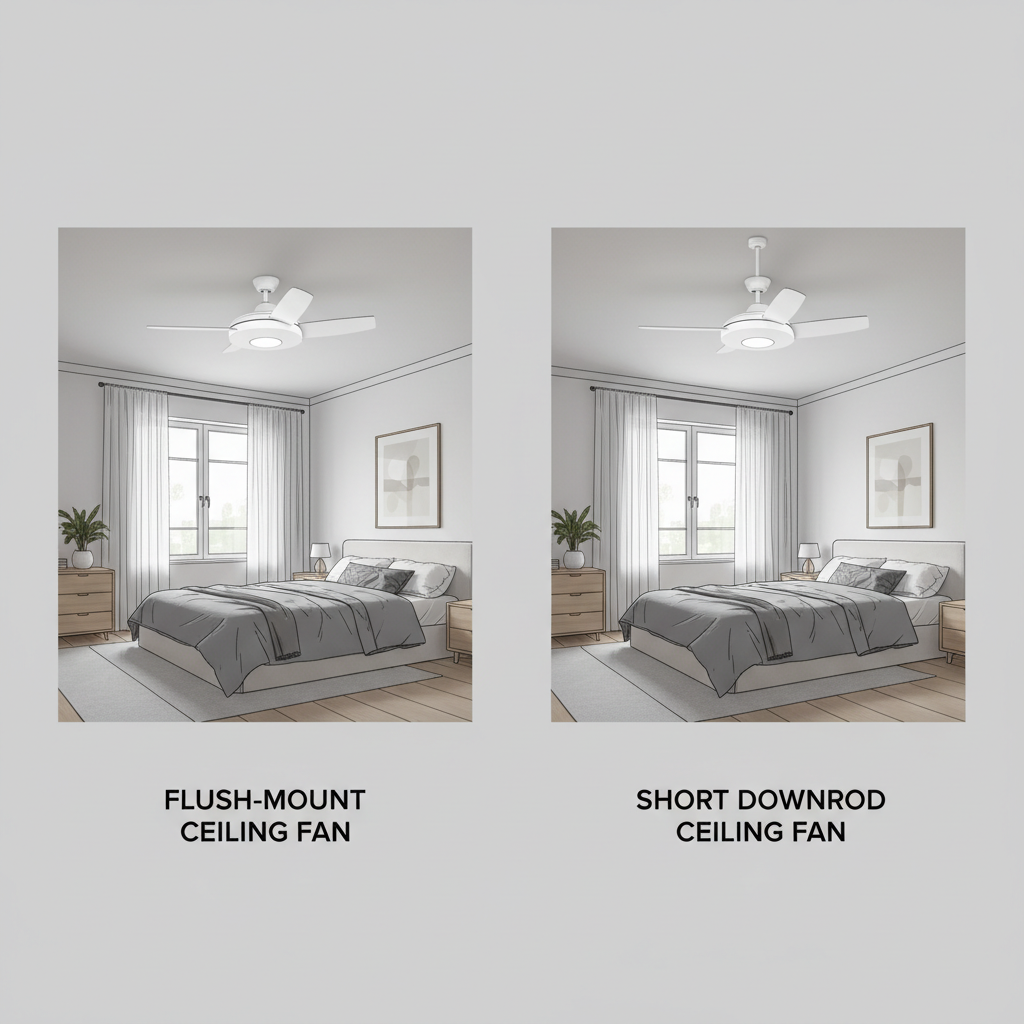
Mounting style: flush vs downrod
- Flush/low-profile: best for 8 ft ceilings or when you want the fan tight to the ceiling.
- Short downrod: sometimes improves airflow and reduces ceiling “dead zone,” if you have clearance.
Light kit and color temperature
If this fan replaces your main bedroom light, pay attention to lumens (brightness) and color temperature. Many people sleep better with warmer light (around 2700K–3000K), but your preference may differ.
Quick comparison table: choosing the right small fan
Use this as a fast filter before you start browsing product pages.
| Bedroom situation | Recommended fan type | Typical blade span | What to prioritize |
|---|---|---|---|
| 8 ft ceiling, bed close to center | Low-profile / flush-mount | 29–42 in | Quiet motor, wobble control, compact housing |
| Ceiling is 9–10 ft | Short downrod mount | 36–44 in | Airflow at bed height, balanced blades |
| No overhead light in room | Fan with LED light kit | 36–42 in | Replaceable LED, dimming, warm color temp options |
| Very noise-sensitive sleeper | DC motor fan | 29–42 in | Low-speed whisper performance, stable mounting |
| Renter, basic ceiling box | Standard flush mount | 36–42 in | Simple install, remote control, solid warranty |
How to pick from the “best small ceiling fans for small bedrooms” (a real-world checklist)
Before you lock in a model, run through this. It’s the stuff people wish they’d checked after the fan is already on the ceiling.
- Measure ceiling height, then decide flush mount vs downrod. If you’re unsure about clearance or code, ask a qualified installer.
- Find the room center relative to your bed. In small rooms, an off-center fan can feel uneven and look awkward.
- Check the ceiling box rating. Ceiling fans typically require a fan-rated electrical box. If you don’t know what’s installed, it’s worth verifying.
- Decide on controls: wall control, remote, or smart. If you share a room, a quiet remote with dimming can be a relationship saver.
- Think about sleep comfort: you’ll likely use low speeds most nights, so low-speed noise matters more than max-speed marketing.
Once you filter this way, the “best small ceiling fans for small bedrooms” list gets shorter fast, and shopping becomes less random.
Installation and setup tips that prevent wobble and noise
A lot of “bad fan” complaints are really setup issues. In a small bedroom, even mild wobble can feel dramatic.
- Balance matters: if your fan includes a balancing kit, use it. A tiny blade weight can eliminate an annoying vibration.
- Tighten connections: many rattles come from loose light kit screws or canopy hardware.
- Use the right downrod length: too long in a small room can feel intrusive, too short (when downrod is appropriate) may reduce airflow.
- Set the correct direction: typically counterclockwise for a cooling breeze in summer, clockwise for gentle air mixing in winter. According to U.S. Department of Energy..., reversing direction seasonally can improve comfort and reduce heating/cooling load in many homes.
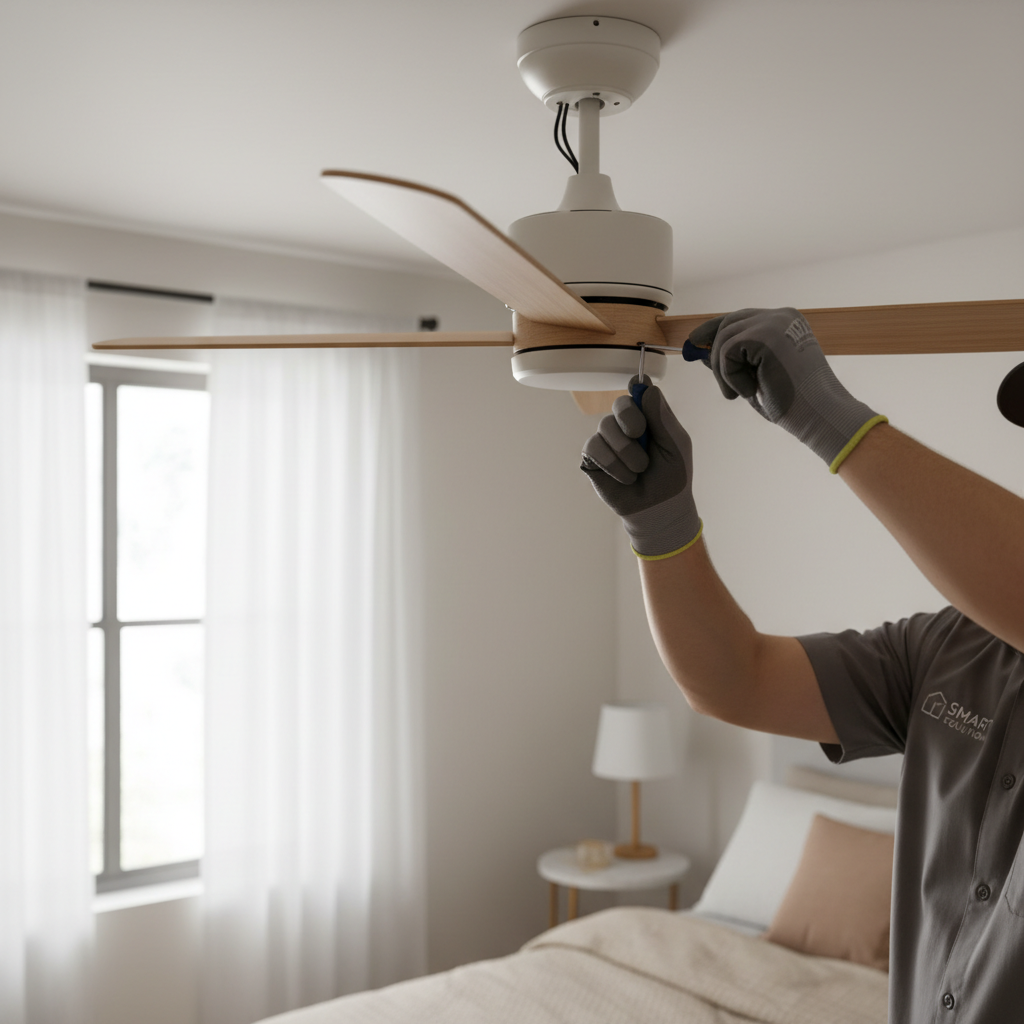
If your ceiling has any slope, verify the fan supports angled mounting. For anything that feels uncertain, especially wiring or box stability, a licensed electrician is the safer choice.
Common mistakes people make in small bedrooms
These come up a lot, and they’re avoidable.
- Buying too large “for more airflow”: bigger can overwhelm the room visually and create an uncomfortable direct draft over the bed.
- Ignoring blade clearance: in tight layouts, doors, wardrobes, and bunk beds create awkward sightlines and safety concerns.
- Overpaying for smart features: smart control is nice, but if your Wi‑Fi is unreliable, a simple remote may cause less frustration.
- Assuming any ceiling box works: fans need stable mounting. If the box isn’t fan-rated, vibration and risk both increase.
If you’re shopping from “best small ceiling fans for small bedrooms” roundups, treat them as starting points, then validate with your measurements and constraints.
Conclusion: a practical way to choose the right fan
The most comfortable small-bedroom setup usually looks like this: a 36–42 inch fan (or smaller for tiny rooms), mounted as close to ideal height as your ceiling allows, with a quiet motor and a light kit only if you truly need it.
Key takeaways: measure ceiling height first, pick mounting style second, then compare noise and controls, because those are what you live with every night. If you want one simple next step, make a shortlist of 3 models that match your mounting type and blade span, then choose the quietest option with the cleanest warranty terms.
If you’re trying to narrow down the best small ceiling fans for small bedrooms based on your exact ceiling height, lighting needs, and budget, a quick spec-based comparison (even from a local electrician or lighting showroom) can save you from buying twice.