
Best pet friendly couches for small spaces usually come down to three things: the right upholstery (so claws and fur don’t win), a compact shape that fits your layout, and details that make cleanup less annoying on busy weeks.
If you’ve ever bought a “cute small sofa” and realized it’s basically a fur magnet, you already know why this matters. In small rooms, pets and people share every inch, so stains, odor, and wear show up faster, and replacing furniture gets expensive quickly.
This guide focuses on practical picks and what to look for, not perfect marketing language. You’ll get a quick material cheat sheet, a sizing checklist, and a short list of couch styles that tend to work well in tight apartments.
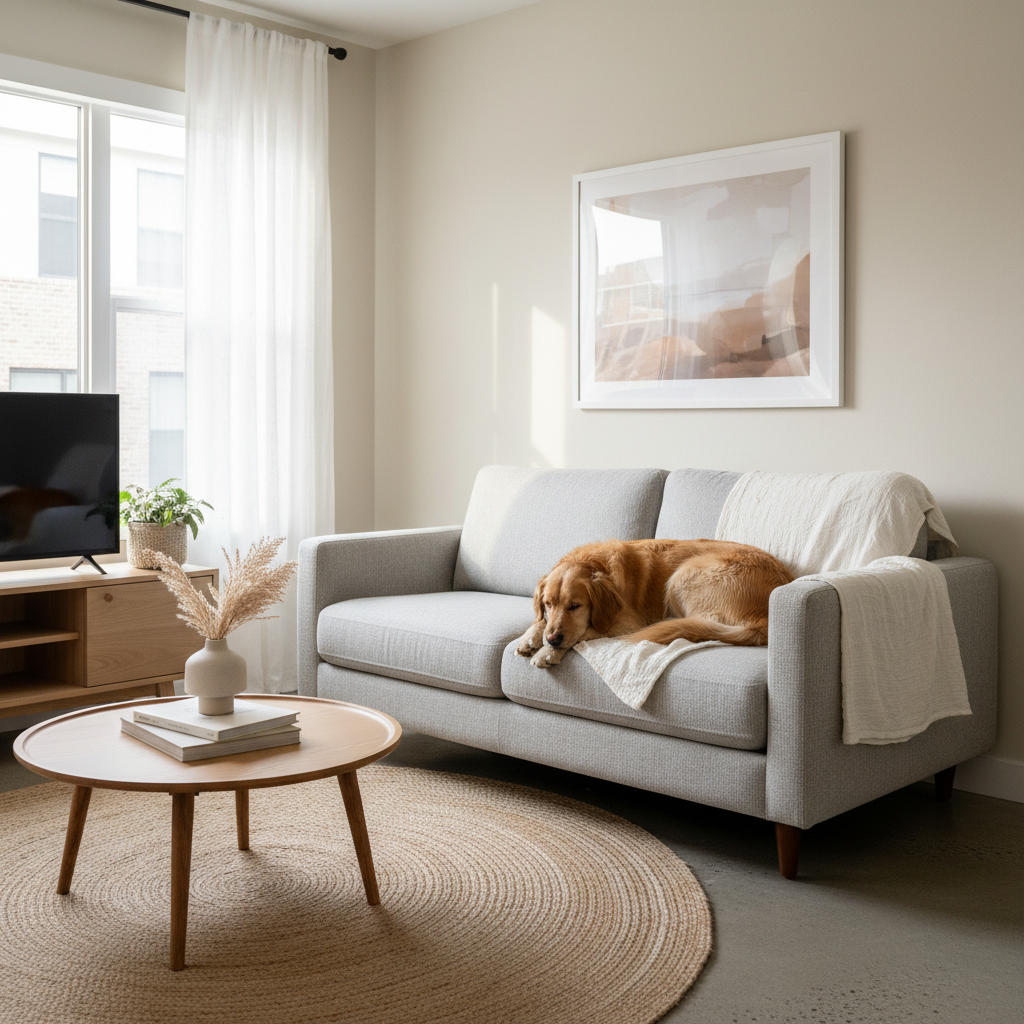
What “pet-friendly” actually means in a small space
Pet-friendly isn’t one magic fabric. It’s a set of tradeoffs that match your pet and your room. In a small space, a couch needs to stay comfortable while resisting the stuff that normally forces you to cover it with blankets forever.
- Durability: tighter weaves and tougher fibers help reduce snags and pulls.
- Cleanability: removable covers, stain-resistant finishes, and fabrics that don’t trap hair.
- Comfort: paws, nails, and zoomies are real, but you still want a seat you enjoy daily.
- Scale: small footprint, smarter proportions, and less visual bulk so the room stays open.
According to the American Kennel Club (AKC), regular grooming can reduce shedding and dander in the home, which pairs nicely with furniture choices that don’t hold on to hair. Translation: fabric helps, but your routine matters too.
Best upholstery materials for pets (and what to avoid)
Most people get stuck on “leather vs fabric,” but the real decision is how the surface behaves with claws, drool, accidents, and vacuuming. If you’re shopping for the best pet friendly couches for small spaces, start here.
Material quick-compare table
| Material | Why it works | Watch-outs | Best for |
|---|---|---|---|
| Performance fabric (often stain-resistant) | Handles spills, cleans easier, tends to be durable | Not all “performance” is equal, ask for care details | Most households with cats or dogs |
| Microfiber | Tight weave, usually resists scratches, easy spot-cleaning | Can hold odors if accidents soak in | Dogs, high-traffic seating |
| Leather (top-grain) | Hair wipes off fast, doesn’t trap smells as easily | Claws can leave marks, needs conditioning | Low-scratch pets, easier hair cleanup |
| Velvet (synthetic) | Often releases hair with brushing, looks elevated | Can show pressure marks, not all velvet is tough | Style-forward small rooms |
| Slipcovered cotton blends | Covers can be washed, easy refresh | Can wrinkle, may stain if not treated | People who prefer washable covers |
Materials to be careful with: loose-weave linen, tweed, and some bouclé can snag easily, especially with cats. They can look amazing online, then unravel in a month in real life.
Small-space couch shapes that tend to work with pets
In tight rooms, you don’t just buy “a couch,” you buy walking paths. The most pet-proof fabric won’t help if the sofa blocks the door or forces your dog to leap awkwardly (that’s when nails scrape edges and arms).
- Apartment-size sofa (72–80 inches): enough seating, less bulk than standard.
- Loveseat (56–70 inches): great for studios, but check seat depth so it feels adult-sized.
- Compact sectional: works when you need to anchor a room, choose a chaise that doesn’t swallow the walkway.
- Armless or slim-arm couches: more sitting space per inch, fewer scratch targets.
- Sleepers for small spaces: doable, but look for durable mechanisms and easy-to-clean cushions.
Editor’s bias: slim arms and higher legs usually look lighter in a small room, and they make it easier to vacuum underneath when hair drifts into corners.
A quick self-checklist: what kind of “pet couch” do you really need?
This is the part many people skip, then regret the purchase. Answer these quickly and you’ll shop faster and avoid mismatched features.
- Cat claws? Prioritize tight-weave fabric or microfiber, and avoid textured loops.
- Heavy shedding? Choose smoother surfaces, darker or heathered colors, and keep a throw on the main spot.
- Accidents or senior pets? Look for removable/washable covers, sealed seams, and cushion covers with liners if available.
- Dog launches onto the sofa? Strong frame, durable arms, and cushions that don’t shift easily.
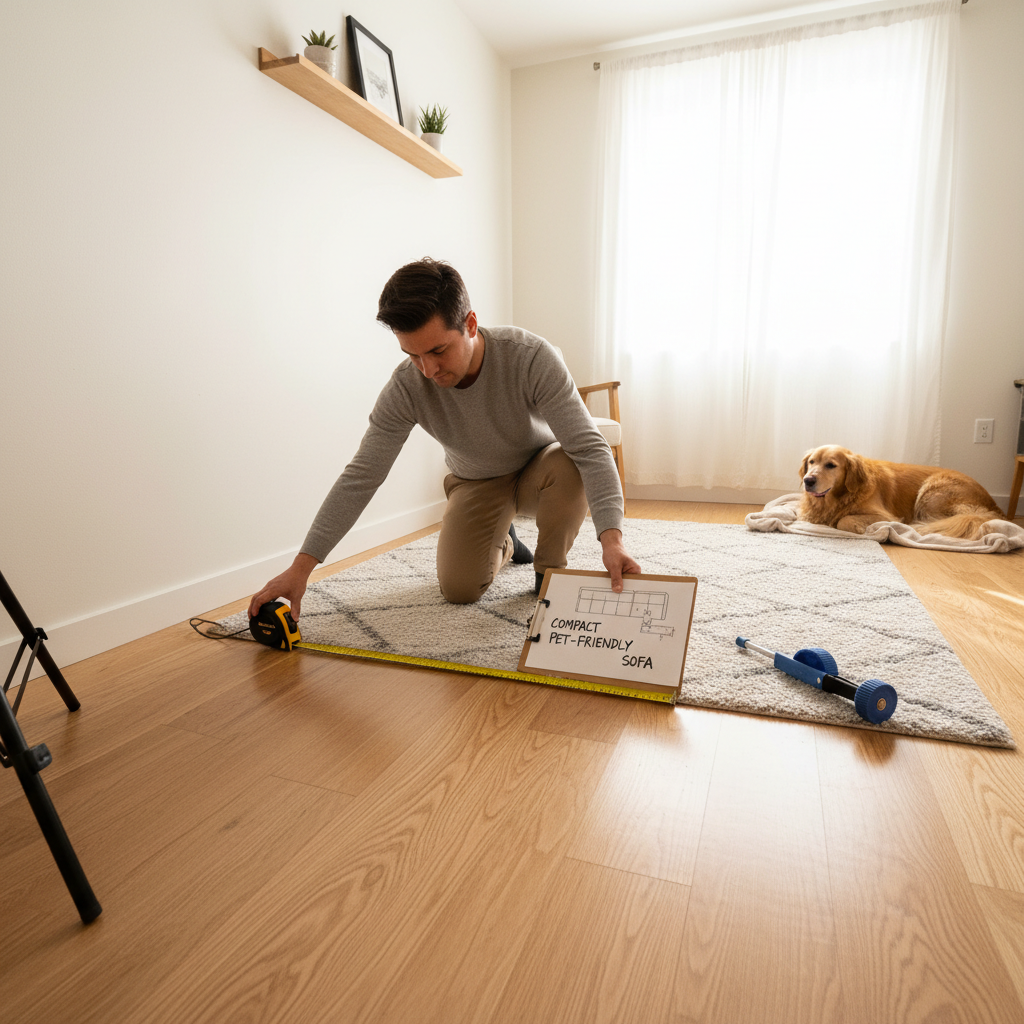
- Very small room? Measure doorways and walkways, not just the wall where the couch sits.
According to the American Society for the Prevention of Cruelty to Animals (ASPCA), behavior and training play a big role in preventing destructive scratching or chewing. A couch can be “resistant,” but it can’t replace a plan for habits.
Practical buying tips (so you don’t get fooled by nice photos)
Online shopping is convenient, and it’s also where a lot of pet-friendly claims get fuzzy. Here’s what tends to separate a good purchase from a stressful return.
1) Ask for the care instructions before you buy
Look for specific guidance like water-based cleaning, solvent-only, or machine-washable covers. If the brand can’t explain how to clean the fabric, that’s usually a warning sign for pet homes.
2) Prioritize removable cushion covers
Even if the whole sofa isn’t slipcovered, removable cushion covers make weekly maintenance realistic. In small spaces, “realistic” matters more than “ideal.”
3) Choose colors and textures that hide real life
- Heathered mid-tones hide fur better than solid light colors.
- Matte textures tend to show fewer claw marks than shiny finishes.
- Patterned weaves can hide small stains, but avoid chunky loops.
4) Don’t ignore the frame and legs
Pets push, jump, and use furniture as traction. A sturdier frame and stable legs reduce wobble, which also reduces the “my couch feels cheap” moment after three months.
Setup and maintenance that make a pet couch last longer
Even the best pet friendly couches for small spaces need a little setup. The goal is not perfection, it’s reducing daily friction so you actually keep up with it.
Key takeaways to make it easier
- Use a dedicated throw on your pet’s favorite spot, wash it weekly.
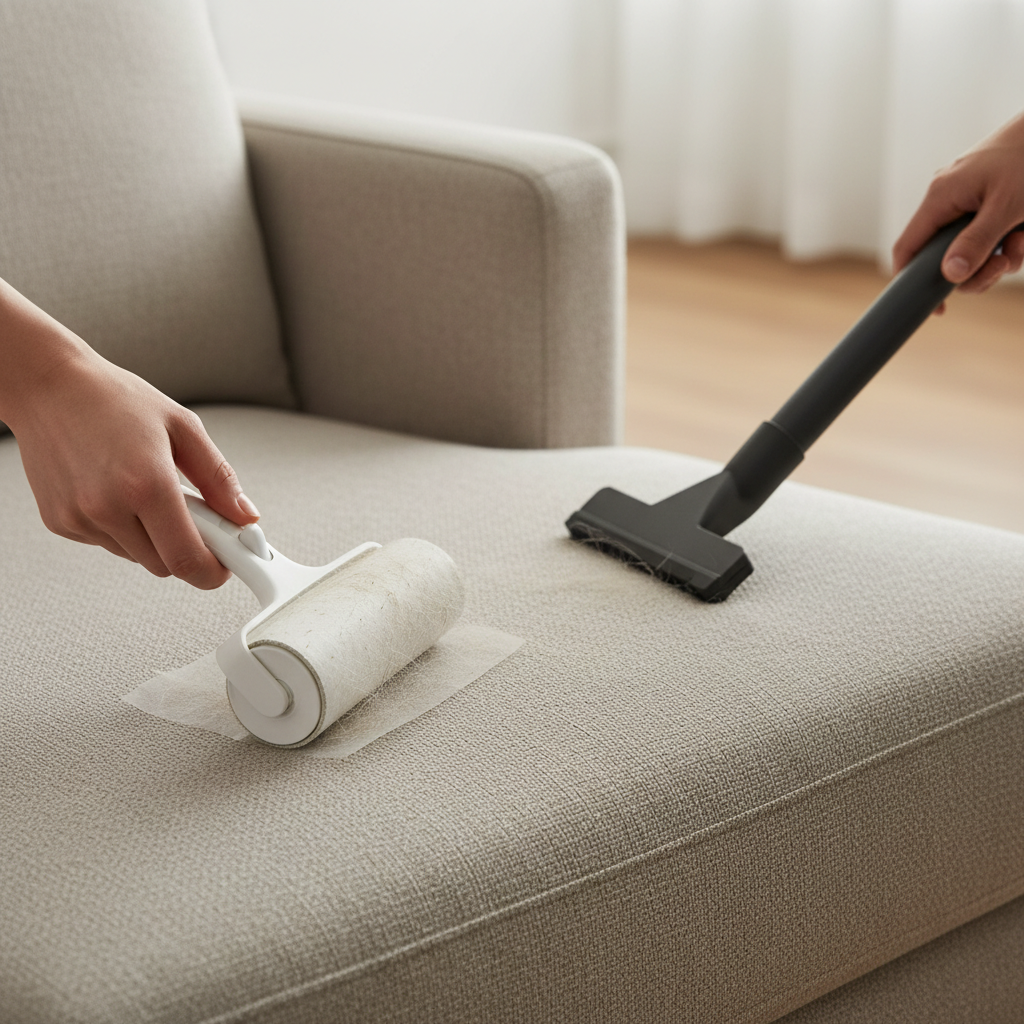
- Keep a lint roller and small vacuum nearby, small cleanups beat marathon sessions.
- Add a scratch alternative close to the couch for cats, like a vertical post or cardboard lounger.
- Rotate cushions so one seat doesn’t become “the crater.”
- Blot spills fast, rubbing often pushes stains deeper into fibers.
If odors linger after cleaning, it may help to check under cushions and along seams where moisture can hide. For recurring accidents, it’s reasonable to consult a veterinarian or trainer since health and stress can be factors.
Common mistakes to avoid (they cost money and patience)
A few small misreads can make a “pet-friendly” sofa feel impossible to live with. These come up a lot in small apartments.
- Buying too deep a seat, then needing extra pillows that become fur collectors.
- Falling for delicate textures because they look cozy in photos.
- Skipping swatches, then discovering the fabric grabs hair or shows every mark.
- Oversizing the couch, which forces pets to brush past it constantly and speeds up wear.
- Using harsh cleaners that can damage finishes, always follow the manufacturer’s care code.
When it’s worth getting professional help or a higher-end option
If you’re dealing with repeated staining, strong odors, or visible wear that spreads fast, a professional upholstery cleaner can help diagnose whether the issue is surface-level or soaked into cushion cores. Many cleaners will tell you up front what they can and can’t fix.
It’s also worth considering an upgrade when your pet has medical needs, like incontinence, or when allergies are a concern in the household. According to the Asthma and Allergy Foundation of America (AAFA), reducing allergen buildup at home often involves a combination of cleaning routines and materials that are easier to clean, so furniture selection becomes part of the plan, not the whole plan.
Conclusion: a small-space pet couch is about smart compromises
Finding the best pet friendly couches for small spaces is less about chasing a single “perfect” model and more about picking the right fabric, a compact shape, and maintenance features you’ll actually use. If you do those three, your living room can feel tidy without banning your pet from the sofa.
Your next step can be simple: measure your walkway clearance, then order a few swatches in the top two fabric types you’re considering. Once you see how they handle hair and light, the choice usually gets obvious.